
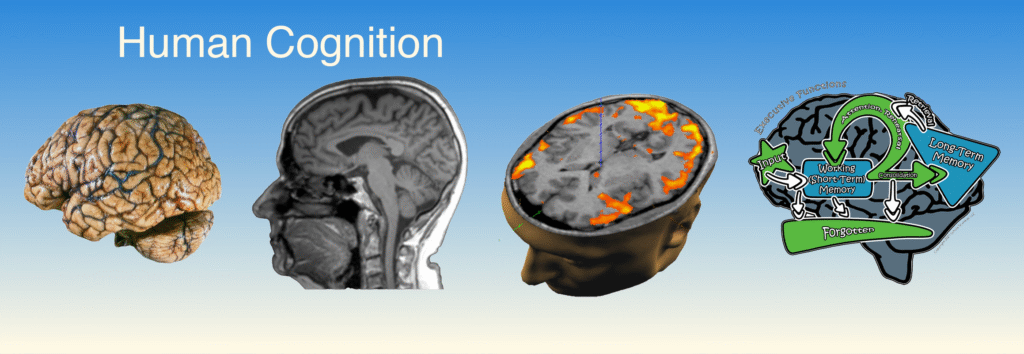
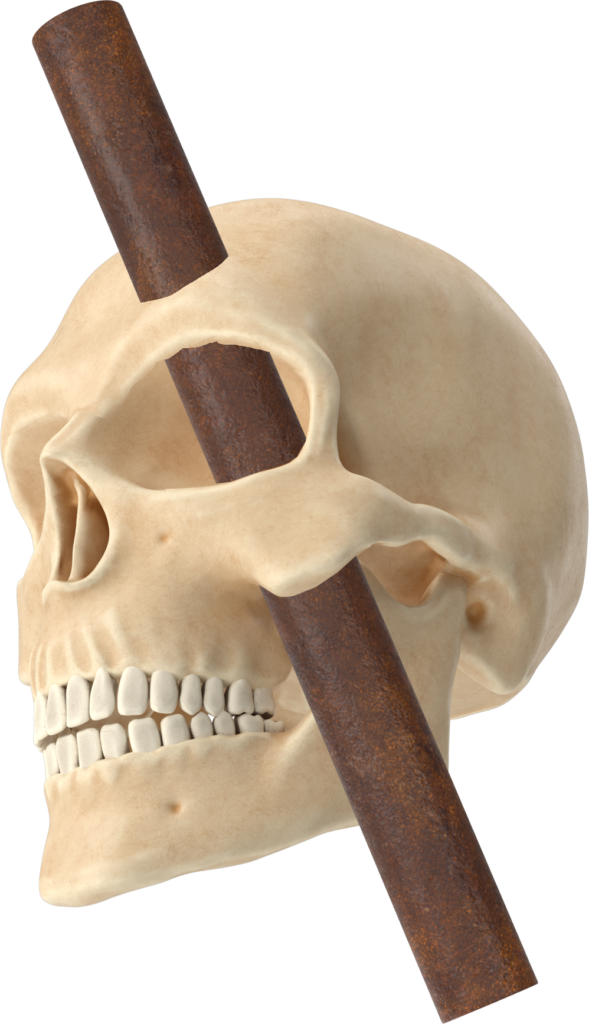
Phineas Gage: The Man Who Survived a Tamping Iron Through His Brain
On September 13, 1848, something happened to a man named Phineas Gage that would change the way scientists think about the brain forever.
Phineas was 25 years old and worked as a construction foreman for a railroad company in Vermont. That meant he was in charge of a crew laying down train tracks—and part of his job was blasting through big rocks using explosives.
To do this, Phineas used a long metal rod called a tamping iron. It was about a meter long (over 3 feet), weighed more than 5 kilograms, and had a sharp point at one end. He used it to pack gunpowder into holes drilled into rocks, pressing the powder down so it would explode in the right direction.
But on that day, something went terribly wrong.
While Phineas was tamping the powder, it exploded too soon. The blast sent the iron rod flying up through his left cheek, straight through the front of his brain, and out the top of his head. The rod flew about 12 meters before landing.
Here’s the unbelievable part: Phineas survived.

The Miracle of Phineas Gage
Not only did Phineas live through the accident, but he was awake and talking right afterward! He could describe what had happened and even walked to get help. After recovering for a few months, he was able to talk, read, and do math just like before.
At first, it seemed like the injury hadn’t changed much.
But over time, people noticed something different about him—his personality had completely changed.
Before the accident, Phineas was friendly, polite, responsible, and smart. Afterward, he became rude, stubborn, disrespectful, and had trouble sticking to plans. He even started using bad language. His friends said he was “no longer Gage.”
Because of this, he lost his job and eventually worked in different places, including driving a horse carriage and even appearing in a museum as a “human curiosity.”
Understanding the Brain: Basic Structure and Function
Even though the human brain only weighs about 3 pounds—just 2% of our body weight—it uses about 20% of the oxygen we breathe in! That means the brain is very active, even when we’re sitting still or sleeping. It’s always working hard, which is why it uses so much energy.
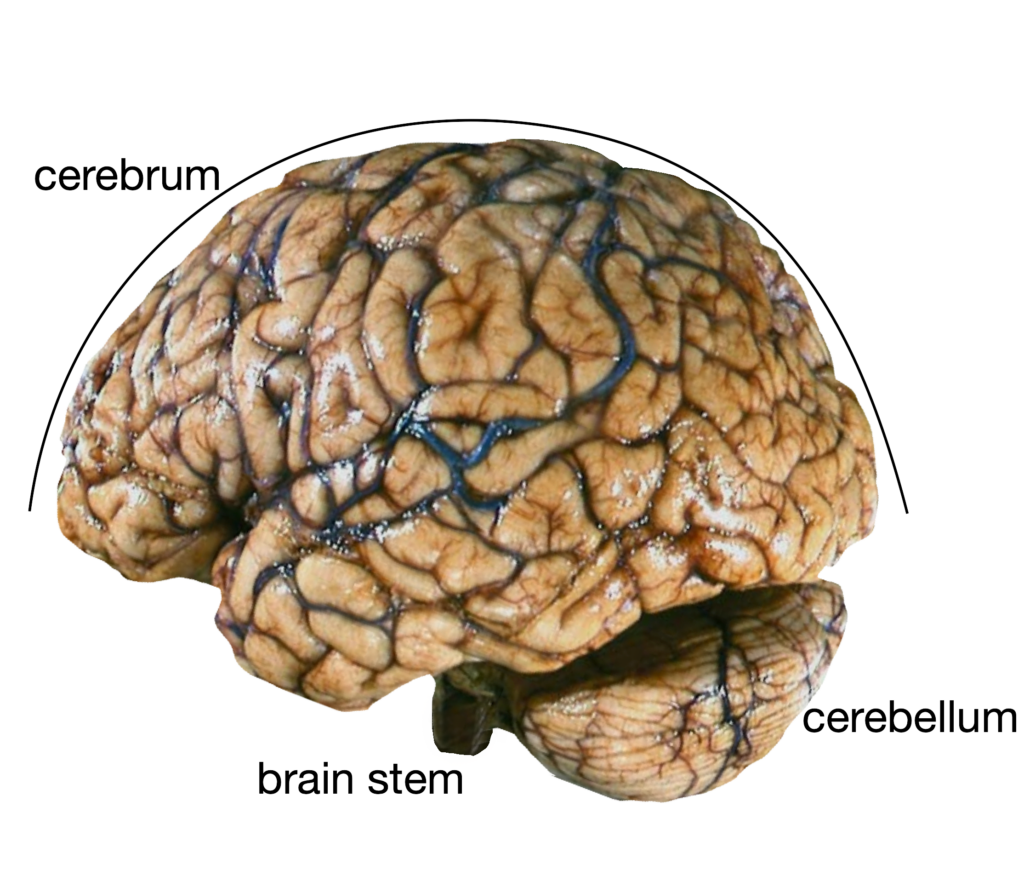
The brain is made up of a few major parts:
-
Cerebrum: This is the biggest part of the brain and looks kind of like a coral. It’s divided into a left side and a right side, called hemispheres. The cerebrum is what allows us to think, remember, solve problems, and do things that make humans different from other animals.
-
Cerebellum: This part is sometimes called “the little brain.” It sits underneath the cerebrum at the back of your head. Its job is to help your muscles move smoothly so you can walk, run, and move without being clumsy.
-
Brainstem: The brainstem connects the brain to the spinal cord. It controls things your body does automatically, like breathing, keeping your heart beating, and maintaining blood pressure. You don’t have to think about these actions—they happen on their own.
The Lobes of the Brain
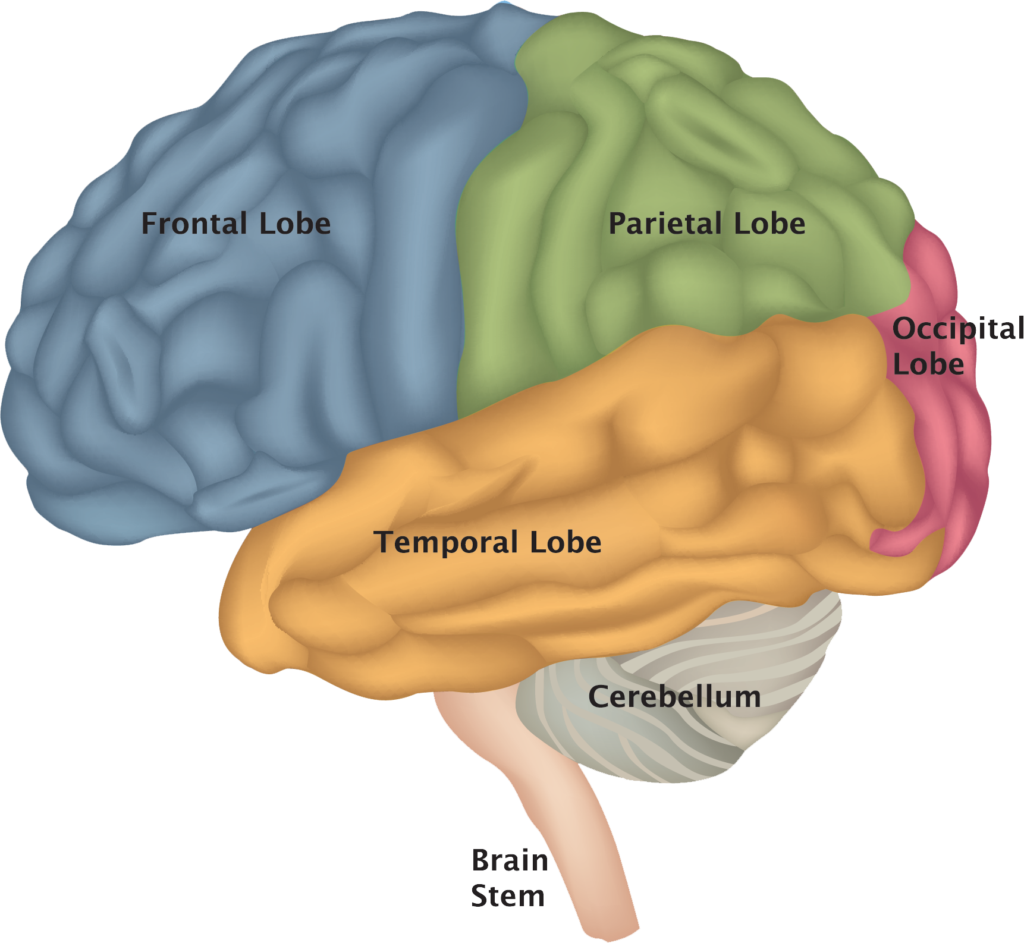
The cerebrum (the big part of the brain) is divided into four parts, called lobes. Each lobe is named after the skull bone above it:
-
Frontal lobe
-
Parietal lobe
-
Temporal lobe
-
Occipital lobe
All of these lobes are covered by a thin outer layer called the cerebral cortex. Even though it’s only about an eighth of an inch thick, the cortex is super important. It helps us sense the world, control our movements, and think, learn, and remember.
If you could flatten out the entire cortex, it would be about the size of a newspaper page!
Why the Cortex Matters
Scientists use brain scans, like fMRI, to study which parts of the brain are active. They’ve found that most brain activity happens in the cortex, showing us just how important it is for thinking and learning.
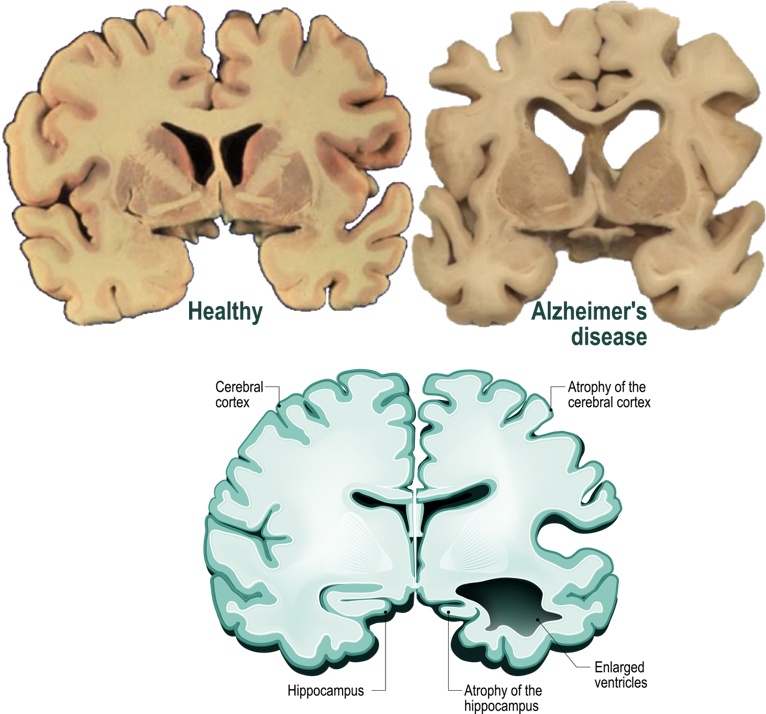
In diseases like Alzheimer’s, the cortex starts to shrink and get thinner. That’s why people with Alzheimer’s often have trouble remembering things and thinking clearly—the parts of their brain responsible for those functions are being damaged.
Check Your Understanding
Q: What does the brain’s structure tell us about its function?
A: Different areas are specialized—like the cerebellum for movement or the occipital lobe for vision—each part plays a unique role.
Q: Why does the brain have wrinkles and folds?
A: To fit more surface area into a small space—more folds mean more neurons and more processing power.
Q: What protects the brain from injury?
A: The skull, cerebrospinal fluid, and meninges form a triple layer of defense to cushion and protect this delicate organ.
The Limbic System — Where Emotion Meets Reason
While the lobes form the outer layer of the brain, deep inside lies a smaller network of structures that connect what we feel with what we think — the limbic system.
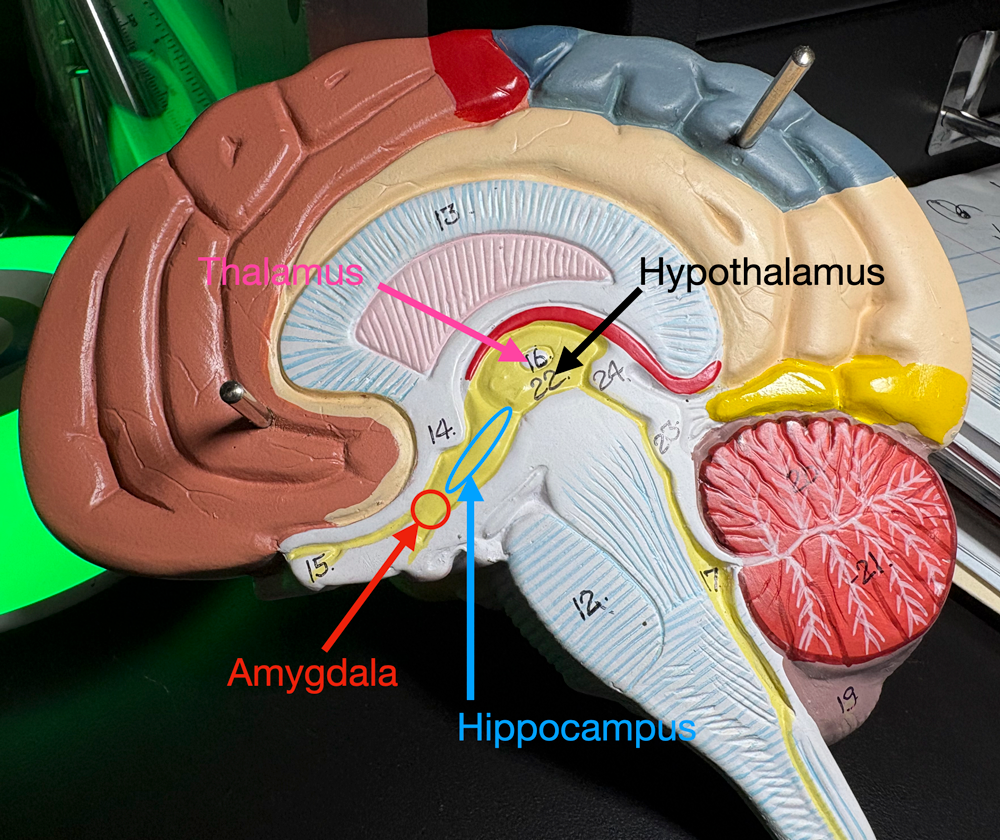
Deep within the brain lies a group of interconnected structures known as the limbic system. It forms a bridge between the primitive brainstem, which controls automatic survival functions, and the cerebral cortex, which governs higher reasoning and decision-making. The limbic system links emotion, memory, and motivation, helping us react to experience with both feeling and thought.
The amygdala acts as an emotional alarm center, rapidly evaluating situations for threat or importance and generating feelings such as fear or excitement. The hippocampus organizes and stores memories, especially those attached to strong emotions. The thalamus relays sensory information to the proper regions of the cortex, while the hypothalamus connects the brain to the body’s internal responses, regulating hunger, temperature, and hormone balance. Working together, these regions ensure that what we feel influences what we remember and how we respond.
In humans, the prefrontal cortex helps regulate the limbic system, allowing reason to guide emotion. When we pause before acting or calm ourselves after anger, the prefrontal cortex is tempering limbic impulses toward balanced behavior. This partnership between emotion and control enables empathy, moral awareness, and mature judgment—hallmarks of human cognition.
Check Your Understanding
Q: What does the limbic system connect in the brain?
A: It links deeper emotional centers with the higher thinking areas of the cerebral cortex, joining feeling with reasoning.
Q: How do the amygdala and hippocampus work together?
A: The amygdala gives emotional meaning to experiences, and the hippocampus helps turn those emotional experiences into lasting memories.
Q: What role does the prefrontal cortex play in relation to the limbic system?
A: It helps control emotional impulses from the limbic system, allowing reason and conscience to guide behavior.
How Brain Cells Work
So far, we’ve talked about the brain’s structure—what you can see with your eyes or with brain scans like fMRI. But deep inside the brain, tiny cells called neurons do all the real work. They are responsible for everything your brain does, including thinking, learning, remembering, and moving.
Neurons and Synapses
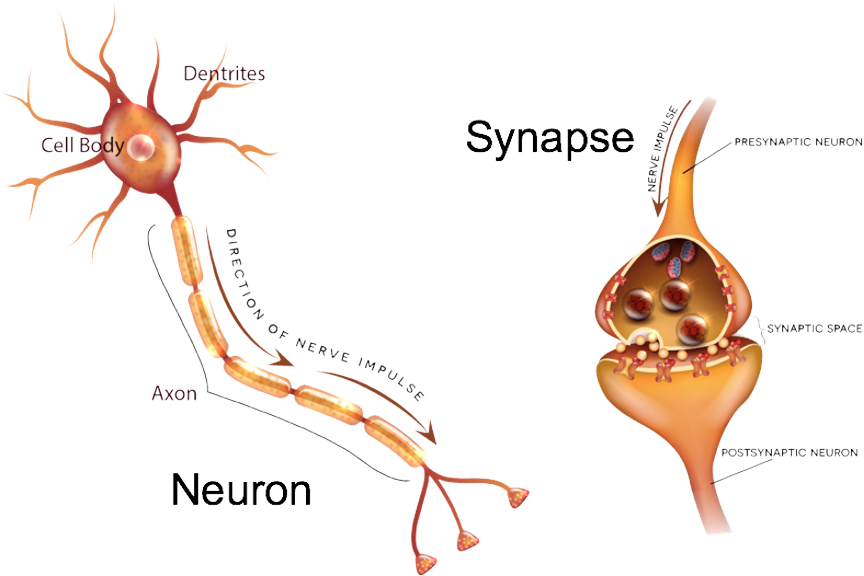
Your brain has billions of neurons, and they need to communicate with each other for your brain to work properly. They send tiny electrical messages called nerve impulses. But there’s a catch: neurons don’t actually touch. Instead, these messages have to jump across a small gap between them.
That tiny gap is called a synapse. It’s one of the most important parts of the brain. When we learn something new, our brains create new synapses. This is how we build long-term memories!
Because of your experiences, the pattern of synapses in your brain is different from everyone else’s. That’s part of what makes you unique—your memories and knowledge are literally built into the shape of your brain.
What a Neuron Looks Like
Neurons have special parts:
- The cell body is the center of the cell and holds the nucleus, which controls what the neuron does.
- Dendrites are like branches that reach out and receive messages from other neurons.
- The axon is like a long wire that sends messages to the next neuron.The message travels into the dendrite, moves through the cell body, and out through the axon, where it crosses a synapse to the next neuron.
The message travels into the dendrite, moves through the cell body, and out through the axon, where it crosses a synapse to the next neuron.
Why the Brain Needs So Much Energy
Every time you move, think, remember, or even breathe, your brain sends messages through billions of neurons and synapses. This happens every second of the day. It takes a lot of energy, which is why the brain uses so much oxygen.
Inside each neuron are tiny parts called mitochondria. They turn oxygen into energy so the brain can keep working.
Check Your Understanding
Q: What makes neurons special compared to other cells?
A: Neurons send and receive signals—fast. They don’t just sit in one place; they’re constantly firing messages to other cells.
Q: What is a synapse, and why does it matter?
A: A synapse is the gap between two neurons. It’s where chemicals carry messages, allowing complex thought and memory.
Q: How do brain cells “learn” from experience?
A: When certain pathways are used often, they strengthen—this is called “neuroplasticity,” and it’s how habits and learning happen.
Simple Information Processing: How the Brain and Body Work Together
Our brains are always busy, and one of their main jobs is to process information. That means taking in signals from the world around us, figuring out what they mean, and telling our bodies what to do. Some types of information processing—like learning a new math concept or remembering a friend’s birthday—are very complex. But some are super fast and simple, like a reflex.
What Is a Reflex?
A reflex is an automatic response your body makes without you even thinking about it. One of the best-known reflexes is the knee-jerk reaction.
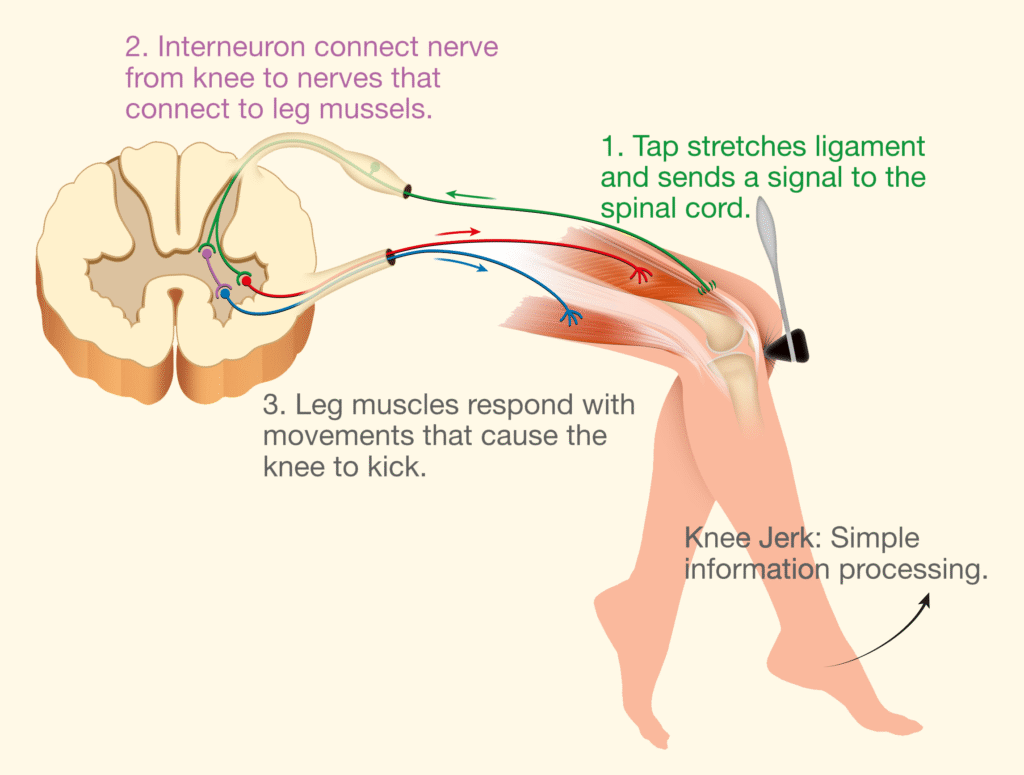
If you’ve ever been to the doctor and had your leg tapped just below the knee with a small hammer, you’ve probably seen this in action. Your leg kicks out quickly—that’s your knee-jerk reflex.
How the Knee-Jerk Reflex Works
Let’s break it down into 3 simple steps:
Input:
The doctor taps your tendon just below your knee. This causes your thigh muscle to stretch. Tiny sensors in that muscle notice the stretch and send a signal through a sensory neuron to your spinal cord.
Processing:
Inside the spinal cord, the message from the sensory neuron is quickly passed to a motor neuron. This step is super fast and doesn’t involve your brain!
Output:
The motor neuron sends a signal back to the same muscle that stretched. The muscle tightens, and your leg kicks out. All of this happens in about 1/20th of a second—that’s faster than the blink of an eye!
What About the Brain?
You may have noticed: the brain isn’t involved in the knee-jerk reflex. That’s why it happens so quickly. If the message had to travel all the way to the brain and back, your reaction would take much longer.
But the brain does eventually get the message. That’s how you know your knee was tapped. It just happens after your leg has already kicked.
Another Reflex: Touching a Hot Stove
The same idea happens when you accidentally touch something hot—like a stove. You pull your hand away fast, often before you even feel the pain. That’s because the reflex goes through your spinal cord, not your brain. Once your brain catches up, it understands what happened—and maybe tells you not to do that again!
What Have We Learned?
Whether it’s kicking your leg or pulling your hand back, reflexes are your body’s way of protecting you quickly. Your brain processes information too, but sometimes your spinal cord takes care of things first—so you stay safe.
Check Your Understanding
Q: What does your brain do with the flood of sights and sounds it receives every second?
A: It filters most of it out, focusing only on what seems important—this is how attention begins.
Q: Why don’t we notice everything we see or hear?
A: Because attention is limited. The brain picks what’s important and lets the rest fade to avoid overload.
Q: What’s the first step in processing information?
A: Sensory input—your brain receives signals from the environment and decides what to pay attention to.
Complex Information Processing: Learning and Memory
Your brain is always taking in and processing information from the world around you. Some of this is really fast and simple—like the knee-jerk reflex. You feel your knee was tapped only after your leg has already kicked. That’s because the signal travels through your spinal cord, not your brain.
But not all information processing is that simple. In fact, the most complex kinds of processing are things like learning and memory.
From Reflexes to Remembering
Reflexes happen automatically, but learning something new—like how to multiply fractions or understand a science experiment—takes a lot more brain power. Learning can involve any of your senses (like sight, sound, or touch) and many different parts of your brain working together.
Teachers work hard every day to help students build skills and remember what they’ve learned. But most people, even teachers, don’t get much training in how the brain actually learns and remembers. That’s why we use something called the Information Processing Model to help explain it.
Why Processing Matters for Learning
If your brain doesn’t fully process new information, you won’t remember it for long—and real learning won’t happen.
But if your brain deeply processes the information—if you think about it, practice it, and connect it to what you already know—then the learning becomes stronger and more permanent.
Later on, we’ll talk more about how your brain stores long-term memories, but for now, remember this:
The better your brain processes new information, the better you’ll remember it.
Check Your Understanding
Q: What makes processing complex information harder than simple information?
A: It involves comparison, memory, prediction, and sometimes emotion—all happening at once.
Q: How do feelings affect how we think?
A: Emotions can speed up or slow down thinking. Strong feelings can help memory—but they can also lead to quick, poor choices.
Q: Can stress change how your brain works?
A: Yes. Chronic stress can make it harder to focus, remember, or stay calm. The brain’s chemistry actually changes under stress.
The Information Processing Model: Short-Term and Working Memory
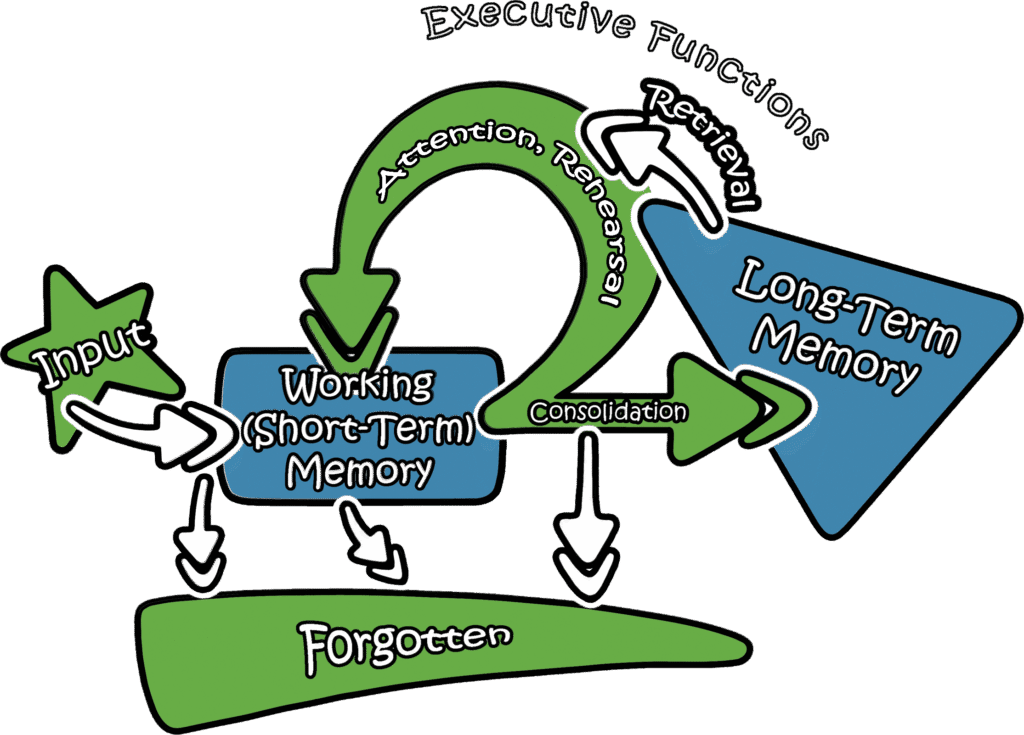
Let’s look at how your brain takes in, filters, and stores information. This is called the Information Processing Model, and it helps us understand how learning and memory work.
Step 1: Input — Information From the Outside World
Everything your brain knows about the world comes through your five senses:
sight, hearing, smell, taste, and touch.
When your senses pick something up—like the sound of a bell or the feel of your chair—that information travels to your brain through nerves. This step is called input.
Even fancy technology like virtual reality still depends on your five senses to get information into your brain. No matter what tools we use, our brain can’t know anything unless it first comes through our senses.
Step 2: Sensory Register — Filtering Out the Noise
Your brain gets thousands of pieces of information every second. That’s way too much to handle all at once! So your brain has a filter called the sensory register. It decides what’s important and what to ignore.
Think about it:
Right now, can you feel your right foot? You probably weren’t thinking about it until this moment. That’s because your brain was filtering it out so you could focus on other things.
This filtering helps you stay focused and not get overwhelmed. Most of the sights, sounds, and feelings you experience are forgotten almost immediately, unless your brain decides they’re important.
Step 3: Limited Storage — Holding Information for a Short Time
If something does get past the sensory register, it goes into a part of your memory called limited storage. This includes:
-
Working Memory – the information you’re using right now (like remembering a question while you’re solving a problem)
-
Short-Term Memory – temporary storage that only lasts a few seconds or minutes
This kind of memory doesn’t last long and can only hold a few things at a time. That’s why it’s easy to forget a phone number right after you hear it or why you walk into a room and forget what you were looking for.
If the information is not processed further, it disappears. But if it’s important and your brain works with it more, it can be stored as long-term memory (which we’ll talk about next!).
The Serial Position Effect: When We Remember Best
Scientists and teachers use simple experiments to learn how memory works. One of those experiments is called the Serial Position Test.
Here’s how it works:
-
You see a list of words appear one at a time on a screen (one every 2 seconds).
-
After the last word, you try to write down as many as you can remember.
The “Smiley Curve”: What We Learn From the Results
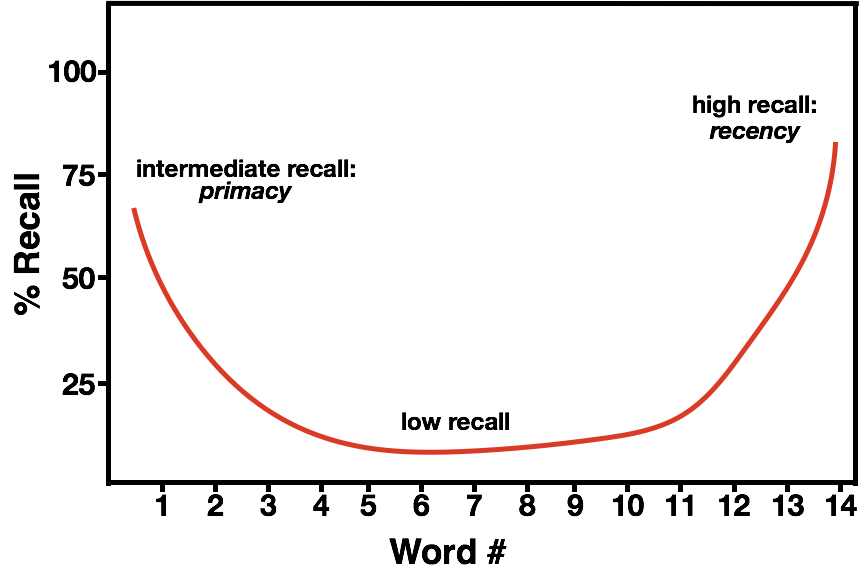
When researchers look at the results, they find something surprising—and it happens almost every time:
-
People tend to remember the first few words and the last few words best.
-
The middle words are often forgotten.
This pattern creates what looks like a smiley face curve when graphed. Scientists call this the Serial Position Effect.
Two Types of Memory Boost
Primacy Effect:
You remember the first few words because your brain has more time to focus on them. You might repeat them in your head before the next word shows up. But after a few words, it becomes hard to keep up.
Recency Effect:
You remember the last few words because they’re still fresh in your mind. They haven’t had time to fade away yet.
Why the Middle Gets Lost
It’s not that the middle words are unimportant. It’s just that:
-
You can’t keep repeating all the earlier words.
-
The later words push the middle ones out of your short-term memory.
-
Your brain has a limited capacity—it can only hold a few things at a time!
What Happens If We Add More Words?
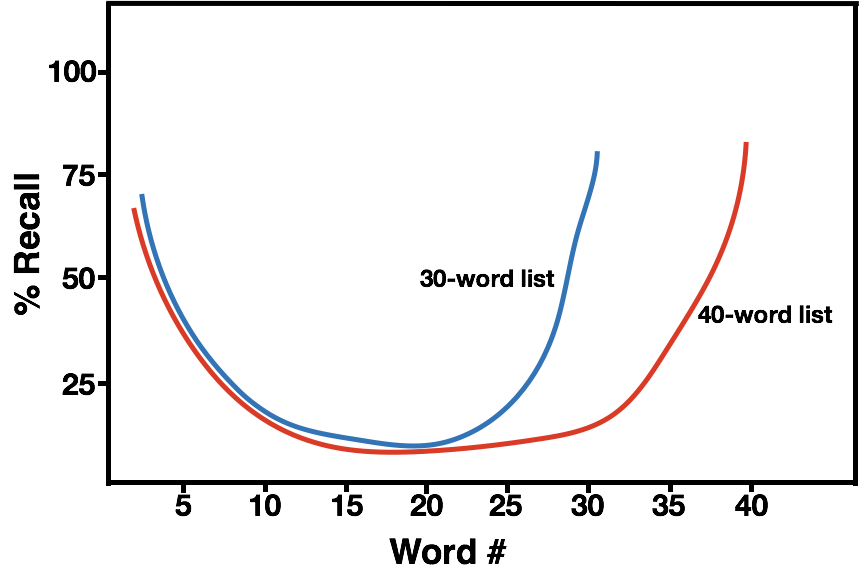
You might think adding more words would mean remembering more. But it doesn’t work that way.
When researchers tested 30 words versus 40 words, the number of words people remembered didn’t change much. The extra words were mostly lost in the middle of the list, where memory is already weak.
What This Means for Learning
This test teaches an important lesson: Giving more information doesn’t always lead to more learning.
If we get too much new information at once, we forget more, not less. That’s why it’s better to chunk information, review it often, and not overwhelm your brain.
Check Your Understanding
Q: Why do we forget things we just heard in class?
A: Short-term memory only lasts a few seconds unless we focus and rehearse it—otherwise, it disappears quickly.
Q: What’s the difference between short-term memory and working memory?
A: Short-term memory holds info briefly; working memory not only holds it but also manipulates it while you think.
Q: How can you make working memory stronger?
A: Practice repeating, organizing, and connecting new information—these strategies help you hold and use thoughts more effectively.
The Information Processing Model: Long-Term Memory
Not everything we see or hear becomes a memory. For information to move from short-term memory to long-term memory, our brain needs to go through a special process called consolidation.
What Is Consolidation?
Consolidation means your brain is comparing new information to what it already knows. Imagine I say, “There’s a fish tank next to a brick fireplace in my living room.” Even if you’ve never seen my living room, you probably picture something—because your brain uses old memories of fish tanks and fireplaces to understand new information.
This happens automatically. Your brain is always connecting new information to stuff that’s already stored in your long-term memory.
What Is Rehearsal?
Rehearsal is when you use new information over and over in different ways to help your brain keep it.
Here are examples of rehearsal:
-
A student explains a science concept to a friend.
-
You do homework about something you learned in class.
-
You review your notes before a test.
Every time you go back to new information and work with it, you are helping it stick in your brain!
How Deep Thinking Helps Memory: The Levels of Processing Test
Psychologists ran an experiment to see how different types of questions affect memory. Here’s how it worked:
Students were shown a word and then asked one of three types of questions:
Letter question (Shallow thinking):
“Does the word have the letter D?”
➤ You don’t even need to know what the word means.
Word meaning question (Medium thinking):
“Does ‘humble’ mean the same as ‘rich’?”
➤ You have to understand what both words mean.
Self-reference question (Deep thinking):
“Does the word ‘friendly’ describe you?”
➤ You have to understand the word and think about yourself.
What Happened?
After answering 30 of these questions, students were asked to write down as many words as they could remember.
The results showed:
-
Students remembered very few of the words from the letter questions.
-
They remembered more from the word meaning questions.
-
And they remembered the most from the self-reference questions.
Why?
Because the more you think about something, the more your brain processes it. And the more your brain processes it, the better you remember it.
The Big Idea
The more deeply we think about something, the more we learn it. So if you just glance at a word, you probably won’t remember it. But if you connect it to other ideas or to your own life, your brain holds onto it much better.
This is why good learning involves more than just seeing or hearing facts. It’s about thinking deeply, making connections, and practicing what you learn.
Check Your Understanding
Q: How do facts move from short-term to long-term memory?
A: Through focus, repetition, emotional impact, and connections to what you already know.
Q: Why do we forget things we studied?
A: If the memory wasn’t reviewed, emotionally important, or tied to something meaningful, it often fades over time.
Q: How can I help my brain store information long-term?
A: Use strategies like summarizing, teaching it to someone else, or making a visual—these activate deeper levels of processing.
Attention and Executive Functions: How the Brain Stays on Track
Not all information makes it into your memory. In fact, most of what you see, hear, and feel is forgotten unless your brain decides it’s important enough to save. To turn short-term memory into long-term memory, your brain has to do real work—making new connections between brain cells, which requires energy, focus, and good health.
Why Nutrition Matters for Learning
Your brain needs energy to grow and make memories. That’s why eating well is important for learning.
If someone comes to school hungry, it’s much harder for their brain to process and remember new information. Programs that offer school breakfast and lunch don’t just feed students—they help their brains function properly so they can learn and grow.
What Are Executive Functions?
Executive Functions are like the brain’s control center. You can think of it as the conductor of an orchestra – a central controller of a wide variety of instruments. When properly conducted, all the musiciaans perform smoothly with each other, producing beautiful music! Executive functions help you:
-
Pay attention
-
Plan and organize your work
-
Make decisions
-
Remember what’s important
For example:
-
If you realize you didn’t understand a paragraph and decide to read it again, that’s Executive Function at work.
-
If you connect a new science fact to something you learned last month, that’s also your brain using Executive Functions.

Focus Is Key
You can’t remember something if you don’t pay attention to it. That’s why focus and concentration are so important when you’re trying to learn. Students with ADHD (Attention Deficit Hyperactivity Disorder), for example, might struggle in school—not because they aren’t smart, but because their brains have trouble staying focused long enough to remember new things.
Where Executive Functions Live in the Brain
Most Executive Functions happen in a part of your brain called the frontal lobe. That’s the front part of your brain—just behind your forehead. Inside the frontal lobe is an area called the prefrontal cortex, and it’s one of the last parts of your brain to fully develop.
That means:
-
Young children don’t yet have strong Executive Functions.
-
They need help from adults—like parents and teachers—to stay focused, plan, and stay on track.
Teachers often act like a “second brain” for kids:
-
They help you see which parts of a lesson are most important.
-
They remind you what to focus on.
-
They teach you how to plan your time and your work.
Why This Matters
One of the main goals of school is to help students develop their Executive Functions. A strong STEM curriculum (science, technology, engineering, and math) can help students grow in this area by:
-
Asking important, thought-provoking questions.
-
Helping students learn how to stay focused and organized.
-
Modeling how to think deeply and carefully about information.
Check Your Understanding
Q: Why is attention so important for learning?
A: Attention acts like a gate—if you don’t focus on something, it won’t even enter your memory. No attention, no learning.
Q: What are executive functions, and why do they matter?
A: They’re brain skills like self-control, planning, and mental flexibility. They help you focus, solve problems, and behave responsibly.
Q: Can you strengthen your executive functions?
A: Yes! Every time you make a good decision, resist a distraction, or plan ahead, you’re exercising and improving those skills.
Executive Functions and Artificial Intelligence
Artificial Intelligence, or AI, is a type of technology designed to do tasks that usually require human intelligence—like recognizing faces, answering questions, or even playing games like chess. AI systems are getting better and faster all the time, and they can do some things incredibly well. But does that mean they think like we do?
Not exactly.
The human brain is far more complex than even the most advanced AI. As we’ve learned, our brains process information by using our five senses, and then filter, store, and connect new information to things we already know. We also use Executive Functions to help us make decisions, focus our attention, and solve problems. All of this happens through real physical changes in the brain, like building new connections between neurons, that is, building new synapses.


AI doesn’t work this way. Instead of using senses like sight or hearing, AI systems rely on data and patterns in computer code. When an AI “learns,” it doesn’t create memories or emotions. It adjusts its programming based on past inputs—but it doesn’t understand things the way we do. For example, an AI can be trained to recognize a dog in a photo, but it doesn’t know what a dog feels like to pet or what it means to love one.
Another big difference is in creativity and judgment. While AI can solve problems using massive amounts of information, it doesn’t truly think for itself. Humans can ask, “Why does this matter?” or “Is this the right thing to do?” These kinds of decisions often involve values, emotions, and experience—things AI doesn’t have.
Still, AI is a powerful tool. Just like a calculator helps with math, AI can help with sorting information, creating art, translating languages, and more. In school, AI might be used to tutor students, help with writing, or even personalize learning based on your progress. But even the smartest AI needs human guidance—especially from people who can think, feel, and care.
Check Your Understanding
Q: Can AI have executive functions like humans do?
A: No. AI can simulate tasks like planning or switching focus, but it doesn’t choose for moral reasons—it just follows code.
Q: Why compare human thinking to AI?
A: It helps us understand what makes us unique—like free will, conscience, and the ability to love, which AI doesn’t have.
Q: How do executive functions show we’re more than machines?
A: Because we don’t just process data—we reflect, choose, and take responsibility for our actions. That’s something no algorithm can do.
Essential Concepts
The Focus Questions in each Investigation are designed to help teachers and students focus on the important concepts. By the end of the CELL, students should be able to answer the following questions:
Investigation One: The Human Brain
Data Interpretation:
When examining the four lobes of the human brain—frontal, temporal, parietal, and occipital—what structural differences do you observe, and how do these relate to their specific functions?
Each lobe has distinct locations and roles: the frontal lobe is associated with reasoning and problem-solving; the temporal lobe with auditory processing and memory; the parietal lobe with sensory information like touch and spatial awareness; and the occipital lobe with visual processing. These structural differences correlate with their specialized functions in cognition and perception.
Critical Thinking:
Considering the distinct functions of each brain lobe, how might damage to a specific lobe affect a person’s abilities and behaviors?
Damage to a particular lobe can impair its associated functions. For instance, injury to the frontal lobe may result in difficulties with decision-making and social behavior, while damage to the occipital lobe could lead to visual disturbances or blindness. Understanding these relationships helps in diagnosing and treating neurological conditions.
Real-World Application:
How can studying the anatomy of the human brain aid medical professionals in developing treatments for brain injuries and diseases?
A thorough understanding of brain anatomy allows medical professionals to pinpoint areas affected by injury or disease, leading to targeted treatments. For example, knowing that the temporal lobe is involved in memory can assist in addressing conditions like Alzheimer’s disease.
Investigation Two: Information Processing Model One (Input and Short-Term/Working Memory)
Data Interpretation:
How does the sensory register filter the vast amount of sensory information we encounter, and what impact does this have on our short-term memory?
The sensory register acts as a filter, allowing only relevant sensory information to proceed to short-term memory. This prevents cognitive overload and enables us to focus on pertinent stimuli, though it also means that much sensory input is quickly forgotten.
Critical Thinking:
Why is working memory capacity limited, and how does this limitation affect our ability to process new information?
Working memory has a limited capacity, typically holding about 7±2 items. This constraint means we can only process a small amount of information at a time, necessitating strategies like chunking or rehearsal to enhance retention and understanding.
Real-World Application:
How can understanding the limitations of short-term and working memory inform effective study habits and information retention techniques?
Awareness of these limitations can lead to the adoption of study techniques such as breaking information into smaller chunks, using mnemonic devices, and engaging in active rehearsal, all of which can improve memory retention and learning outcomes.
Investigation Three: Information Processing Model Two (Learning and Memory)
Data Interpretation:
What role does rehearsal play in the consolidation of information from short-term to long-term memory?
Rehearsal involves the repeated review or practice of information, which strengthens neural connections and facilitates the transfer of information from short-term to long-term memory, making it more likely to be retained over time.
Critical Thinking:
How do factors such as attention and prior knowledge influence the effectiveness of learning and memory consolidation?
Attention ensures that information is effectively encoded, while prior knowledge provides a framework for integrating new information. Both factors enhance the depth of processing, leading to more robust memory consolidation.
Real-World Application:
In what ways can educators apply principles of the Information Processing Model to design more effective teaching strategies?
Educators can design lessons that capture students’ attention, connect new material to existing knowledge, and incorporate activities that promote active rehearsal, thereby facilitating deeper learning and better memory retention.
Investigation Four: Executive Functions and Artificial Intelligence
Data Interpretation:
What are executive functions, and how are they related to the frontal lobe’s development during adolescence and early adulthood?
Executive functions are higher-order cognitive processes, including planning, decision-making, and problem-solving, primarily associated with the frontal lobe. These functions continue to develop into early adulthood, reflecting the maturation of the frontal lobe.
Critical Thinking:
How might the ongoing development of executive functions during adolescence impact behaviors and decision-making in teenagers?
Since executive functions are not fully developed in teenagers, they may exhibit impulsive behaviors and have difficulty with long-term planning and risk assessment, highlighting the importance of guidance during this developmental stage.
Real-World Application:
Considering the rise of Artificial Intelligence (AI), how can understanding human executive functions inform the development and ethical implementation of AI technologies?
Insights into human executive functions can guide the creation of AI systems that mimic human decision-making processes and help address ethical considerations, ensuring that AI complements human capabilities without compromising ethical standards.
Unit Vocabulary
The following list includes key terms that are introduced throughout the CELL. These terms should be used, as appropriate, by teachers and students during everyday classroom discourse.
Artificial Intelligence (AI) – Technology designed to perform tasks that typically require human intelligence, such as recognizing patterns, answering questions, or making predictions. AI processes data but does not think or feel like humans.
Attention – The ability to focus on specific information or tasks while ignoring distractions. Attention is necessary for learning and memory.
Axon – The part of a neuron that carries messages away from the cell body to other neurons, muscles, or glands.
Brainstem – The lower part of the brain that connects to the spinal cord. It controls automatic functions like breathing, heartbeat, and digestion.
Cerebellum – A part of the brain located under the cerebrum that helps control balance, coordination, and smooth muscle movements.
Cerebral Cortex – The thin outer layer of the cerebrum, responsible for advanced thinking, sensory processing, learning, and memory.
Cerebrum – The largest part of the brain, divided into two hemispheres, responsible for thinking, problem-solving, language, and voluntary movement.
Consolidation – The process of turning short-term memories into long-term memories by linking new information with existing knowledge.
Dendrite – A branch-like extension of a neuron that receives messages from other neurons.
Electric Impulse – A fast-moving signal sent along neurons to transmit information through the nervous system.
Executive Functions – High-level brain processes that help with planning, organizing, focusing, managing time, and controlling behavior.
fMRI (Functional Magnetic Resonance Imaging) – A brain imaging tool that shows which parts of the brain are active while a person is performing a task.
Frontal Lobe – The part of the brain responsible for decision-making, reasoning, problem-solving, and controlling emotions and behavior.
Hippocampus – A part of the brain involved in forming and organizing long-term memories (mentioned implicitly in memory-related content).
Information Processing Model – A theory describing how the brain takes in information (input), filters it, holds it temporarily (short-term memory), and stores it permanently (long-term memory).
Long-Term Memory – The part of memory where information is stored for hours, days, or even a lifetime.
Memory – The brain’s ability to store, retain, and retrieve information over time.
Motor Neuron (Efferent Neuron) – A neuron that carries signals from the brain or spinal cord to muscles, causing movement.
MRI (Magnetic Resonance Imaging) – A brain scan that shows the physical structure of the brain.
Neuron – A nerve cell that sends and receives information through electrical and chemical signals.
Occipital Lobe – The part of the brain located at the back of the head that processes visual information.
Parietal Lobe – The part of the brain involved in processing touch, temperature, and spatial awareness.
Prefrontal Cortex – A part of the frontal lobe responsible for planning, decision-making, and self-control. It develops fully in early adulthood.
Primacy Effect – The tendency to remember the first items in a list better than those in the middle.
Processing – The act of thinking about or working with new information so it can be understood and remembered.
Recency Effect – The tendency to remember the last items in a list more easily because they are still in short-term memory.
Rehearsal – The mental practice of repeating or using information, which helps move it into long-term memory.
Retrieval – The process of recalling information stored in long-term memory.
Sensory Register – The part of the brain that briefly holds all incoming sensory information, most of which is quickly filtered out and forgotten.
Short-Term Memory – Temporary memory storage that holds a small amount of information for a few seconds to minutes.
Stroop Test – A psychological test that measures attention and the ability to suppress automatic responses when given conflicting information (e.g., reading the word “blue” printed in red ink).
Synapse – The tiny gap between two neurons where messages are passed using chemical signals.
Temporal Lobe – The part of the brain that processes sounds, language, and memory.
Lorem ipsum dolor sit amet, consectetur adipiscing elit. Ut elit tellus, luctus nec ullamcorper mattis, pulvinar dapibus leo.