
Teacher Portal
Investigation 1: PreLab
The Human Brain
Focus Questions:
1. How does studying brain structure help us understand human behavior and decision-making?
Studying brain structure allows scientists to link specific regions of the brain to particular functions and behaviors. Different areas of the brain are responsible for tasks such as movement, sensation, emotion, and decision-making. When a specific region is damaged or altered, changes in behavior often follow, helping researchers infer the role of that region. Understanding brain structure therefore provides insight into how physical systems support thought, personality, and action.
Discussion angles students may raise:
“Different brain parts do different jobs.”
“Damage can change behavior.”
“You can learn about thinking by studying the brain.”
“The brain controls more than just movement.”
Teacher move:
Reinforce the idea that structure and function are connected, and emphasize that behavior is not random but reflects underlying neural organization.
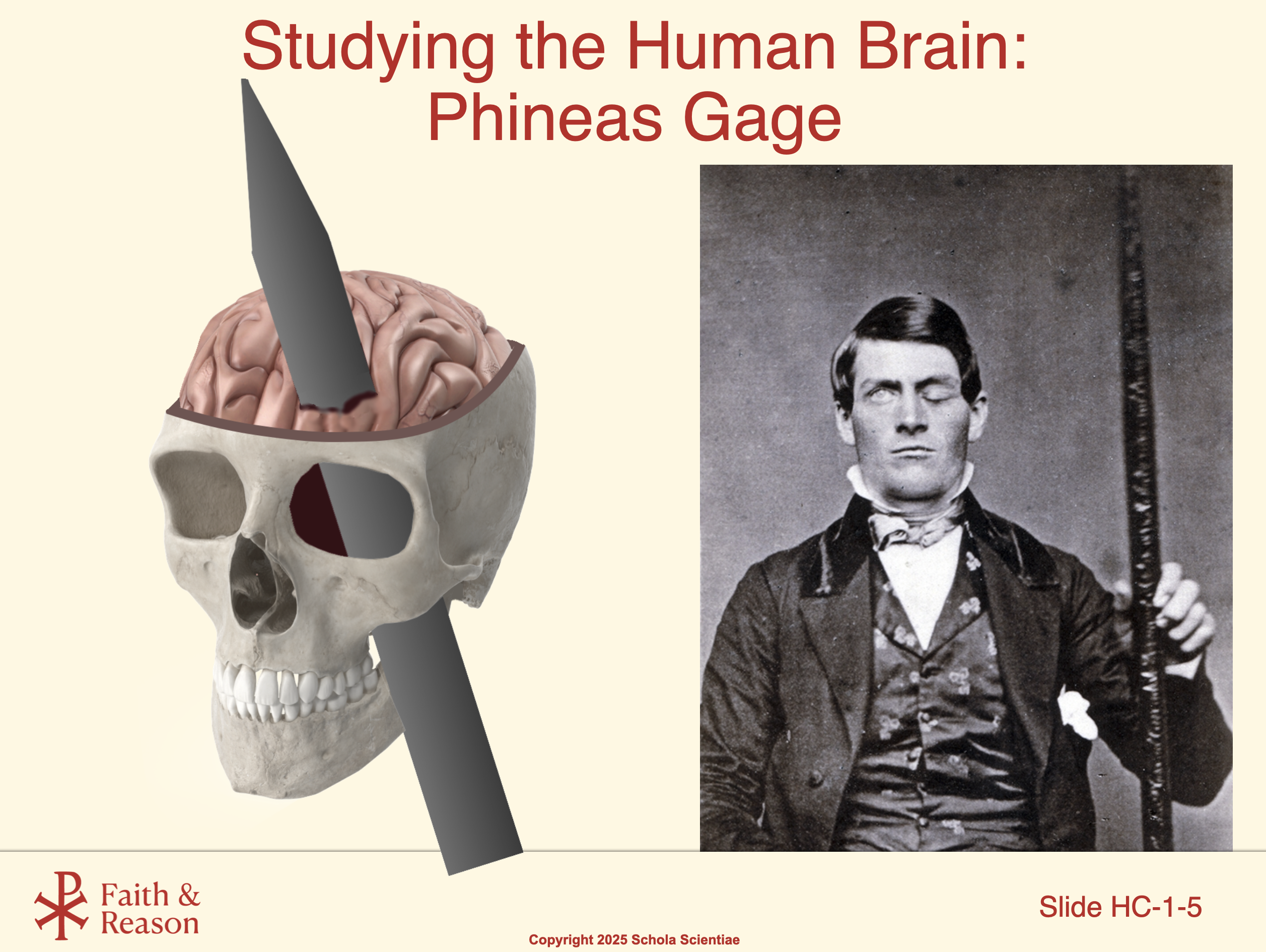
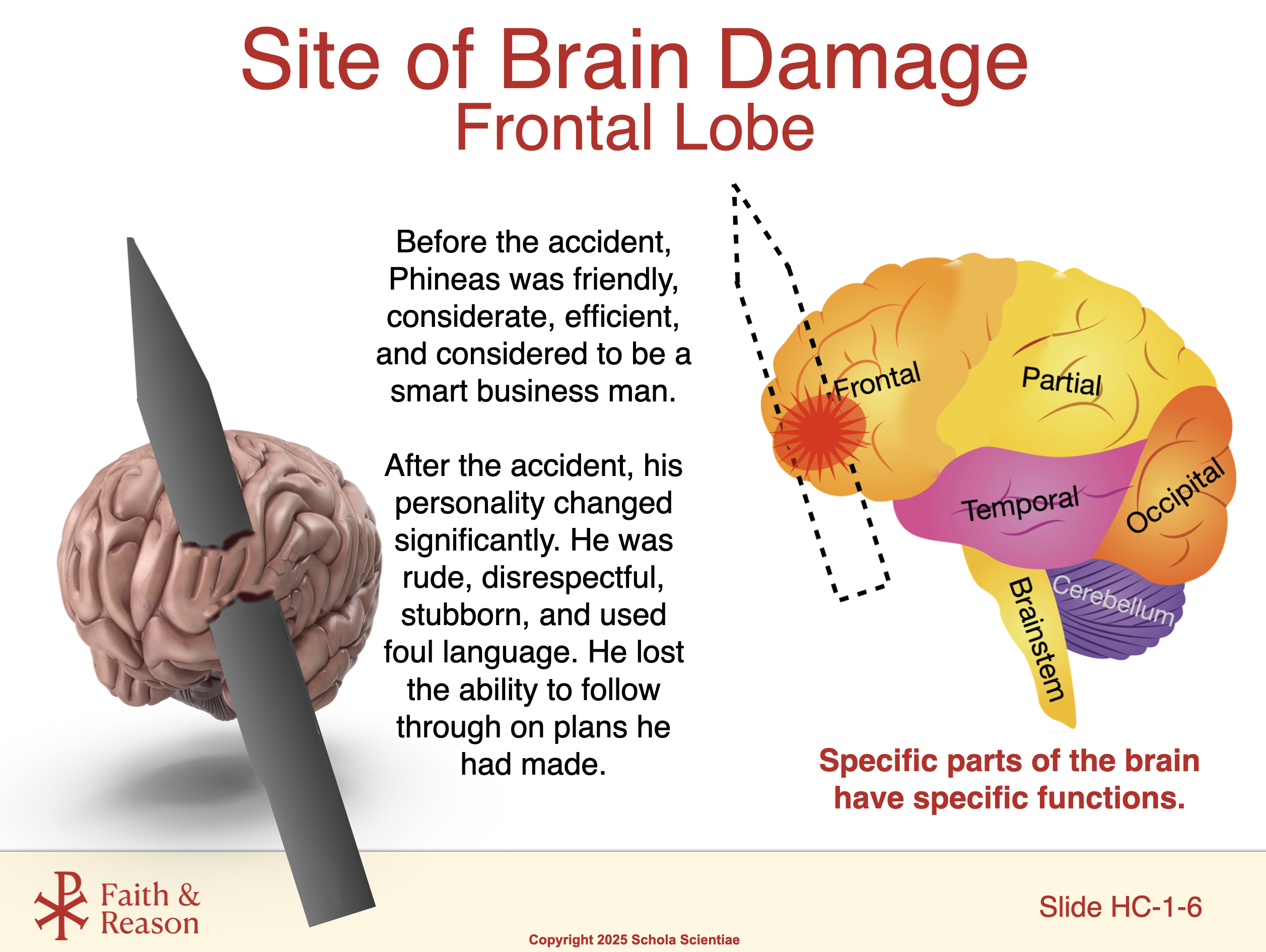
2. What did the case of Phineas Gage reveal about the role of the frontal lobes?
The case of Phineas Gage demonstrated that damage to the frontal lobes can dramatically alter personality, judgment, and social behavior without eliminating basic intelligence or memory. After his injury, Gage retained many physical and cognitive abilities but showed profound changes in self-control and decision-making. This provided early evidence that the frontal lobes play a critical role in executive functions such as planning, impulse control, and moral reasoning.
Discussion angles students may raise:
“He was the same person, but also different.”
“Personality can change if the brain is damaged.”
“The frontal lobe affects choices and behavior.”
“You can be smart but still make bad decisions.”
Teacher move:
Highlight the concept of executive function and explain that higher-order thinking depends heavily on frontal lobe integrity.
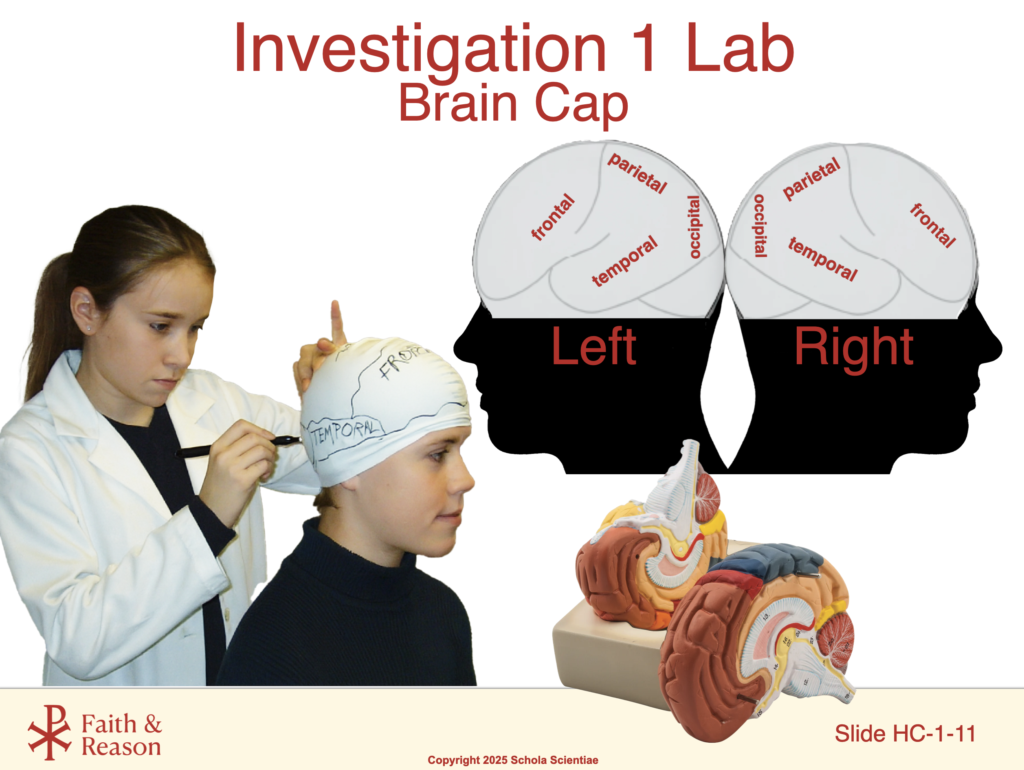
3. Why is it important to divide the brain into regions such as the frontal, parietal, temporal, and occipital lobes?
Dividing the brain into regions helps scientists and doctors describe, study, and diagnose brain function more precisely. Each lobe is associated with dominant functions—such as vision, sensation, language, or planning—allowing clearer interpretation of injuries, diseases, and imaging data. This organizational framework makes the complex brain easier to understand and communicate about scientifically.
Discussion angles students may raise:
“It’s like a map.”
“Doctors need names for parts.”
“Different jobs need different areas.”
“It helps explain symptoms.”
Teacher move:
Use this question to stress the value of models and classifications in science as tools for understanding complexity.
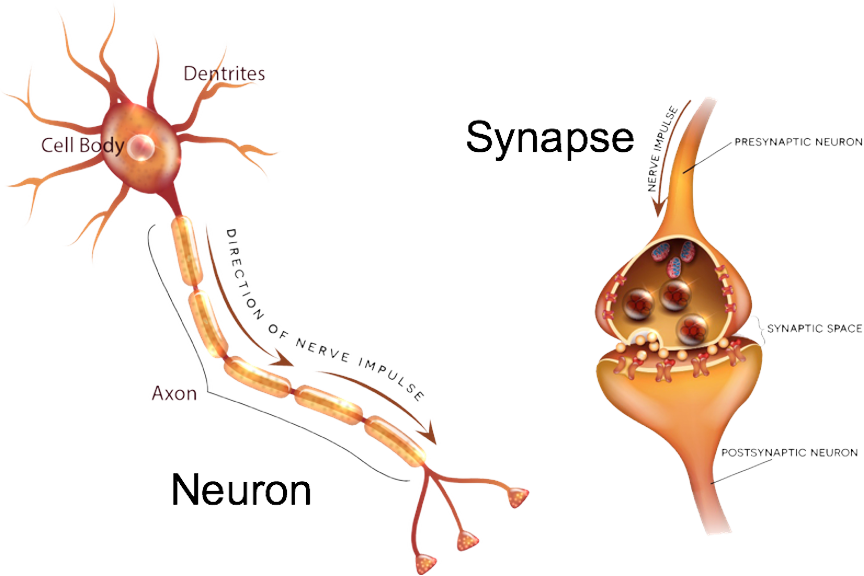
4. How do neurons communicate information within the brain?
Neurons communicate using electrical signals within the cell and chemical signals between cells. An electrical impulse travels down a neuron’s axon, triggering the release of neurotransmitters at the synapse. These chemicals cross the synaptic gap and bind to receptors on the next neuron, continuing the signal. This process allows information to move rapidly and precisely through neural networks.
Discussion angles students may raise:
“Electricity and chemicals both matter.”
“Messages jump between cells.”
“Signals can speed up or slow down.”
“Interruptions cause problems.”
Teacher move:
Clarify the phrase “electrical within, chemical between” and connect communication breakdowns to brain disorders or injuries.
Preparing for Success:
Before beginning this Investigation, students should carefully review the Background Reading and Concept Slides provided below. These materials introduce the foundational ideas students will need in order to understand how the human brain is organized and why different regions perform different functions.
Students should be encouraged to read thoughtfully, examine diagrams closely, and focus on understanding how the structure of the brain relates to what the brain does.
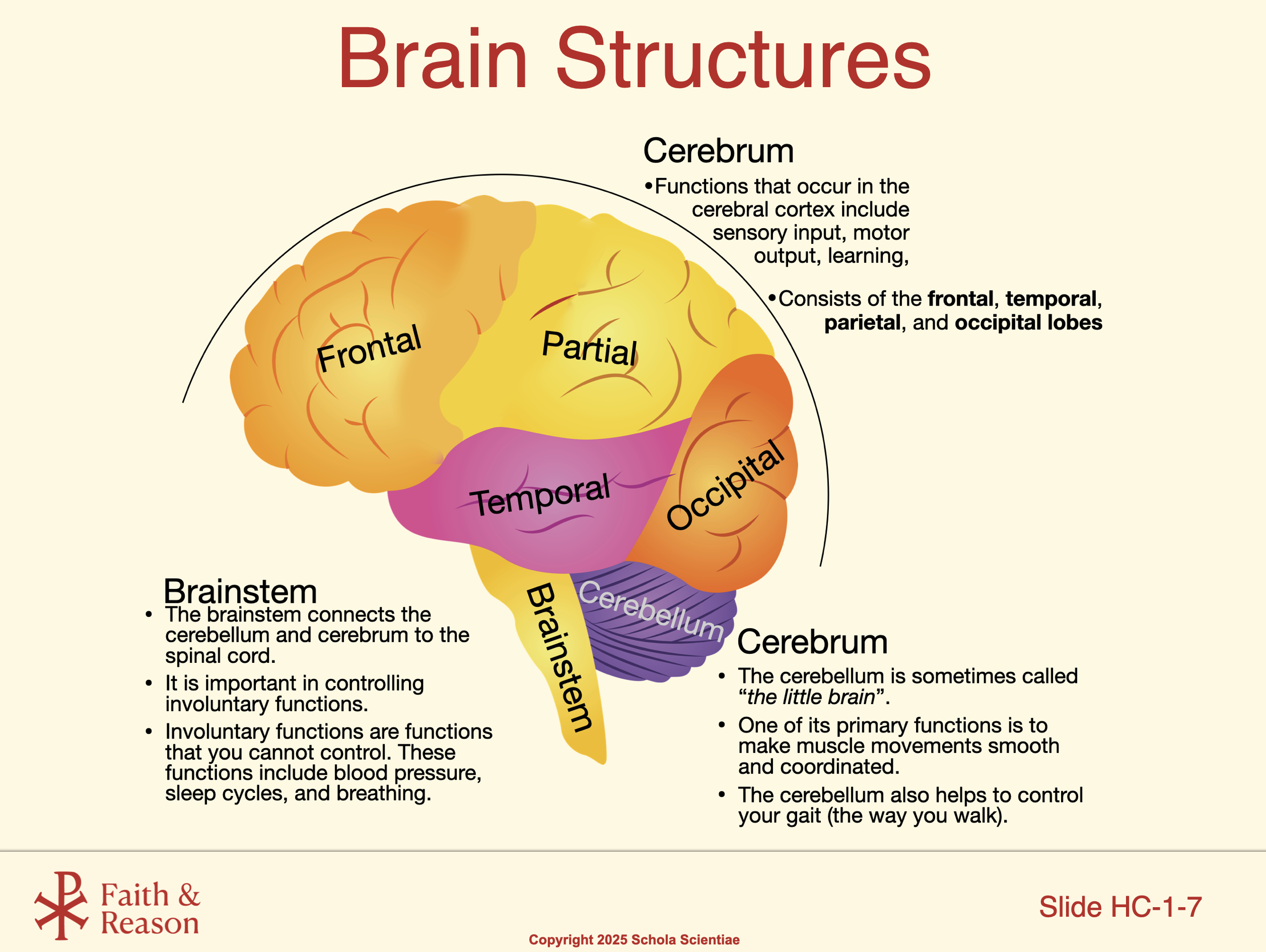
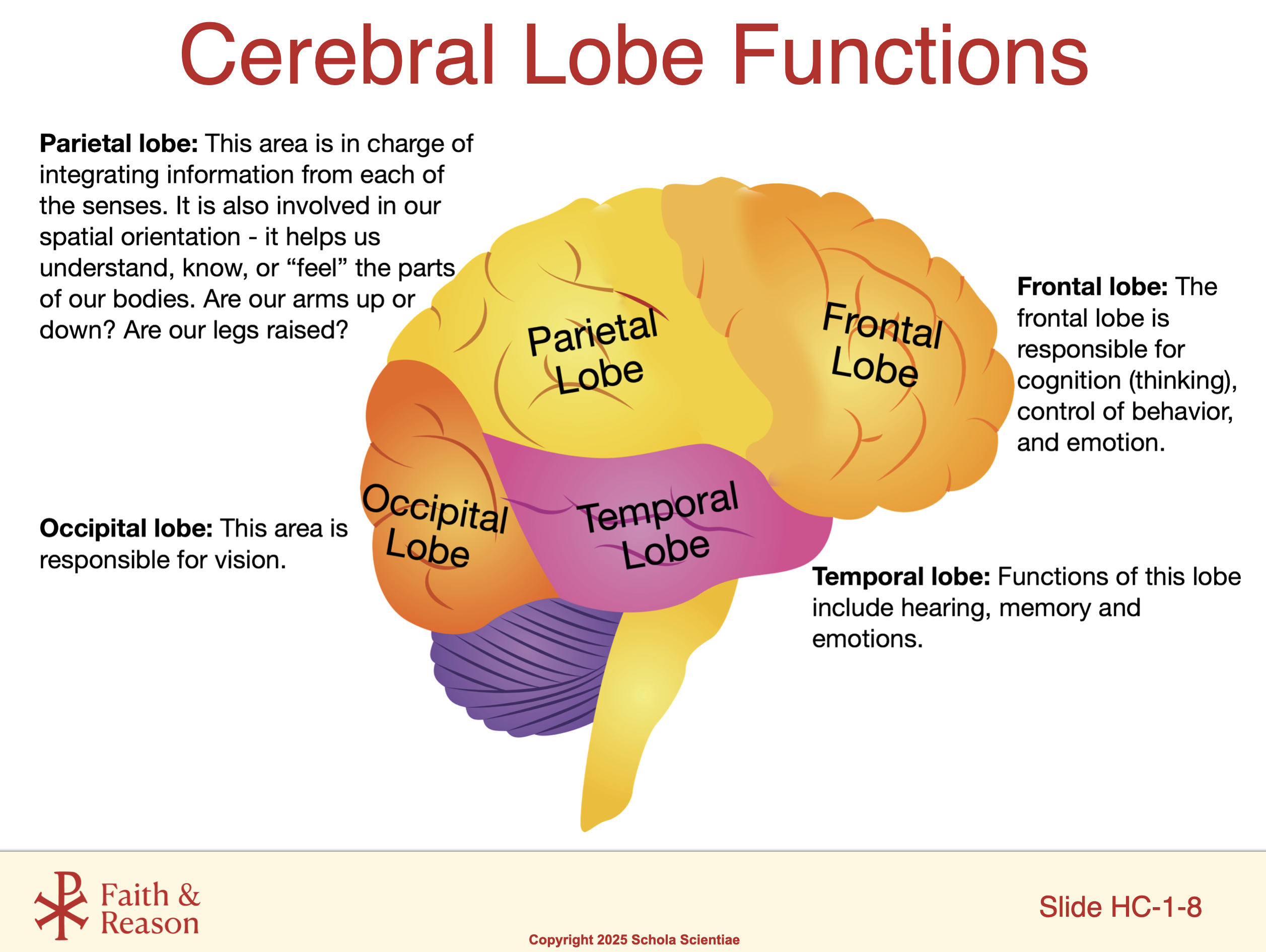
1. The Human Brain Is Organized Into Specialized Regions
Key Idea:
- The human brain is not a single uniform structure. Different regions are responsible for different functions, including movement, sensation, language, emotion, and decision-making.
Background Reading (Readings open in a new window):
Relevant Concept Slides (Click to enlarge):
Why this matters:
Understanding brain organization helps students recognize that different abilities depend on different parts of the brain. This idea explains why injuries or changes to specific brain regions can affect certain functions while leaving others unchanged.
2. Structure and Function Are Closely Related in the Brain
Key Idea:
The physical structure of a brain region is closely related to the function it performs. The way brain tissue is organized helps determine how information is received, processed, and acted upon.
Background Reading (Readings open in a new window):
Relevant Concept Slides (Click to enlarge):
Why this matters:
Recognizing the relationship between structure and function allows students to move beyond memorization and begin thinking scientifically about why the brain works the way it does.
3. The Brain Works as an Integrated System
Key Idea:
Although different regions of the brain have specialized roles, the brain functions as an integrated system. Most behaviors and abilities depend on multiple regions working together.
Background Reading (Readings open in a new window):
Relevant Concept Slides (Click to enlarge):
Why this matters:
This idea helps students understand that complex behaviors are rarely controlled by a single brain region. Instead, coordination among regions is essential for normal brain function.
4. Vocabulary Helps Describe Brain Organization Accurately
Key Idea:
Scientific vocabulary provides a shared language for describing brain structures and their functions clearly and precisely.
Background Reading (Readings open in a new window):
Relevant Concept Slides (Click to enlarge):
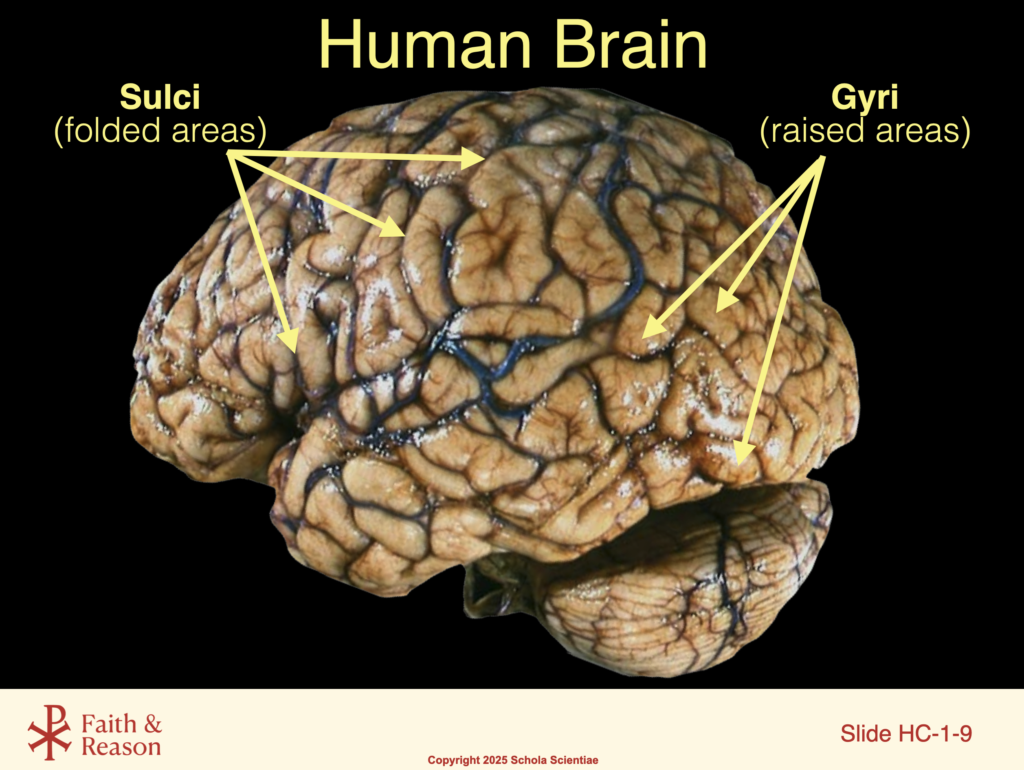
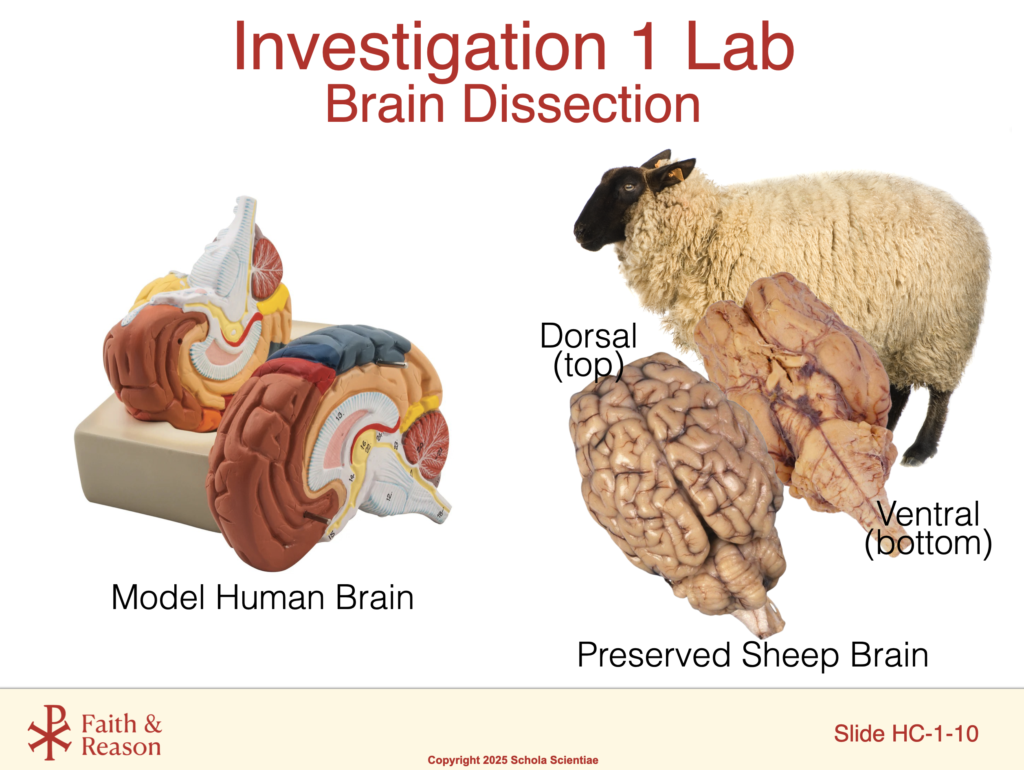
Why this matters:
Using accurate vocabulary supports clear communication and prepares students to discuss brain structure and function thoughtfully during class activities and future Investigations.
Investigation Vocabulary:
Brain
Definition:
The organ in the head that controls thoughts, movements, senses, emotions, and many body functions.
Teacher Notes — Why this matters:
Students need a clear, concrete understanding of what the brain does before exploring how it processes information or supports higher thinking.
Classroom Example — What this looks like:
Teacher asks: “What are some things your brain helps you do every day without you thinking about it?”
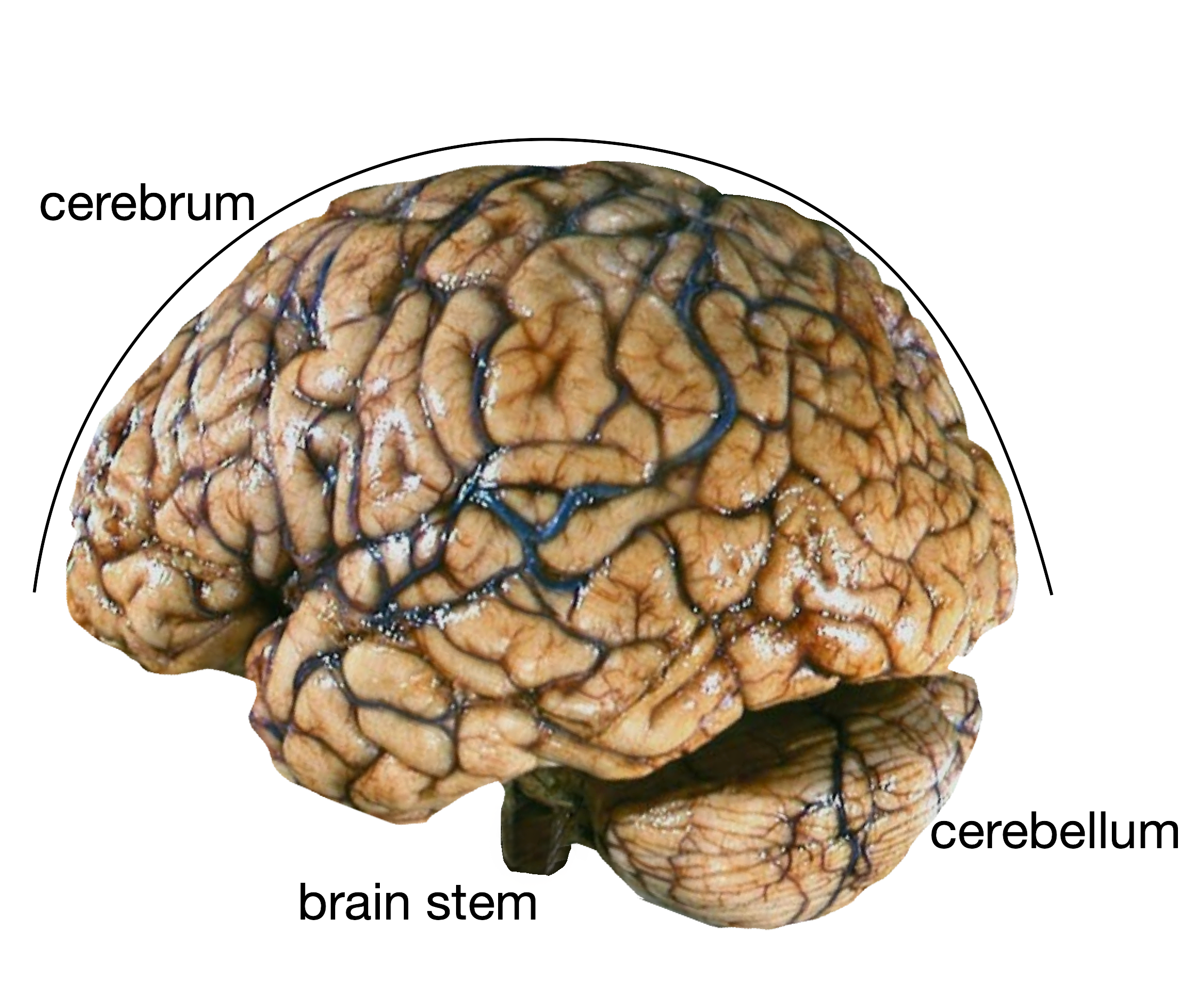
Brain Stem
Definition:
The part of the brain that connects the brain to the spinal cord and controls basic life functions such as breathing and heartbeat.
Teacher Notes — Why this matters:
Understanding the brain stem helps students recognize that some brain functions are automatic and essential for survival.
Classroom Example — What this looks like:
Teacher asks: “Do you have to think about breathing? Which part of the brain makes sure it happens anyway?”
Cerebellum (seh-ruh-BELL-um)
Definition:
The final stage of cell division in which the cytoplasm separates, forming two complete cells.
Teacher Notes — Why this matters:
Students will physically model this step using the Lab materials.
Classroom Example:
Teacher uses string to demonstrate the “pinching in” of animal cell cytokinesis.
Cerebrum (suh-REE-brum)
Definition:
The largest part of the brain, responsible for thinking, memory, movement, and interpreting sensory information.
Teacher Notes — Why this matters:
Many higher brain functions discussed later in the unit depend on the cerebrum. Students should recognize it as the center of conscious thought.
Classroom Example — What this looks like:
Teacher points to a brain diagram and asks: “Which part do you think you use most when solving a math problem?”
Frontal Lobe
Definition:
The front part of the cerebrum involved in movement, speech, decision-making, and problem-solving.
Teacher Notes — Why this matters:
This prepares students for later discussions about judgment and self-control without introducing executive functions yet.
Classroom Example — What this looks like:
Teacher asks: “Which part of the brain helps you decide what to say before you say it?”
Function
Definition:
The job or role that something performs.
Teacher Notes — Why this matters:
Pairing structure with function reinforces scientific thinking and prepares students for later analysis.
Classroom Example — What this looks like:
Teacher asks: “What is the function of the cerebellum?”
Nervous System
Definition:
The developing human from about week 9 until birth, when major organs have begun forming.
Teacher Notes — Why this matters:
Students must distinguish embryo vs fetus to interpret the weekly fetal mass and length table.
Classroom Example:
Teacher displays Week 14 vs Week 21 models and asks: “What growth patterns do you notice?”
Karyotype (CARE-ee-oh-type)
Definition:
An organized image of all the chromosomes in a cell, arranged in pairs.
Teacher Notes — Why this matters:
Understanding the normal set of 23 pairs sets up later lessons on meiosis and inheritance.
Classroom Example:
Teacher shows two karyotypes and asks: “Which one is male and how do you know?”
Mitosis (my-TOE-sis)
Definition:
The process in which a single cell divides to form two genetically identical cells.
Teacher Notes — Why this matters:
Growth, tissue repair, and cell replacement all depend on mitosis. Students must understand how chromosomes copy and separate accurately.
Classroom Example:
During a review, teacher asks: “Show me—what happens in metaphase?” Students point to chromosomes lining up in the center.
Nucleus (NOO-klee-us)
Definition:
The membrane-bound structure in the cell that houses the chromosomes.
Teacher Notes — Why this matters:
Students often forget that mitosis is division of the nucleus, not the entire cell.
Classroom Example:
Teacher taps a diagram: “Where is mitosis actually happening?” Students point to the nucleus.