Teacher Portal
Investigation 1: Faith in Depth
NOTE TO RELIGION TEACHER: This page consists of more in-depth theological connections for this Investigation. In it, you will find additional Scriptural Connections, Catechism Connections, Theology of Body References, and Catholic Virtues related to this scientific Investigation.
Investigation 1: Unity of Body, Mind, and Soul
This section highlights connections between Investigation 1 science concepts and several theological references. At the bottom of the page, there is a section that briefly describes the key documents used to make these connections – there are undoubtedly many more.
Each section below begins with Scientific Content and Concepts to update the religion teacher on the content contained in their students’ related science lessons. The teacher is also encouraged to read through the relevant sections of the Teacher Portal for a complete view of what students learn and experience in the lab. This will make it easier to relate and discuss the scientific/theological complementarity of each Investigation.
Scientific Content and Concepts
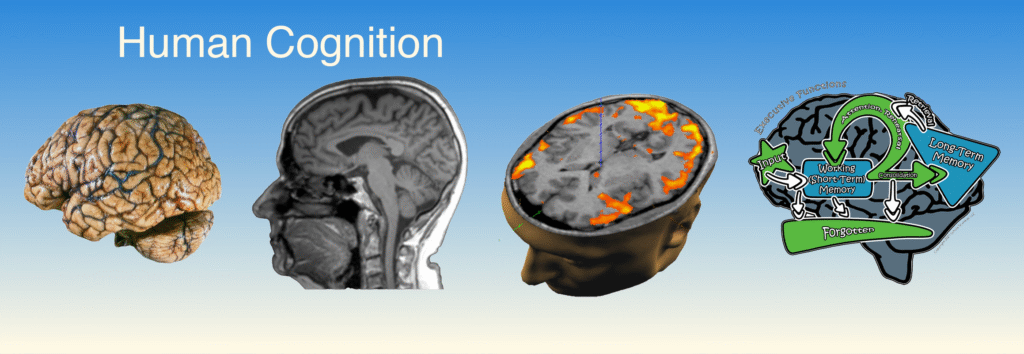
In this first Investigation of Human Cognition, students begin by exploring the basic anatomy of the human brain and its relationship to function. Using both preserved sheep brains and human brain models, students learn to identify the major regions of the brain — cerebrum, cerebellum, and brainstem — and understand their key roles in cognition, coordination, and survival.
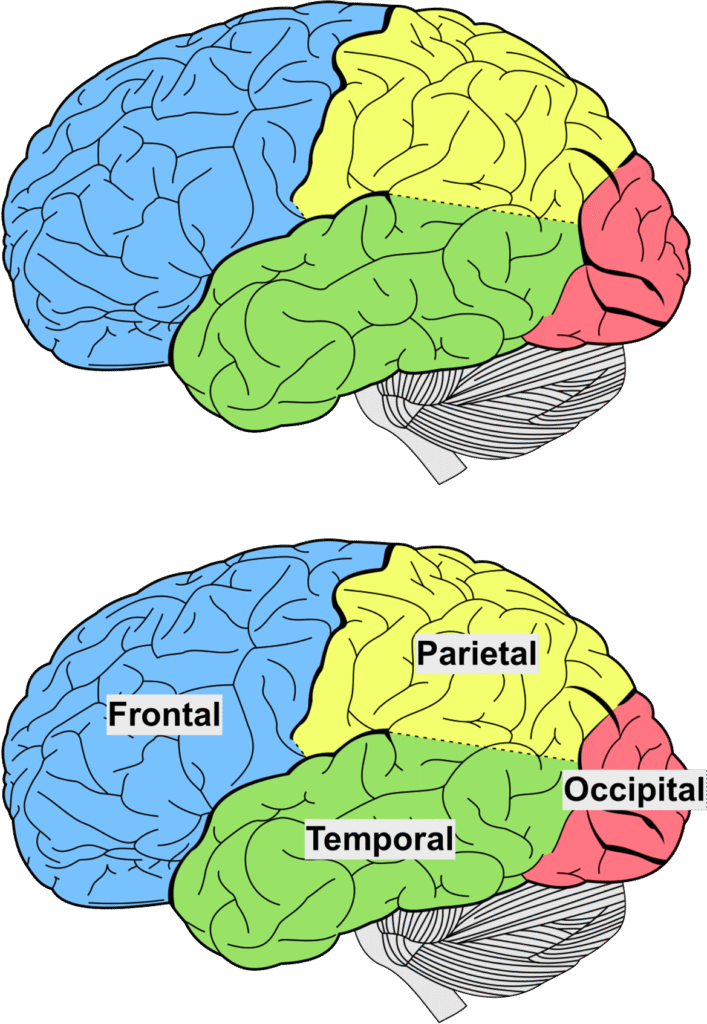
Students also engage in a brain cap modeling activity, mapping the four lobes of the cerebrum (frontal, parietal, temporal, and occipital) onto a wearable swim cap to visualize the brain’s external organization. This exercise helps them connect structure to function and reinforces the concept of localization of brain activity (e.g., vision in the occipital lobe, motor control in the frontal lobe).
Together, the dissection and modeling experiences highlight the remarkable complexity of the brain as the physical foundation of thought, memory, movement, and personality. These activities provide the scientific context for theological reflection on the unity of body and soul, the dignity of the human person, and the image of God revealed through human intellect and will.
Scriptural Connections
Genesis 2:7 – “Then the LORD God formed man of dust from the ground, and breathed into his nostrils the breath of life; and man became a living being.”
Reminds us that the brain is part of the physical body, yet animated by the soul through God’s breath of life.
Psalm 139:14 – “I praise you, for I am fearfully and wonderfully made.”
Celebrates the complexity of the brain’s structure and function as part of God’s marvelous design.
Romans 12:2 – “Do not be conformed to this world, but be transformed by the renewal of your mind.”
Connects cognition to moral formation and spiritual renewal, showing the mind’s role in directing the person toward truth.
Wisdom 9:10 – “Send her forth from the holy heavens, and from the throne of your glory send her, that she may labor at my side, and that I may know what is pleasing to you.”
Recognizes wisdom as a divine gift guiding human intellect beyond biology.
Matthew 22:37 – “You shall love the Lord your God with all your heart, and with all your soul, and with all your mind.”
Affirms the integration of the mind in the fullness of human love for God.
Catechism Connections
CCC 362 – “The human person, created in the image of God, is a being at once corporeal and spiritual.”
The brain is part of the body, but the mind also reflects the soul’s presence.
CCC 1730 – “God created man a rational being, conferring on him the dignity of a person who can initiate and control his own actions.”
The rational capacity of the brain reveals our dignity and freedom.
CCC 1731 – “Freedom is the power, rooted in reason and will… to perform deliberate actions on one’s own responsibility.”
Cognition is the biological foundation of moral choice and responsibility.
CCC 1954 – “Man participates in the wisdom and goodness of the Creator who gives him mastery of his acts and the ability to govern himself with a view to the true and the good.”
Highlights that thinking and reasoning are not only biological but also moral and spiritual.
CCC 1703 – “Endowed with ‘a spiritual and immortal’ soul, the human person is ‘the only creature on earth that God has willed for its own sake.’”
Cognition is evidence of the unique status of humans in creation.
Theology of Body References
TOB 19:4 (Jan. 16, 1980) – “The body, and it alone, is capable of making visible what is invisible: the spiritual and the divine.”
The brain makes visible human thought and intellect, pointing to the invisible reality of the soul.
TOB 4:2 (Sept. 19, 1979) – “Man cannot live without love. He remains a being that is incomprehensible for himself, his life is senseless, if love is not revealed to him.”
The intellect alone is not enough; the human mind finds meaning only in love, which integrates cognition with the soul’s vocation.
TOB 59:3 (May 27, 1981) – “Man is called to a fullness of life which far exceeds the dimensions of his earthly existence.”
Cognition is a foretaste of a greater destiny; the mind points beyond earthly biology to eternal truth.
TOB 23:3 (Apr. 2, 1980) – “The person manifests himself through the body.”
The brain is not just a mechanism; it is the bodily instrument through which the person reveals rationality, emotion, and freedom.
TOB 14:4 (Nov. 14, 1979) – “The human body includes right from the beginning…the capacity of expressing love.”
The mind and brain, as part of the body, enable communication and relationship — central to personhood and vocation.
Catholic Virtues
Wisdom – Recognizing that cognition is both a scientific reality and a spiritual gift from God.
Prudence – Using rational thought to make good choices that lead toward truth and goodness.
Justice – Respecting the dignity of every person’s mind, regardless of ability or difference.
Fortitude – Applying the mind to seek truth even when it is difficult or unpopular.
Temperance – Balancing instinctive reactions (reflexes, emotions) with thoughtful decision-making.
Humility – Acknowledging that while the brain is powerful, the soul completes the person’s identity.
Wonder and Awe (Fear of the Lord) – Marveling at the complexity of the brain as a reflection of God’s wisdom.
Charity (Love) – Using our mind and reason to better serve others and deepen communion.
Hope – Understanding that the mind points us toward truth, and truth ultimately points us toward God.
Gratitude – Giving thanks for the gift of intellect, memory, and learning that reflect God’s image.
Integration into the Classroom
Reflection Prompt:
“How does learning about the structure and function of the human brain deepen your understanding of the human person as both body and soul?”
Ethical Discussion:
Consider modern debates on neuroscience and identity — for example, the effects of brain injury, dementia, or cognitive disorders. How do scientific insights into brain function raise questions about personal dignity, free will, and moral responsibility? Explore how Catholic teaching affirms that even when cognitive ability is diminished, the person’s dignity and worth remain unchanged.
Theological Question:
“If the brain enables thought, memory, and decision-making, how does this reflect the image of God in us, and how does it point beyond biology to the presence of the soul?”
This approach provides a holistic framework for connecting the science of brain anatomy and function with theological reflection, helping students see the unity of faith and reason in understanding the human person.
Scriptural Connections
Incorporating biblical references into the study of LabLearner science enriches the educational experience by connecting scientific exploration with spiritual reflection. By integrating scripture, students gain a deeper appreciation for the harmony between God’s creation and scientific discovery. For instance, verses such as “For You created my inmost being; You knit me together in my mother’s womb” (Psalm 139:13-14, New International Version) emphasize the sacredness and complexity of human life, aligning seamlessly with the study of prenatal development. The use of the New International Version (NIV) ensures a modern, accessible translation while maintaining theological depth. These references not only illuminate scientific concepts but also foster critical thinking about the moral and spiritual dimensions of science, encouraging students to approach their studies with both curiosity and reverence.
Catechism Connections
Incorporating references from the Catechism of the Catholic Church (CCC) into the study of LabLearner science helps students see the profound connections between faith and reason. The Catechism provides a theological framework that underscores the sanctity of life, the dignity of the human person, and the moral responsibility to care for creation. For example, CCC 2270 states, “Human life must be respected and protected absolutely from the moment of conception.” This teaching beautifully complements scientific lessons on prenatal development by emphasizing the sacredness of life at its earliest stages. By integrating these Catechism insights, students are encouraged to view scientific knowledge not in isolation but as a means to deepen their understanding of God’s creation and their moral responsibilities within it. This approach fosters a holistic view of education, where faith and science are partners in truth.
Theology of the Body Reference
Incorporating references from Pope John Paul II’s Theology of the Body (TOB) into the study of LabLearner science offers a profound way to connect biological processes with the spiritual and theological dimensions of human existence. TOB emphasizes the unity of body and soul, the sacredness of the human body, and the vocation of self-giving love. For example, TOB 19:4 states, “The body, and it alone, is capable of making visible what is invisible: the spiritual and the divine.” This insight beautifully aligns with the study of prenatal development, where the visible growth of the human body reflects the invisible dignity and purpose bestowed by God. By integrating TOB, students can explore how the scientific marvels of human development mirror the divine plan for creation, fostering an appreciation for the sacredness of life and the call to live as persons in communion. This approach bridges science and theology, cultivating a deeper understanding of the human person as a masterpiece of both physical and spiritual dimensions.
Virtue Education
Incorporating virtues into Christian education, particularly in the study of prenatal development, is essential to fostering a holistic understanding of human dignity and moral responsibility. Virtues such as patience, gratitude, and reverence for life align deeply with the Christian worldview, encouraging students to see human development as a miraculous and intentional act of God. These virtues serve as a bridge between knowledge and action, inspiring students to appreciate the complexity and sanctity of prenatal life and live in a way that honors the Creator. By cultivating virtues alongside scientific inquiry, Christian education equips students with the moral framework necessary to approach ethical issues with compassion and wisdom, fostering a profound respect for life at all stages.