
Teacher Portal
Investigation 2: Reflection and Meaning
NAVIGATE
Once the slide presentation is launched
- use your left and right arrows to advance or go back in the slide presentation, and
- hover your mouse over the left edge of the presentation to get a view of the thumbnails for all the slides so that you can quickly move anywhere in the presentation.
Click on any image below to expand
Human Cognition – Simple Information Processing
Purpose
This title slide signals the beginning of the Reflection & Meaning section. Students have completed the science investigation and are now ready to consider what those scientific discoveries reveal about themselves, their relationships, and the choices they make. Reflection & Meaning does not replace science—it builds upon it.
Key Idea
Scientific knowledge is valuable not only because it explains how the world works, but also because it helps us better understand ourselves and live more thoughtfully.
Leading the Conversation
Allow students a moment to settle before beginning the discussion. Explain that today’s lesson is different from the previous science activities. Rather than learning new scientific concepts, students will use what they have already learned to think more deeply about themselves and the world around them.
You might begin by saying:
“Scientists work hard to discover how the natural world works. Once those discoveries are made, another question naturally follows: What do those discoveries teach us about ourselves? Today we begin exploring that question.”
Encourage students to participate freely, support their ideas with evidence from the investigation, and respectfully consider the ideas of their classmates.
Connections
Science Investigation
Today’s discussion builds directly upon the Concepts, Background Reading, PreLab, Lab, and PostLab activities. Students should continually connect their ideas to what they discovered during the investigation.
Human Cognition
Throughout Human Cognition, students will discover that understanding how the brain works helps us better understand perception, learning, memory, decision making, and what it means to be human.
Reflection & Meaning
Reflection & Meaning asks students to move beyond simply knowing scientific facts. It invites them to consider why those facts matter and how they can influence the way we think, act, and live.
Teaching Tips
Avoid beginning with a lecture. Instead, establish that today’s discussion belongs to the students as much as to the teacher.
Resist answering questions too quickly. Give students time to think, explain, and build upon one another’s ideas.
Whenever possible, ask students to support their answers by referring back to the science they learned during the investigation. This reinforces the idea that thoughtful reflection grows from careful observation, evidence, and reason.
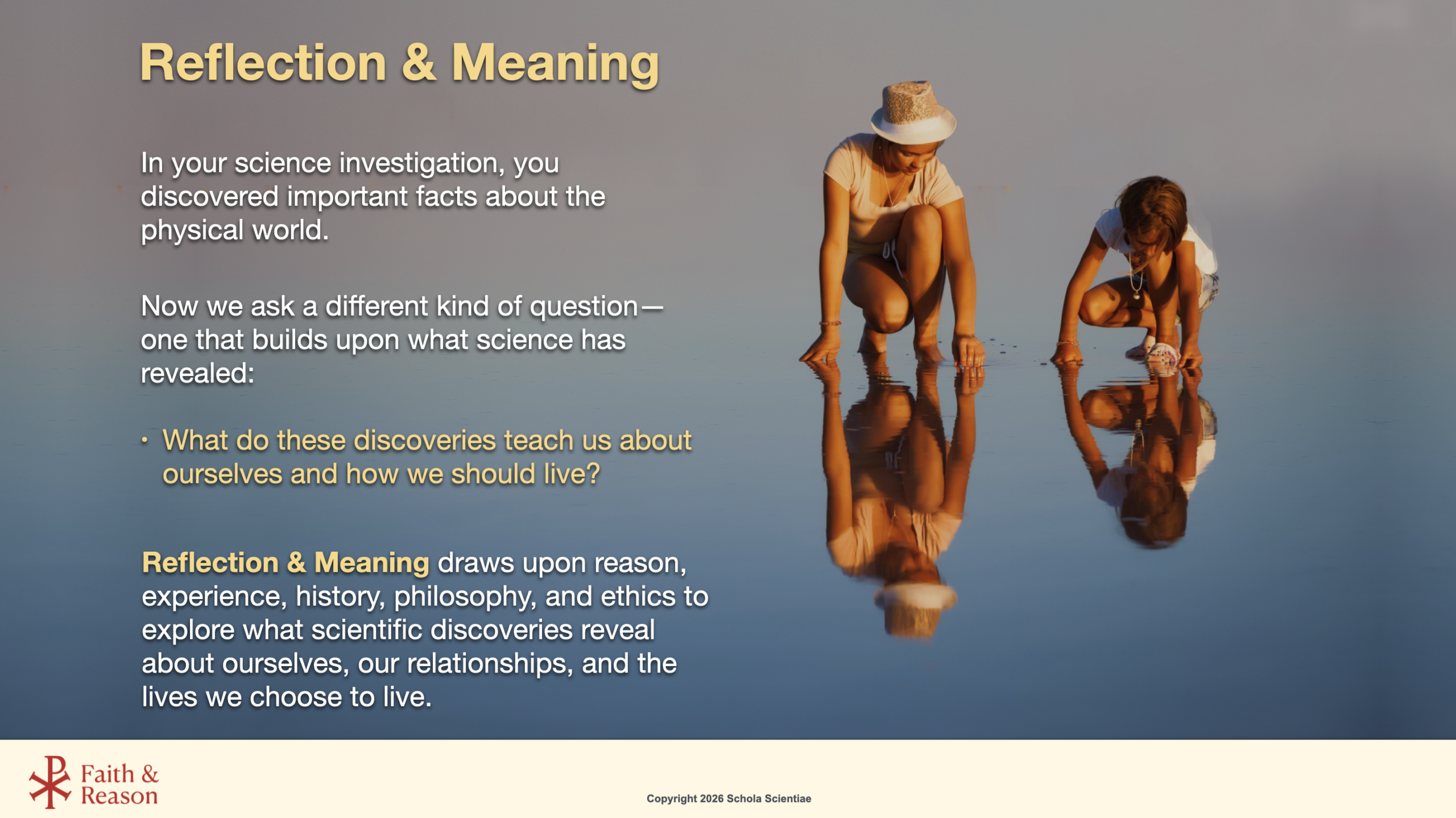
Reflection & Meaning
Purpose
This slide introduces the Reflection & Meaning experience. Students transition from discovering how the nervous system processes information to considering why that knowledge matters. The goal is to help students recognize that scientific understanding can influence the way we think, make decisions, and live our lives.
Key Idea
Science provides reliable knowledge about the natural world. Reflection & Meaning builds upon that knowledge by asking students to consider its significance through reason, experience, and thoughtful discussion.
Leading the Conversation
Explain that Reflection & Meaning is a natural continuation of the scientific investigation—not a departure from it.
You might begin by asking:
“Have you ever learned something in science that changed the way you behaved?”
Allow students to offer examples before connecting the discussion to today’s investigation.
Then explain that scientists often make discoveries that eventually change medicine, technology, education, or even the way people understand themselves. Today’s discussion asks whether understanding how the brain receives and processes information might also change how we think and act.
Encourage students to share ideas respectfully and support their thinking by referring back to what they learned during the investigation.
Connections
Science Investigation
Today’s discussion is grounded in the scientific evidence students collected during the Concepts, Background Reading, PreLab, Lab, and PostLab activities.
Everyday Life
Every decision we make depends on how our brains receive, process, and respond to information from the world around us.
Human Cognition
Reflection & Meaning will become an important part of every Human Cognition investigation, helping students connect scientific discoveries to their own lives and experiences.
Teaching Tips
Avoid treating Reflection & Meaning as a separate subject or philosophy lesson. Students should recognize that meaningful reflection grows out of accurate scientific understanding.
Allow discussion to develop naturally. Some classes will contribute many ideas immediately, while others may need additional encouragement through open-ended questions and examples from everyday life.
Let’s Review the Science
Purpose
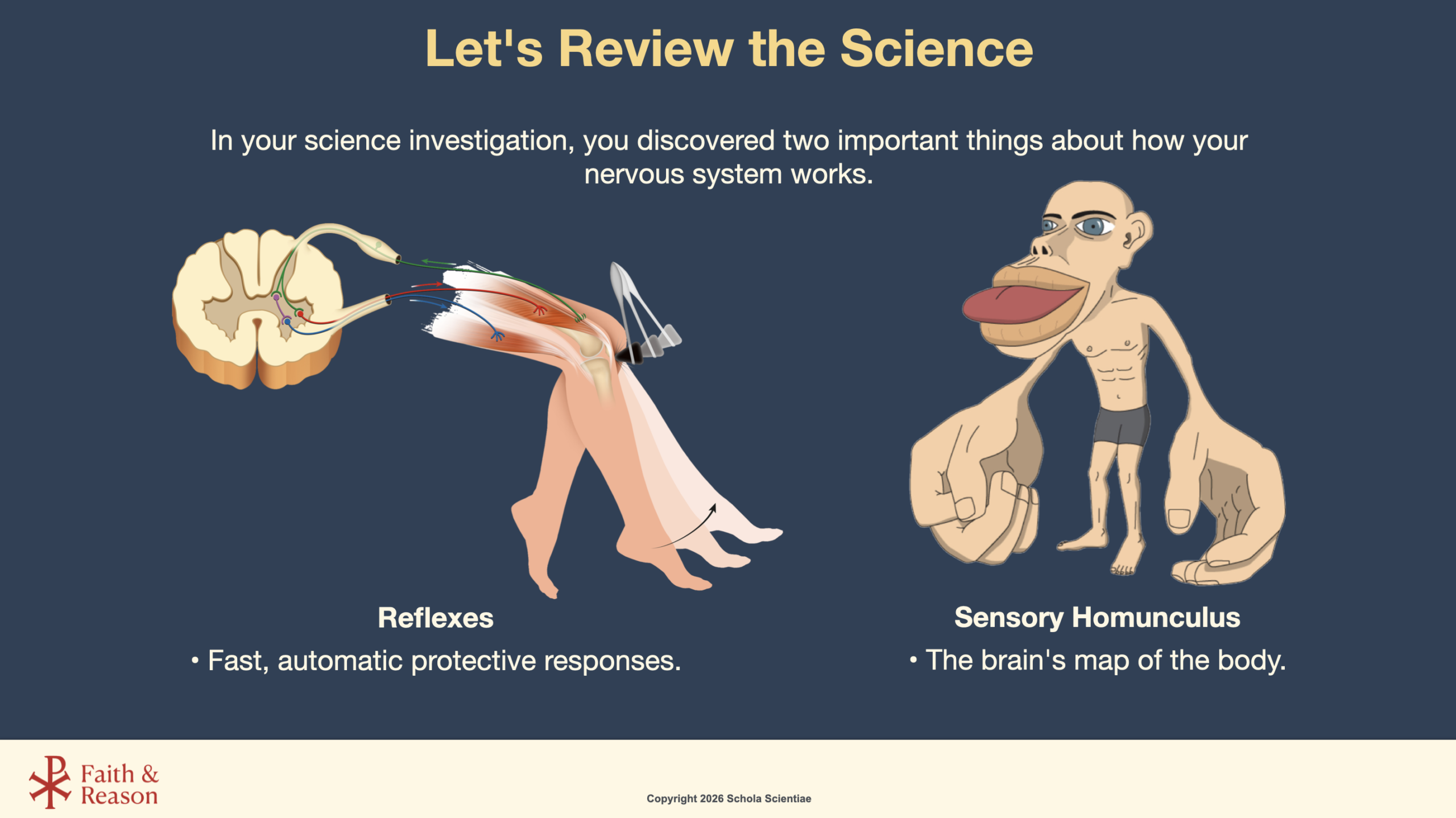
Before exploring broader questions, students briefly revisit the most important scientific discoveries from the investigation. This review ensures that the discussion remains firmly grounded in evidence rather than opinion or memory alone.
Key Idea
The nervous system is constantly receiving information, processing that information, and producing responses. Some responses, such as reflexes, occur automatically, while others involve conscious thought and decision-making. The sensory homunculus demonstrates that the brain gives different amounts of attention to different parts of the body based on their sensory importance.
Leading the Conversation
Invite students to explain the investigation in their own words rather than reteaching the material yourself.
Ask students to describe:
- what a reflex is,
- why reflexes are important,
- what the sensory homunculus revealed,
- why some parts of the body are more sensitive than others.
Encourage students to respond to one another, clarify misconceptions together, and support their explanations with observations from the laboratory investigation.
As students answer, emphasize that these scientific discoveries will become the evidence used throughout today’s Reflection & Meaning discussion.
Connections
Previous Investigation
HC1 introduced the brain as the organ responsible for perception, learning, memory, emotion, and decision-making. HC2 begins explaining how information reaches that remarkable organ.
Everyday Life
Every second of every day, your nervous system filters enormous amounts of sensory information, allowing you to respond efficiently to your surroundings without becoming overwhelmed.
Future Investigations
Later Human Cognition investigations will explore how the brain transforms sensory information into learning, memory, reasoning, self-control, language, and other uniquely human abilities.
Teaching Tips
Keep this review brief. The goal is to reactivate students’ understanding rather than repeat the investigation.
Whenever possible, allow students to provide the explanations. Student-generated summaries are often more memorable than teacher lectures and provide an opportunity to identify and correct misunderstandings before moving into deeper reflection.
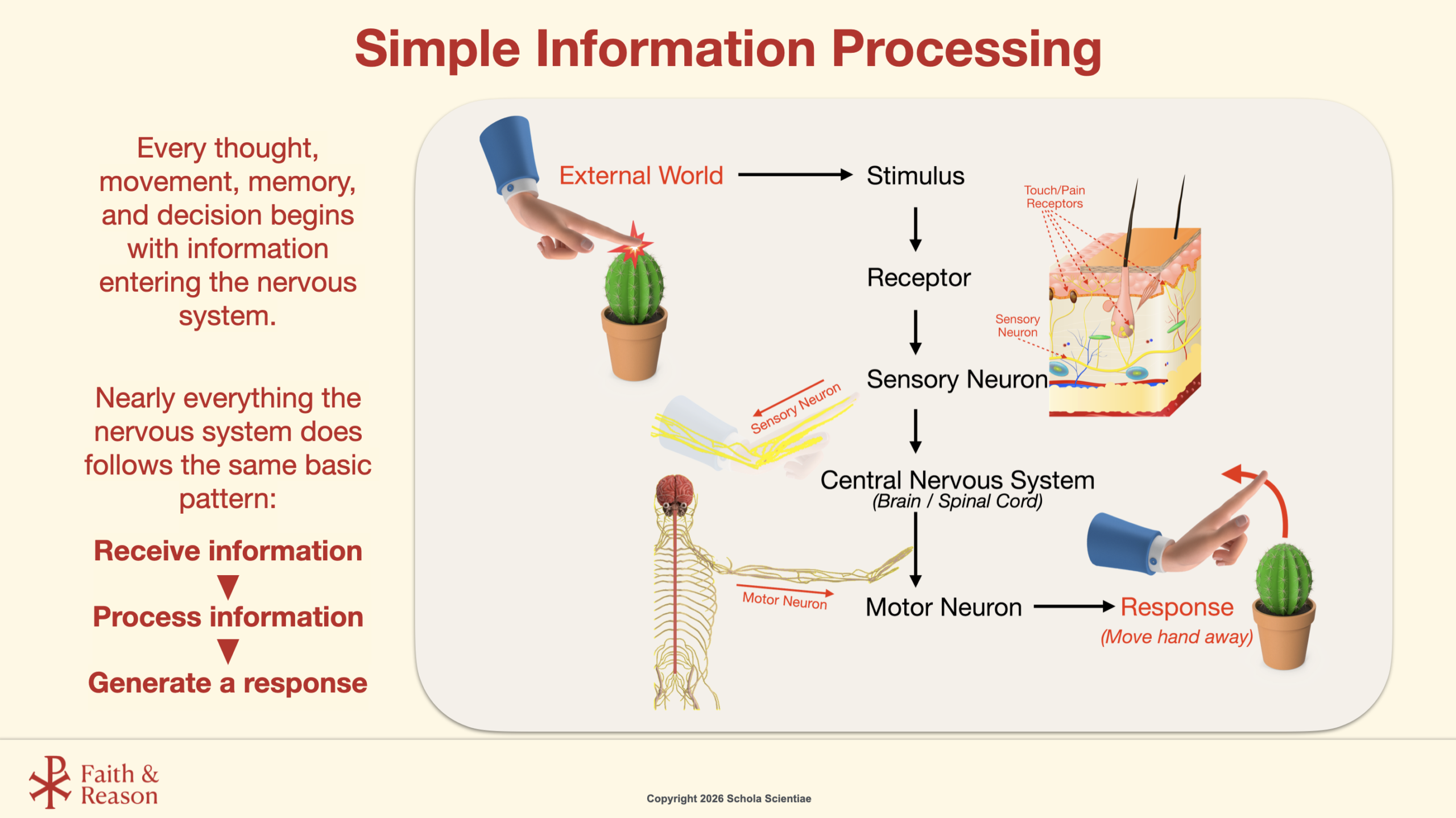
Simple Information Processing
Purpose
Students now move from reviewing the science to considering one of its most important implications: much of what the nervous system does occurs automatically and efficiently, allowing us to function without consciously thinking about every sensation or movement. Recognizing this helps students appreciate both the remarkable capabilities and the limitations of the human nervous system.
Key Idea
The nervous system is designed to process enormous amounts of information quickly and efficiently. Automatic processing allows us to respond rapidly to many situations while conserving conscious thought for more complex decisions.
Leading the Conversation
Invite students to think about activities they perform every day without consciously analyzing every movement.
Ask questions such as:
- How much attention do you give to walking across a room?
- Do you consciously think about every step you take?
- What would happen if your brain had to carefully analyze every sensation before allowing you to move?
Help students recognize that automatic processing is not a weakness—it is an elegant biological solution that allows the brain to function efficiently.
Then transition to the next idea:
“If so much of our nervous system operates automatically, when do we actually need conscious thought?”
That question prepares students for the next slide.
Connections
Everyday Life
Walking, catching a ball, typing, riding a bicycle, and many other familiar activities depend upon rapid information processing that often occurs outside conscious awareness.
Future Investigations
Later investigations will explore how attention, learning, memory, and executive function allow us to move beyond automatic responses when situations require careful thought and self-control.
Teaching Tips
Students sometimes assume “automatic” means “simple.” Emphasize that many automatic nervous system functions involve extraordinarily sophisticated neural processing developed through evolution and learning.
Encourage students to appreciate the efficiency of the nervous system before discussing situations in which automatic responses may need to be overridden by deliberate thinking.
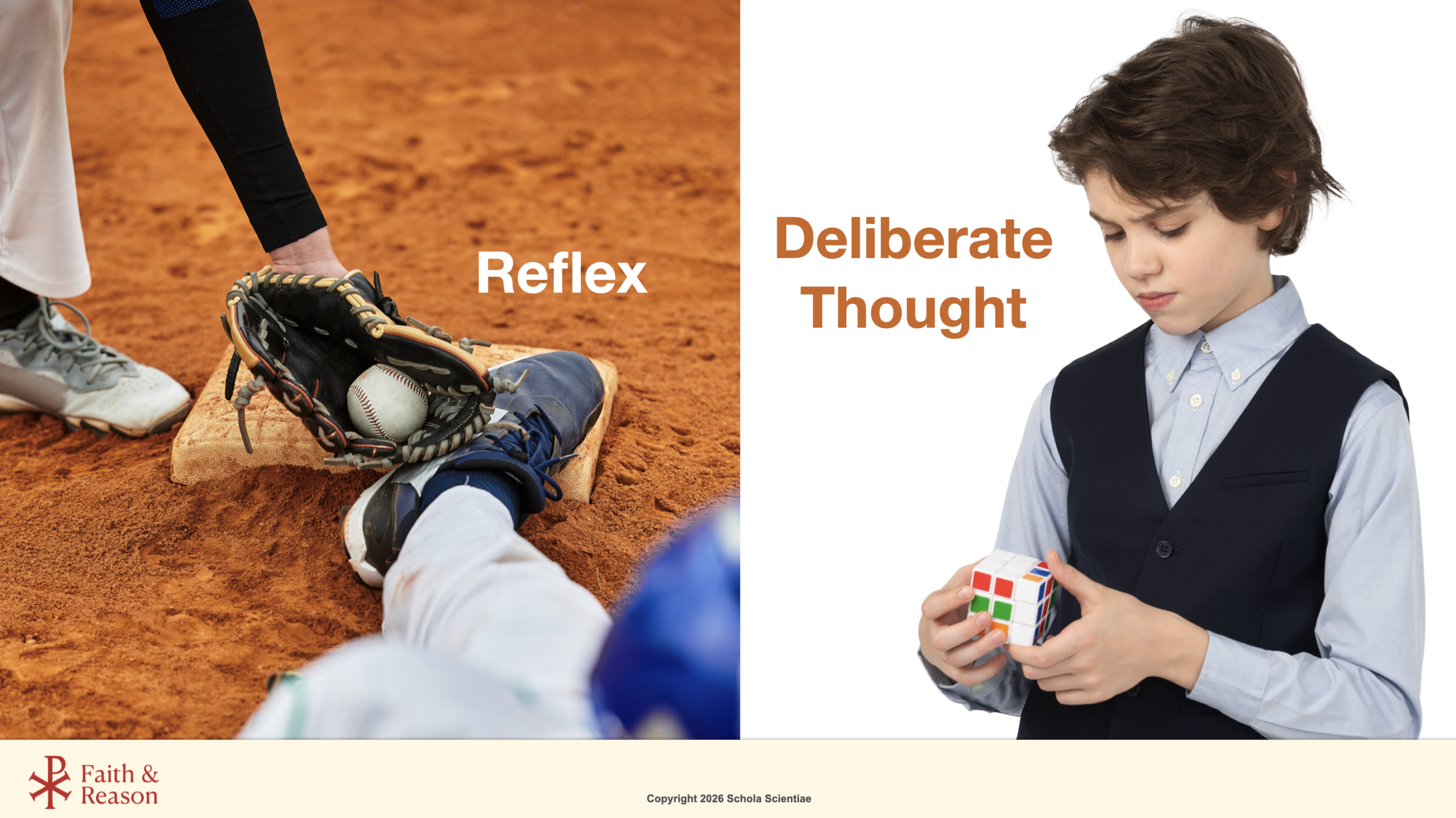
Reflex vs. Deliberate Thought
Purpose
This slide introduces one of the central themes of Human Cognition: although many responses are automatic, humans also possess the ability to pause, think, evaluate alternatives, and intentionally choose how to respond. This distinction provides an important bridge to later investigations of executive function.
Key Idea
Reflexes protect us by producing rapid automatic responses. Deliberate thought allows us to evaluate information, consider consequences, and choose actions that may differ from our first impulse.
Leading the Conversation
Begin by reviewing the reflex demonstration from the laboratory investigation.
Then ask students to compare two situations:
- Touching a hot stove.
- Receiving an insulting text message.
Ask:
“Should both situations be handled with the same kind of response?”
Students will quickly recognize that physical danger often requires immediate action, whereas interpersonal situations usually benefit from careful thought before responding.
Guide students toward recognizing that one of the remarkable abilities of the human brain is deciding when to act immediately and when to pause and think.
Connections
Science Investigation
The reflex investigation demonstrated that some protective responses occur before conscious awareness.
Everyday Life
Many of life’s most important decisions—including friendships, conflicts, academic choices, and moral decisions—benefit from slowing down, gathering information, and thinking carefully before acting.
Future Investigations
HC4 will explore executive functions—the mental processes that allow us to inhibit impulses, plan ahead, solve problems, and make thoughtful decisions.
Teaching Tips
Avoid suggesting that reflexes are “bad” or that quick decisions are always poor. The goal is to help students recognize that different situations require different kinds of thinking.
Encourage students to provide examples from their own lives where pausing to think produced a better outcome than reacting immediately.

We Don’t All Experience the World the Same Way
Purpose
This slide helps students recognize that although humans share the same basic nervous system, each person experiences the world somewhat differently. Differences in sensory receptors, attention, prior experiences, learning, emotions, and expectations all influence how we perceive the same event. This realization encourages intellectual humility and respect for the perspectives of others.
Key Idea
Our brains do not simply record the world like a camera. They actively interpret incoming information. As a result, two people can experience the same event differently while each honestly believes their perception is accurate.
Leading the Conversation
Begin by asking students whether everyone notices exactly the same things in a classroom.
Invite examples:
- One student notices sounds.
- Another notices colors.
- Another notices facial expressions.
- Another notices movement.
Then broaden the discussion.
Ask:
“If two people can honestly experience the same event differently, what does that suggest about listening carefully before judging someone else’s perspective?”
Help students recognize that different perceptions do not necessarily mean someone is dishonest or unintelligent. Our brains naturally attend to different information.
This is also an excellent opportunity to remind students that good scientists seek additional evidence before reaching conclusions.
Connections
Everyday Life
Misunderstandings often arise because people notice, remember, and interpret different aspects of the same situation.
Science
The sensory homunculus demonstrated that the brain gives different importance to different sensory inputs. Perception is already selective before conscious thought begins.
Future Investigations
Later investigations will explore how memory, attention, and prior knowledge further shape our understanding of the world.
Teaching Tips
Avoid suggesting that “everyone is equally correct.” Instead, distinguish between different perspectives and objective reality.
Help students appreciate that recognizing our own perceptual limitations is one reason scientists rely on careful observation, measurement, replication, and evidence rather than personal impressions alone.

A Voice from History
Purpose
This slide demonstrates that thoughtful reflection about perception, knowledge, and human understanding is not new. Across history, philosophers, theologians, scientists, and other great thinkers have wrestled with many of the same questions students are exploring today.
Key Idea
The scientific study of cognition belongs within a much larger human conversation that spans centuries. Learning science allows students to participate in that ongoing search for truth.
Leading the Conversation
Introduce the historical quotation by reminding students that people have always wondered:
- How do we know what is true?
- Can our senses be trusted?
- How should knowledge influence our actions?
Invite students to interpret the quotation in their own words before offering your own explanation.
Ask:
“Do you think people living hundreds of years ago struggled with many of the same questions we ask today?”
Encourage students to recognize that scientific discoveries often deepen—not replace—the enduring questions explored throughout history.
Connections
History
Throughout history, great thinkers have sought to understand human nature, knowledge, truth, and wisdom.
Science
Modern neuroscience provides remarkable new insights into how the brain works, yet many fundamental questions about human understanding remain deeply meaningful.
Faith & Reason
One of the goals of Faith & Reason is to demonstrate that scientific investigation and thoughtful reflection can complement one another in the search for truth.
Teaching Tips
Do not treat the historical quotation as something students must memorize.
Instead, encourage discussion about why thoughtful people throughout history have considered these questions important.
Allow students to compare the quotation with ideas they have already encountered during the investigation.
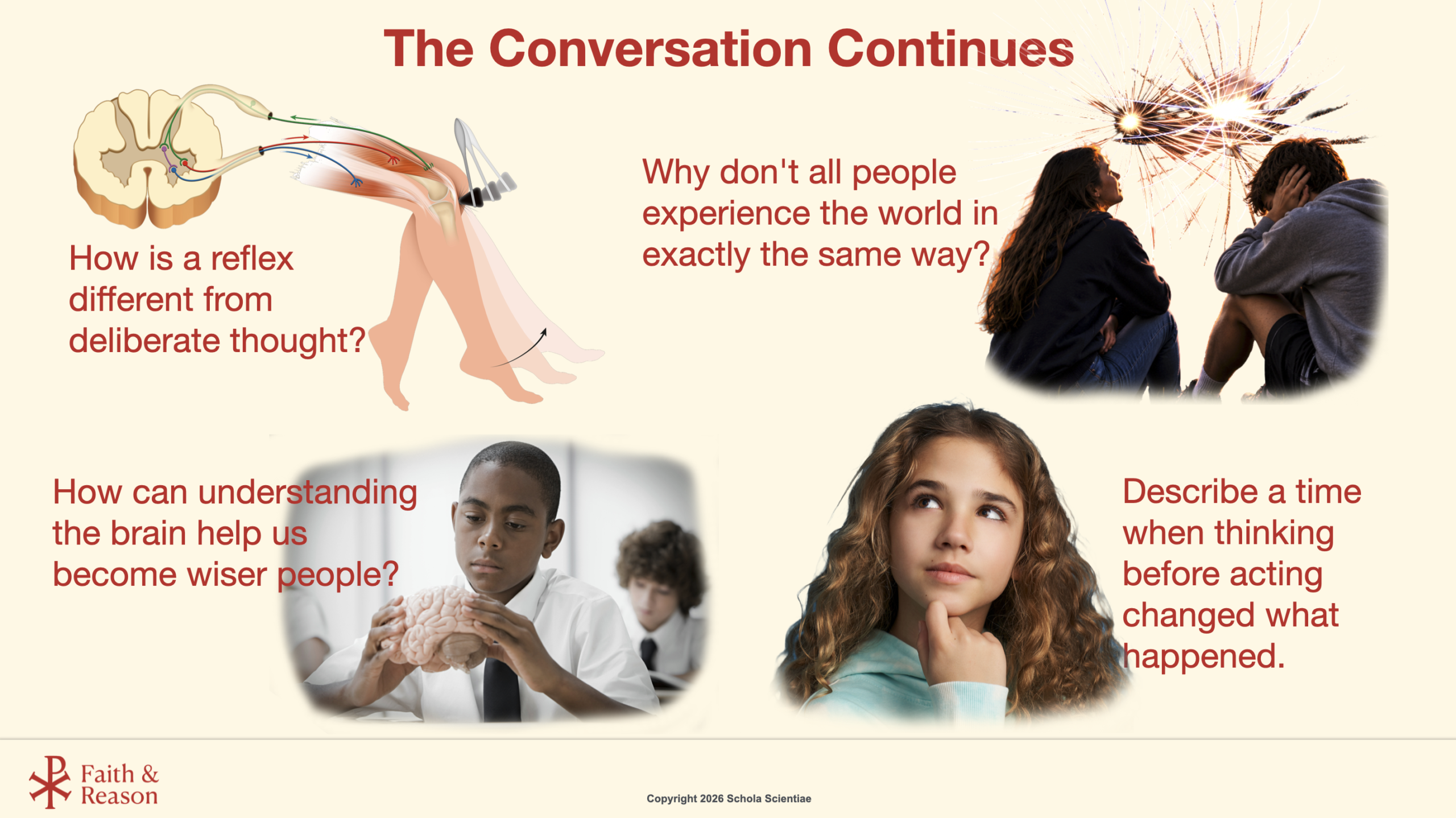
The Conversation Continues
Purpose
This discussion slide encourages students to consolidate what they have learned by explaining the science and its meaning in their own words. As students summarize ideas, they strengthen understanding, correct misconceptions, and recognize connections they may not have noticed during the investigation.
Key Idea
Learning becomes more meaningful when we explain ideas, listen to others, and thoughtfully reconsider our own understanding. Scientific knowledge grows through discussion, questioning, and continued reflection.
Leading the Conversation
Rather than asking students for isolated facts, invite them to tell the story of the investigation.
Encourage discussion around questions such as:
- What surprised you most during this investigation?
- Which scientific discovery do you think is most important?
- How has your understanding of your nervous system changed?
- Can understanding how your brain works help you make better decisions?
- Is there anything you now see differently in everyday life because of what you learned?
Allow students to respond to one another rather than directing every comment back through the teacher. Your role is to guide the conversation, clarify misunderstandings, and occasionally ask follow-up questions that encourage deeper thinking.
Connections
Science
Students should naturally connect ideas from the Concepts, Background Reading, PreLab, Lab, and PostLab investigations as they explain their understanding.
Future Investigations
Today’s discussion prepares students for later investigations into learning, memory, attention, executive function, and uniquely human cognition.
Reflection & Meaning
One purpose of Reflection & Meaning is not simply to answer questions, but to encourage students to continue asking thoughtful questions long after the lesson has ended.
Teaching Tips
Resist the temptation to “wrap everything up” yourself. Students learn more when they construct the summary.
Listen carefully for misconceptions that may have remained hidden during earlier activities, and gently guide students toward more accurate scientific understanding through additional questions rather than immediate correction whenever possible.
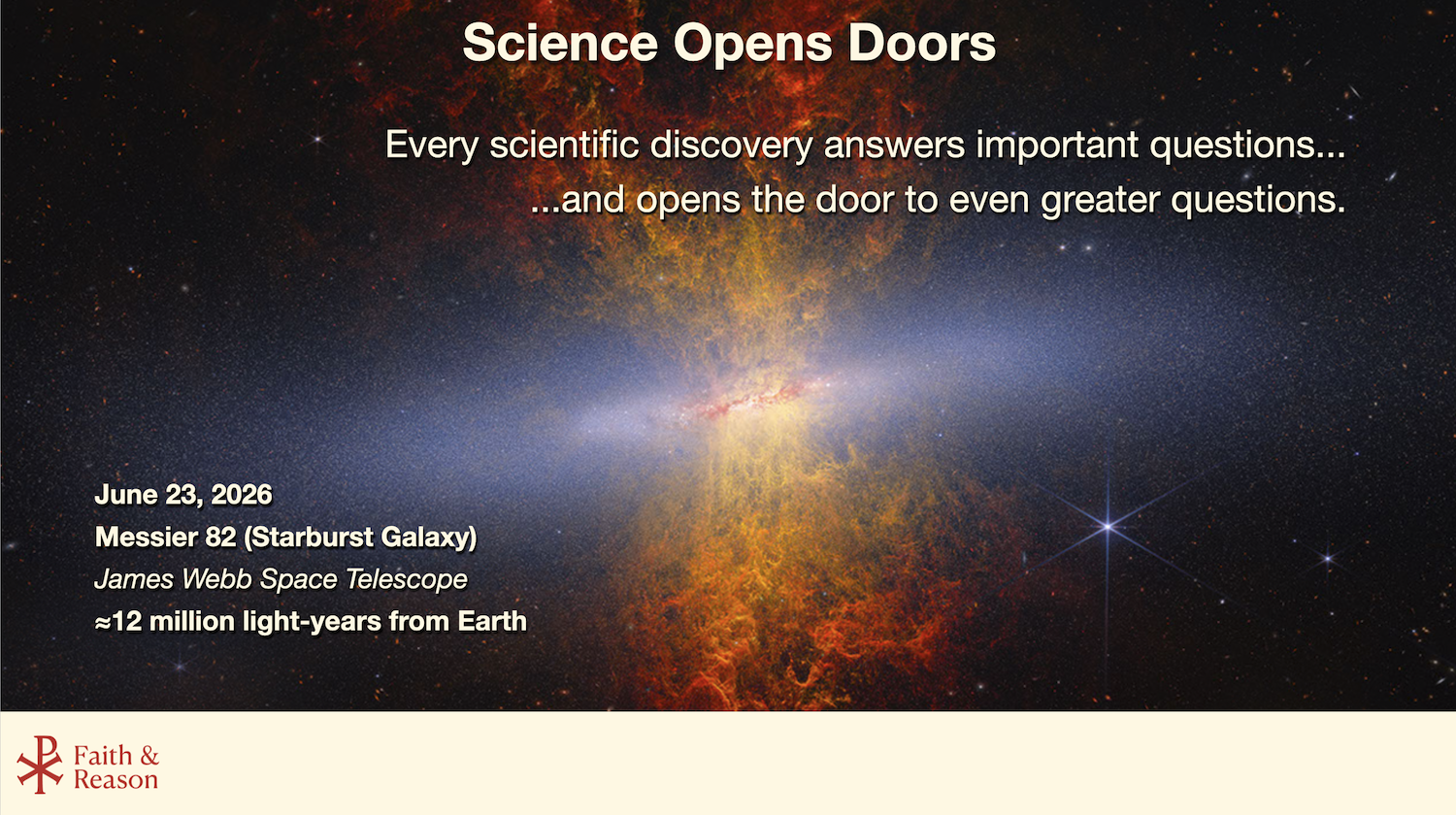
Science Opens Doors
Purpose
This slide broadens students’ perspective beyond today’s investigation. Using a recent James Webb Space Telescope image of Messier 82, students see that every scientific discovery answers important questions while opening the door to even greater ones. It serves as a transition from today’s science to the broader habit of lifelong curiosity.
Key Idea
Science is an ongoing journey. Every discovery expands our understanding while inspiring new questions that future scientists may one day answer.
Leading the Conversation
Ask students:
- Why do scientists continue exploring the universe after making so many discoveries?
- Why do new discoveries often create even more questions?
- What unanswered question would you most like scientists to solve?
Then explain that curiosity is one of the driving forces behind scientific progress.
Connections
This Investigation
In Investigation 2, students discovered how the nervous system receives, processes, and responds to information. Understanding these basic processes opens the door to future investigations of learning, memory, reasoning, decision making, and what makes us uniquely human.
Human Cognition
Throughout this curriculum, students will repeatedly discover that each new understanding of the brain raises deeper questions about perception, intelligence, consciousness, and human nature.
Science
The James Webb Space Telescope reminds us that scientific discovery continues every day. Even after centuries of investigation, the universe still contains mysteries waiting to be explored.
Teaching Tips
End on a note of wonder rather than completion. Students should leave the classroom recognizing that today’s investigation is not the end of learning but the beginning of a lifelong habit of asking thoughtful questions.
Human Cognition
From sensation…to understanding…to wise action.
Purpose
This closing slide brings the investigation to its central message. Throughout Investigation 2, students discovered how the nervous system receives information from the world, processes that information, and generates responses. Reflection & Meaning now asks them to consider why that process matters.
The goal is not simply to understand how the brain works, but to recognize that knowledge becomes most valuable when it helps us think more carefully, make better decisions, and live more wisely.
Key Idea
Every thought, decision, and action begins with information.
But information alone is not enough.
The human mind must interpret that information, evaluate it, and transform it into understanding. When understanding guides our choices, it becomes wise action.
This progression—
Sensation → Understanding → Wise Action
is not only the conclusion of this investigation. It is a theme that students will revisit throughout the Human Cognition curriculum.
Leading the Conversation
Allow students a few moments to quietly reflect on the closing statement.
Then ask:
“Why do you think the slide ends with ‘wise action’ instead of simply ‘action’?”
Encourage students to recognize that people often have the same information yet make very different decisions.
Ask:
- What turns information into understanding?
- Can someone know a fact without understanding its importance?
- Why is wisdom more than simply knowing many facts?
Guide students toward the idea that scientific knowledge is most valuable when it helps us live more thoughtfully and make better choices.
Connections
Investigation 2
Students learned how the nervous system receives information, processes it, and produces responses.
Future Investigations
The investigations ahead will explore how attention, learning, memory, language, reasoning, and executive function contribute to this same progression—from sensation to understanding and, ultimately, to wise action.
Reflection & Meaning
Reflection & Meaning reminds us that science not only explains how the world works; it also helps us understand ourselves and make wiser decisions.
Teaching Tips
Resist the temptation to summarize the entire investigation yourself.
Instead, invite students to explain what the closing statement means in their own words.
Accept different examples and perspectives while encouraging students to support their ideas with evidence from the investigation.
End the discussion by reminding students that every Human Cognition investigation will build upon this same journey—from sensation…to understanding…to wise action.