
Back to: Human Cognition – Teacher
Student Portal
Investigation 2: PreLab
Simple Information Processing
In this Investigation, you will explore how the nervous system detects and responds to information. You will examine rapid, automatic reflexes, compare sensitivity in different areas of the body, and investigate how the brain organizes sensory information. The ideas on this page will prepare you to understand what you observe during the Investigation.
Focus Questions
1. What is a reflex arc, and how does it allow the nervous system to produce a rapid response?
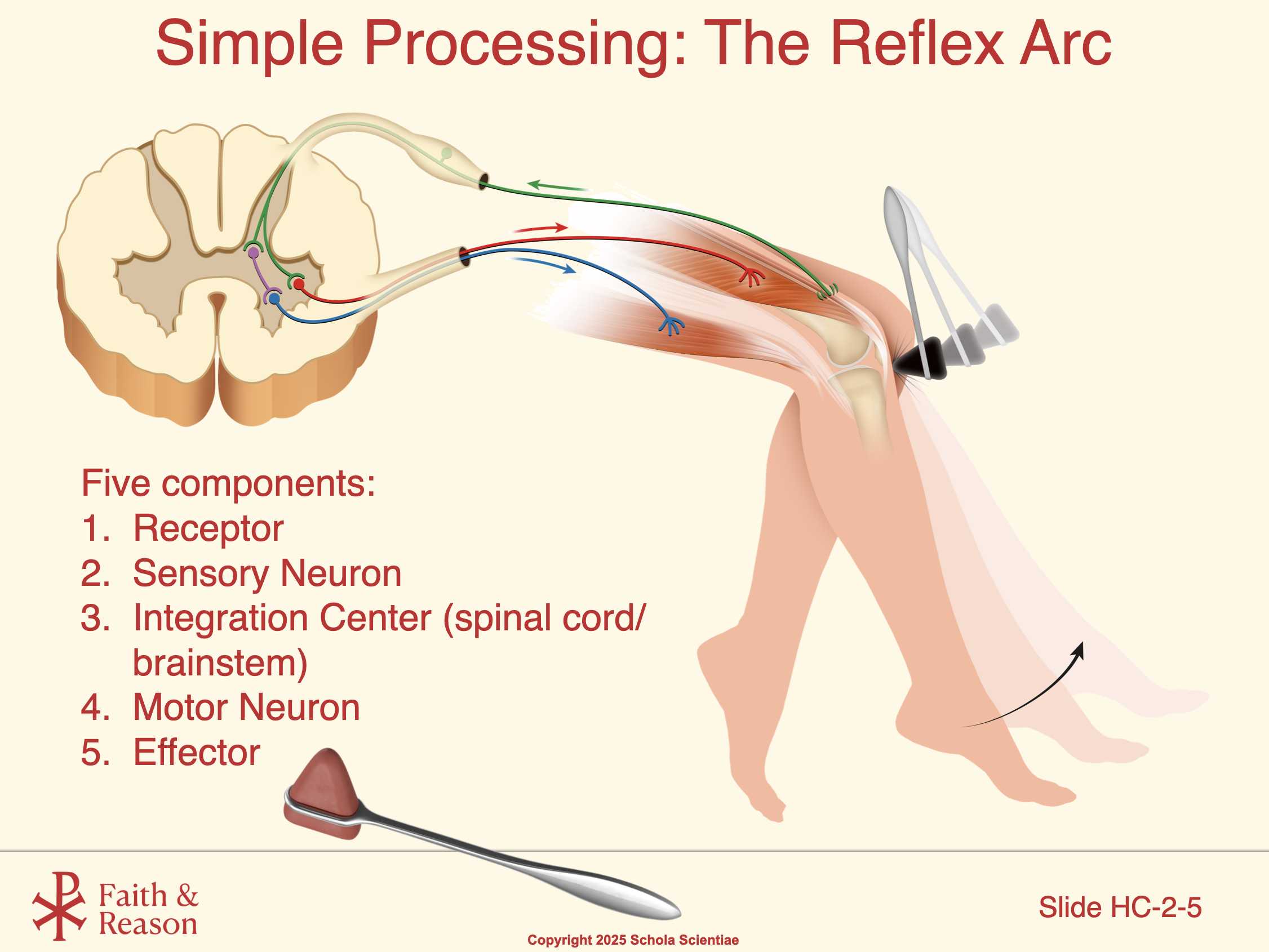
A reflex arc is a neural pathway that allows the nervous system to respond rapidly and automatically to a stimulus. Sensory receptors detect a stimulus and send information through sensory neurons to the central nervous system. In many reflexes, the spinal cord can rapidly activate motor neurons that produce a response without waiting for conscious processing by higher brain centers. This organization allows protective responses to occur very quickly.
Ideas to Consider:
“Some responses happen before we consciously think about them.”
“The spinal cord can help organize a response.”
“Fast responses can help protect the body.”
“A reflex is organized, even though it is automatic.”
2. Why are some areas of the body more sensitive to touch than others?
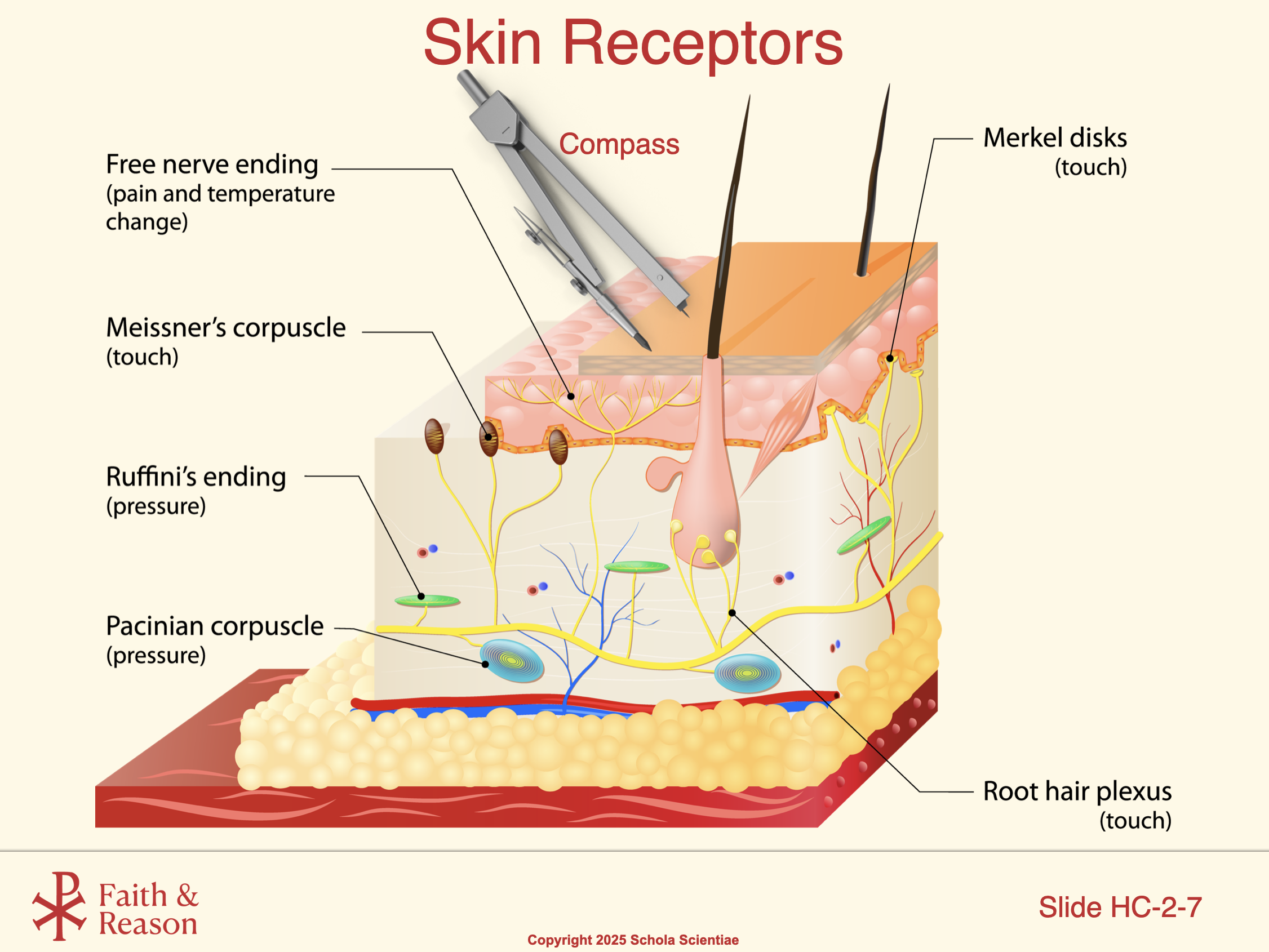
Different regions of the skin contain different densities of sensory receptors. Areas with many touch-sensitive mechanoreceptors can distinguish between stimuli that are very close together, while areas with fewer receptors are less able to make these fine distinctions. This helps explain why fingertips and other highly sensitive areas can detect details that other parts of the body cannot.
Ideas to Consider:
“Different parts of the skin are not equally sensitive.”
“Fingertips can detect very small differences.”
“More receptors can provide more detailed sensory information.”
“Two touches can sometimes feel like one.”
3. What do direct and consensual pupillary responses reveal about how the nervous system is organized?
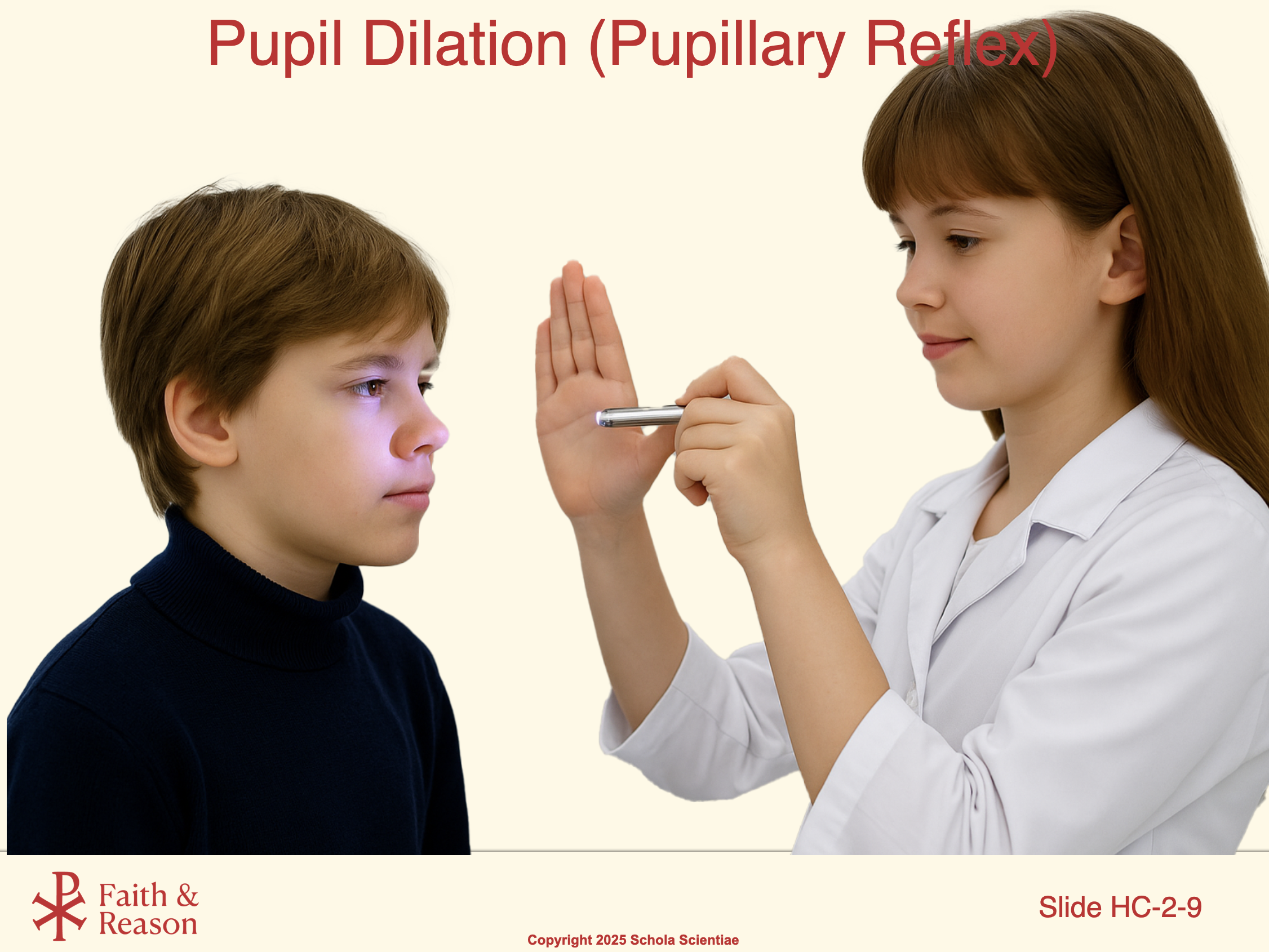
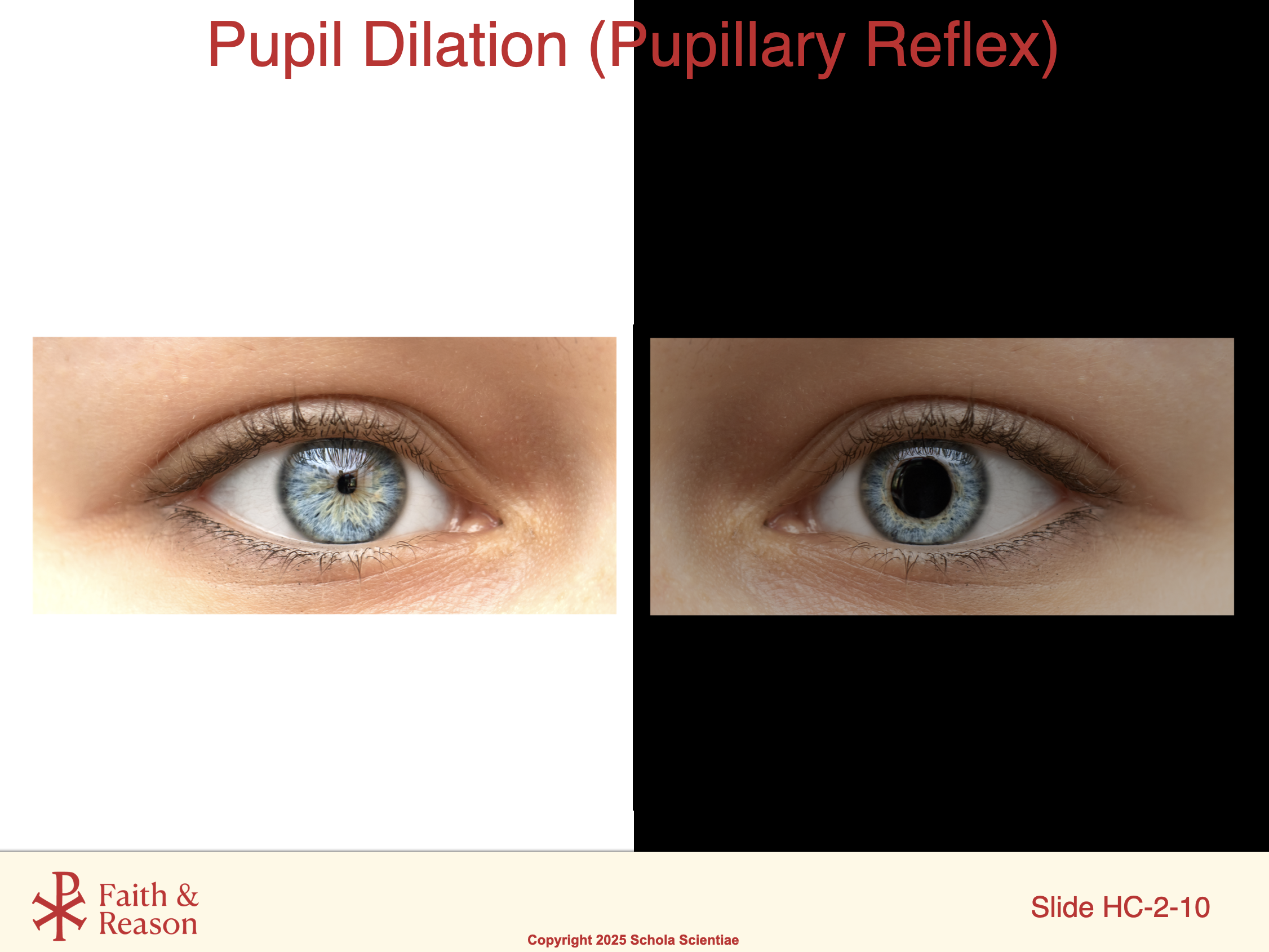
When light enters one eye, the pupil of that eye becomes smaller. This is the direct pupillary response. At the same time, the pupil of the other eye also becomes smaller, producing the consensual response. These coordinated responses show that sensory information entering through one side of the nervous system can influence responses on both sides of the body.
Ideas to Consider:
“Light entering one eye can affect both eyes.”
“The two eyes do not respond independently.”
“One sensory input can produce more than one response.”
“The nervous system coordinates information across different pathways.”
4. How does the brain represent sensory information from different parts of the body?
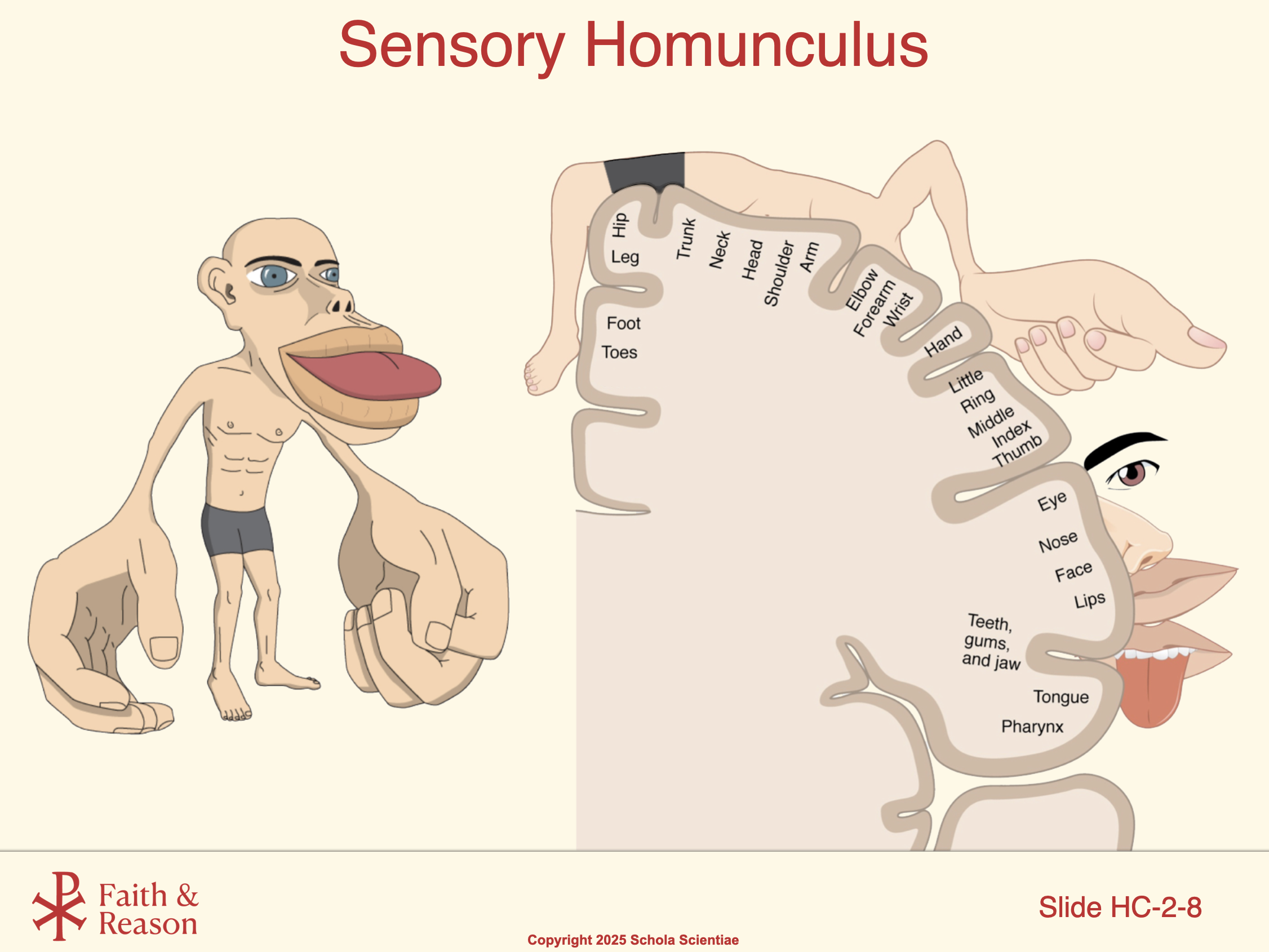
Sensory information from the body is carried to the brain, where regions of the sensory cortex process information from different body areas. These regions are not represented equally. Body areas with greater sensitivity and more detailed sensory input occupy more cortical processing space than less sensitive areas. The sensory homunculus provides a visual model of this unequal representation.
Ideas to Consider:
“The brain contains a kind of sensory map of the body.”
“More sensitive body areas receive more processing space.”
“The brain’s map does not match the physical size of body parts.”
“Hands and lips appear unusually large on the sensory homunculus.”
Preparing for Success
Before beginning this Investigation, carefully review the Background Reading and Concept Slides provided below. These materials will help you understand how the nervous system detects sensory information, processes that information, and produces rapid, coordinated responses.
As you work through the material, read thoughtfully and examine the diagrams closely. Look for connections between brain structure and brain function—how the way a part of the brain is organized relates to what it does.
Don’t worry about memorizing every detail. Instead, focus on recognizing important patterns and relationships. These ideas will help prepare you for the Concept activities, PreLab work, and Lab Investigation that follow.
Background Reading (Readings open in a new window):
1. Reflex Arcs: How Fast Responses Happen
Key Idea:
Reflexes bypass the brain’s higher thinking centers and travel through a rapid spinal pathway.
Relevant Concept Slides (Click to enlarge):
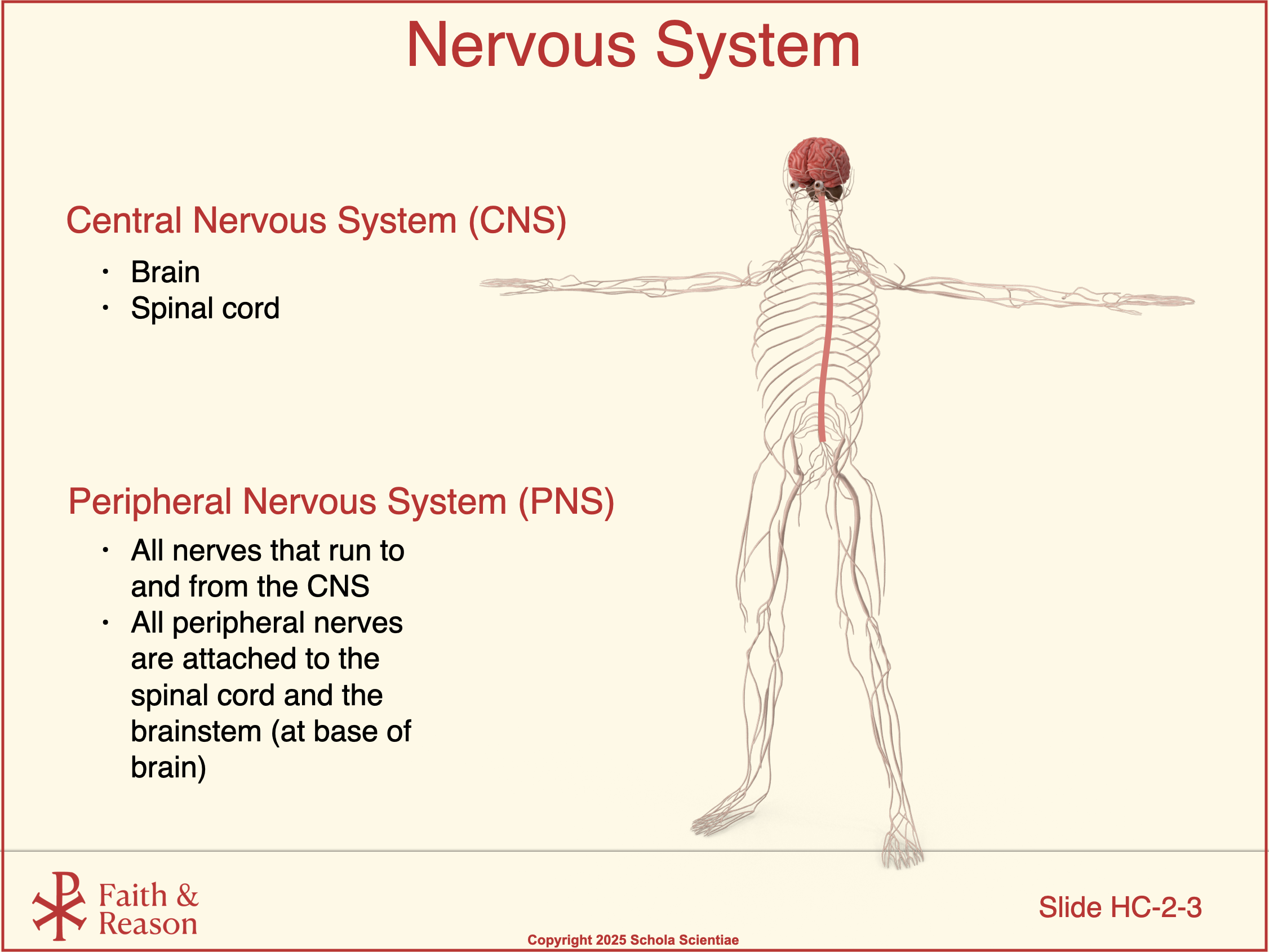
Why this matters
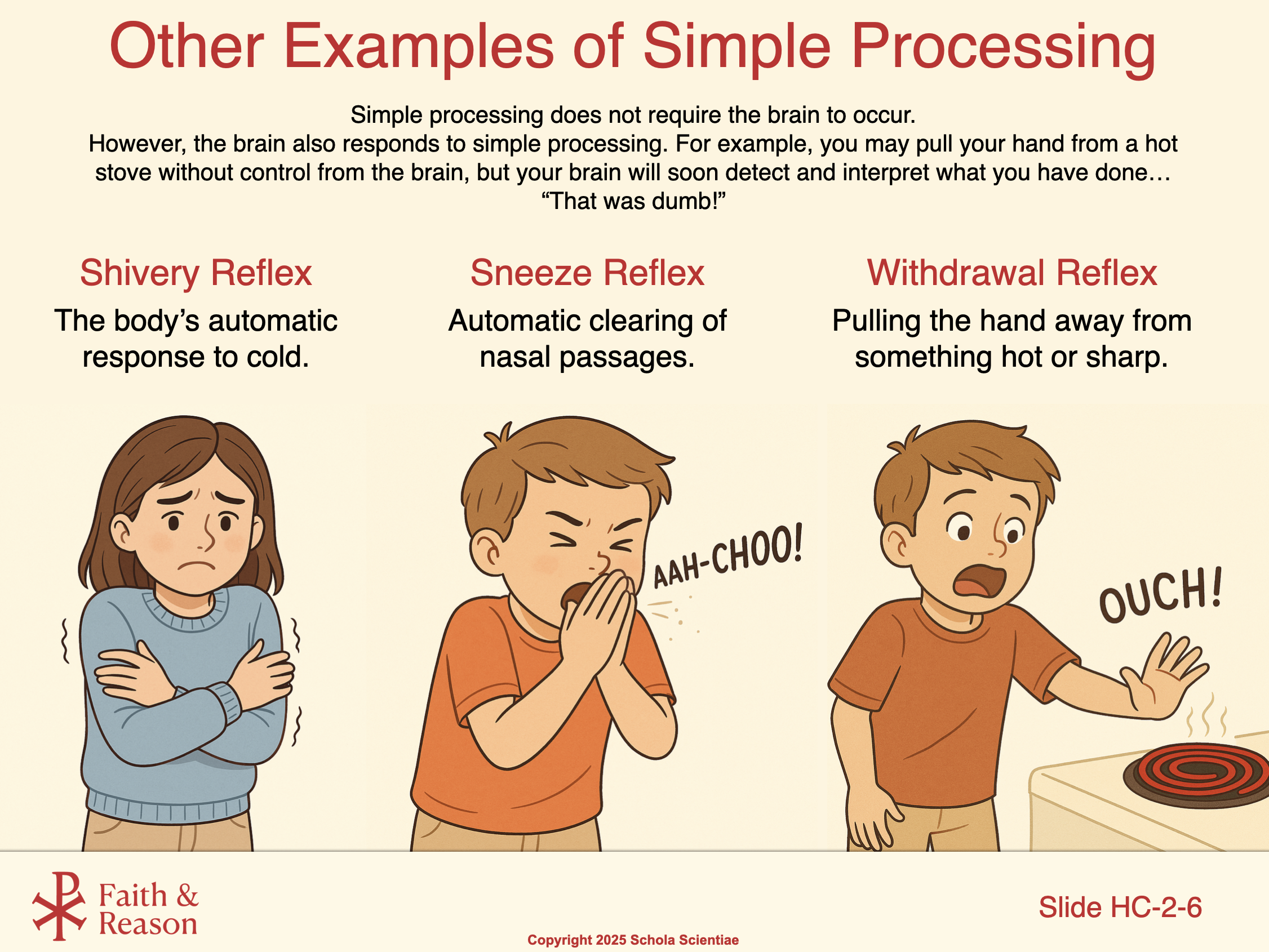
During the Knee-Jerk Reflex test, you will observe a response that happens too quickly for the brain to control. Understanding that reflexes travel through a fast spinal pathway—bypassing higher thinking centers—helps you explain why reflexes protect the body from harm and why they function the same way in all healthy individuals.
2. Two-Point Discrimination: How Sensory Maps Work
Key Idea:
• The body has uneven touch sensitivity because different regions of the skin contain different densities of mechanoreceptors.
Background Reading (Readings open in a new window):
Relevant Concept Slides (Click to enlarge):
Why this matters
The Two-Point Discrimination test reveals how unevenly the body senses touch. You will learn that some regions—like fingertips—contain many receptors, while other areas have far fewer. Understanding receptor density will help you interpret your lab results and see how the brain uses sensory maps to make sense of the world.
3. Pupillary Responses: Direct and Consensual Reflexes
Key Idea:
- When light enters one eye, both pupils get smaller at the same time — even the one not in the light.
Background Reading (Readings open in a new window):
Relevant Concept Slides (Click to enlarge):
Why this matters
During the Pupillary Light Reflex test, you will see both pupils constrict even when only one eye is exposed to light. Understanding direct and consensual responses will help you appreciate how the brain coordinates automatic reflexes to maintain visual balance and protect the retina from excessive light.
Investigation Two Vocabulary
Consensual Pupillary Response (pyoo-pil-AIR-ee)
Definition:
The pupil in the opposite eye becomes smaller even though it did not receive light.
Why this matters:
Shows coordinated reflex pathways in the brainstem.
Example — What this looks like:
Light shines in the right eye → the left pupil also constricts.
Direct Pupillary Response (pyoo-pil-AIR-ee)
Definition:
The pupil in the eye that receives light becomes smaller.
Why this matters:
Protects the retina from too much light.
Example — What this looks like:
Shining a light in the right eye → the right pupil constricts.
Homunculus (hoh-MUNK-yoo-lus)
Definition:
A “map” of the body in the brain showing how sensitive each area is.
Why this matters:
Areas with more receptors look larger on the homunculus.
Example — What this looks like:
Lips and hands appear huge because they have high sensitivity.
Mechanoreceptor (meh-KAN-oh-ree-sep-ter)
Definition:
A receptor that detects touch, pressure, vibration, or stretch.
Why this matters:
Different body regions have different amounts of mechanoreceptors.
Example — What this looks like:
Fingertips have many mechanoreceptors, making them very sensitive.
Reflex
Definition:
A quick, automatic response that happens without you thinking about it.
Why this matters:
Reflexes protect the body from harm.
Example — What this looks like:
Pulling your hand away from something hot is a reflex.
Reflex Arc
Definition:
The path a reflex signal takes: receptor → sensory neuron → spinal cord → motor neuron → effector.
Why this matters:
Reflex arcs bypass the brain’s thinking centers, making the response very fast.
Example — What this looks like:
The knee-jerk reflex uses a simple reflex arc.
Receptor
Definition:
A nerve ending that detects a stimulus.
Why this matters:
Receptors allow the nervous system to sense the environment.
Example — What this looks like:
Touch receptors on your skin detect light tapping.
Sensory Cortex
Definition:
Part of the brain that receives and interprets touch information.
Why this matters:
The sensory cortex is organized by sensitivity, not physical size.
Example — What this looks like:
Touching the fingertip activates a large area of sensory cortex.
Stimulus
Definition:
A change in the environment that the body reacts to.
Why this matters:
All reflexes begin with a stimulus.
Example — What this looks like:
A tap below the kneecap is a stimulus that triggers the knee-jerk response.
Two-Point Discrimination
Definition:
The ability to tell whether one or two points are touching the skin.
Why this matters:
Reveals how sensitive different body regions are.
Example — What this looks like:
Students use a divider to see how close two points can be before they feel like one.