Back to: Human Cognition – Teacher
Student Portal
Investigation 2: Faith & Reason
Science helps us understand the world through observation, investigation, and evidence. Faith & Reason invites us to continue the conversation by exploring what these discoveries may reveal about ourselves, truth, and our relationship with God. Click on any image below to begin.
Click on any image below to expand
Slide 1 — Human Cognition: Simple Information Processing
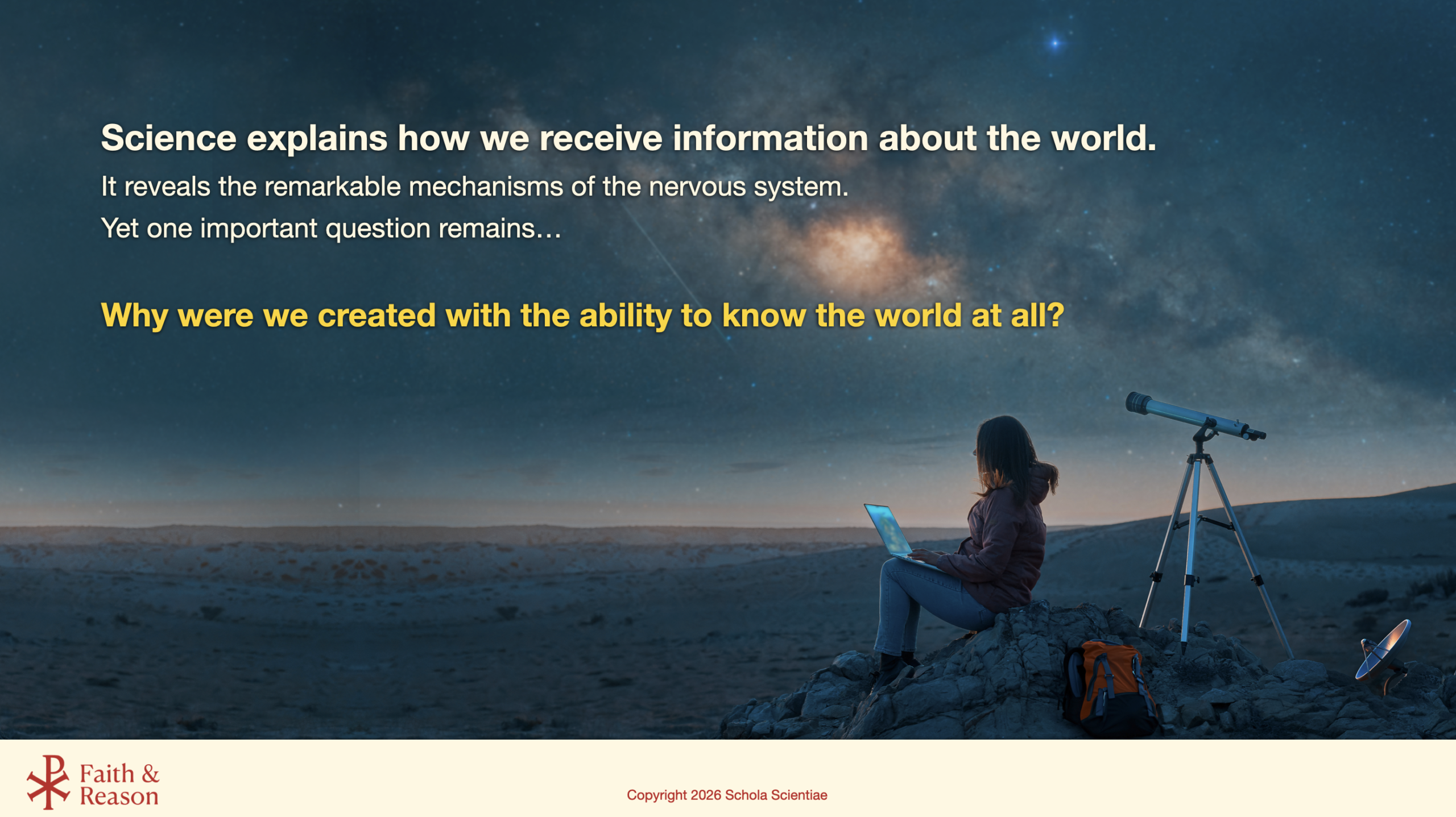
Science can explain how information moves through the nervous system. But understanding how the process works raises another question: What does our ability to know and understand reveal about us as human beings?
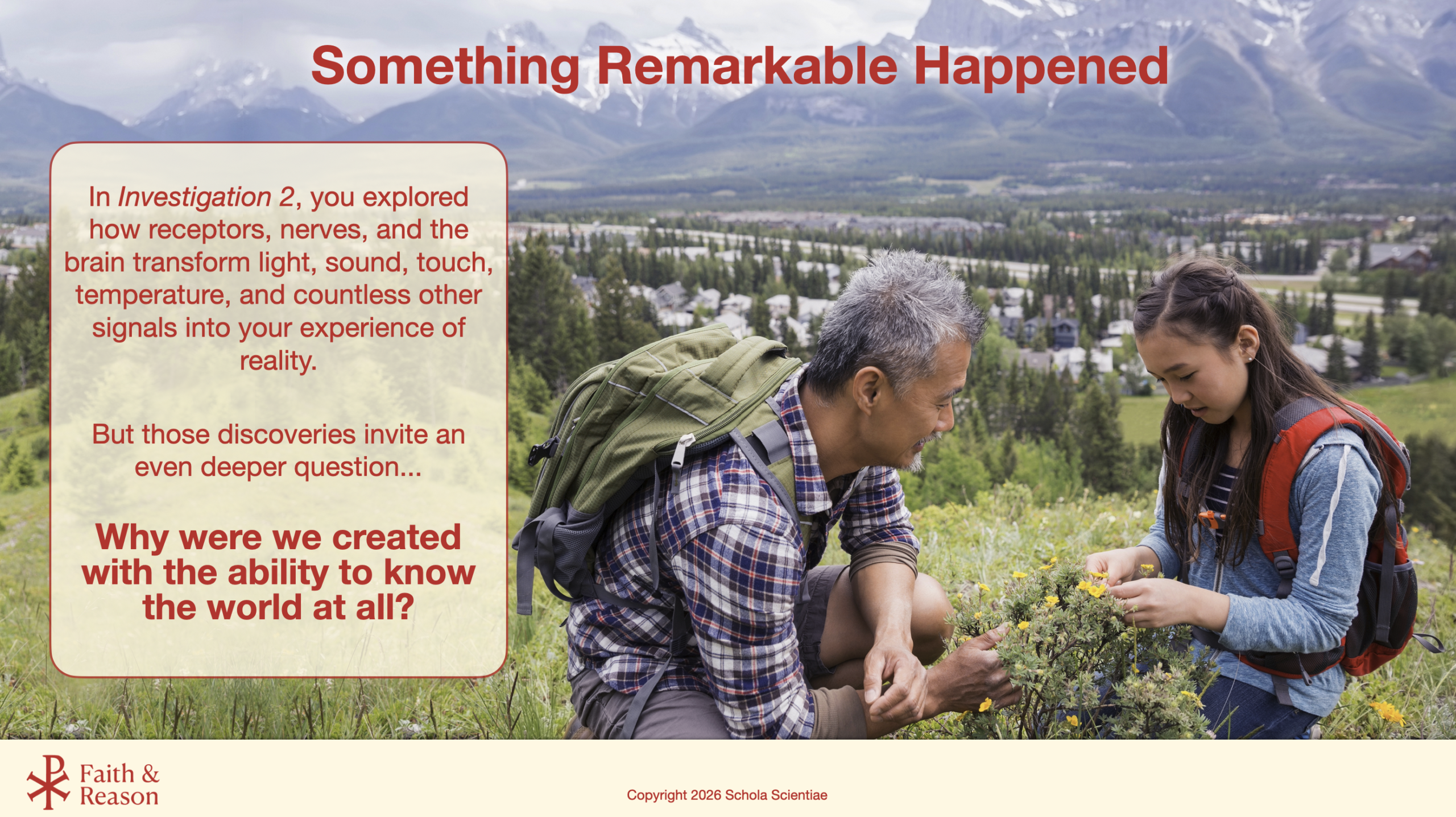
Slide 2 — Something Remarkable Happened
The ability to receive information, understand the world, recognize patterns, and discover truth is one of the most remarkable human characteristics. These abilities are so familiar that we rarely stop to wonder why we possess them at all.
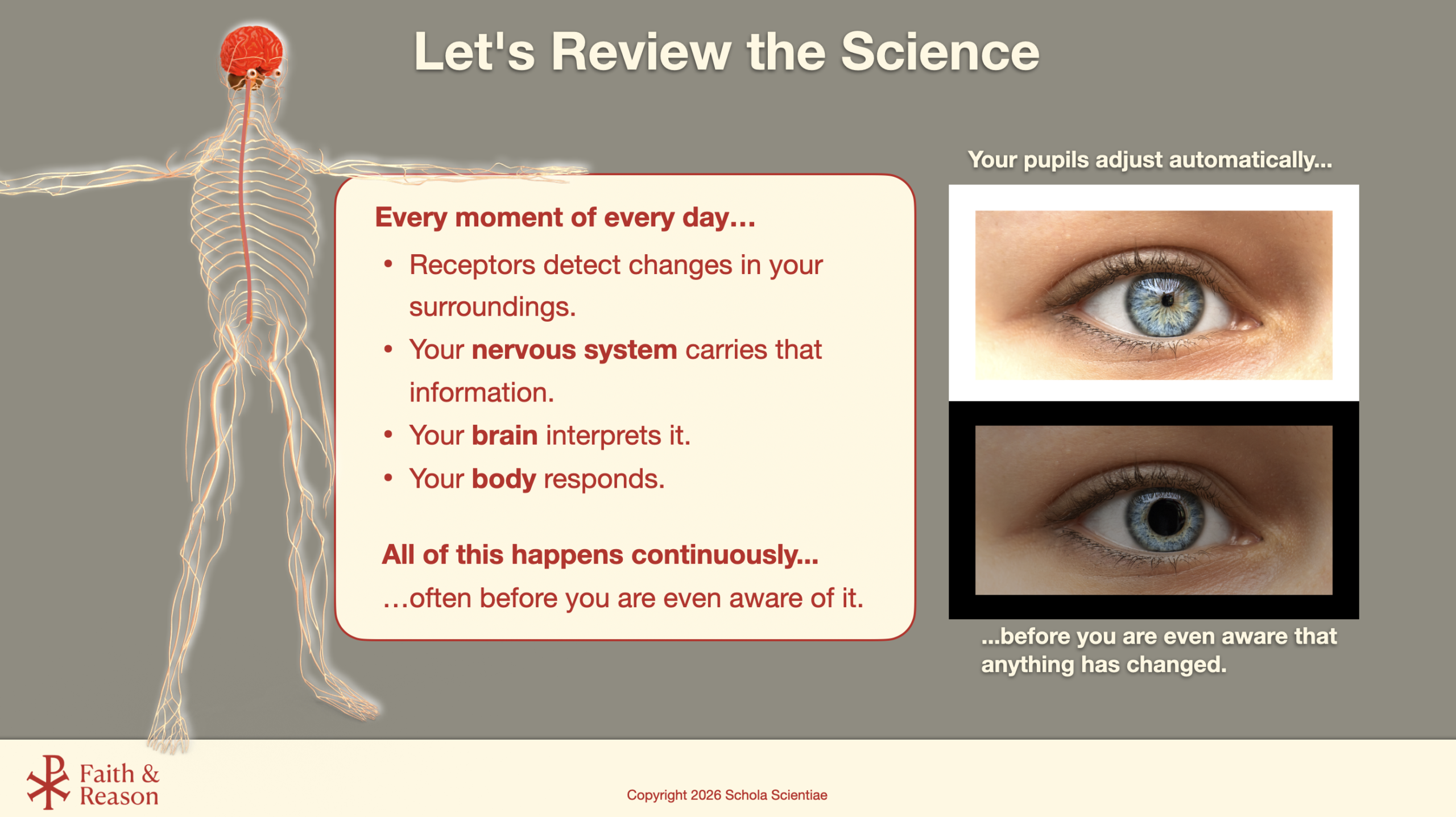
Slide 3 — Let’s Review the Science
The nervous system continually receives information, processes that information, and produces appropriate responses. These remarkable biological processes enable us to perceive and understand the world around us. These scientific discoveries provide the foundation for the deeper questions that follow.
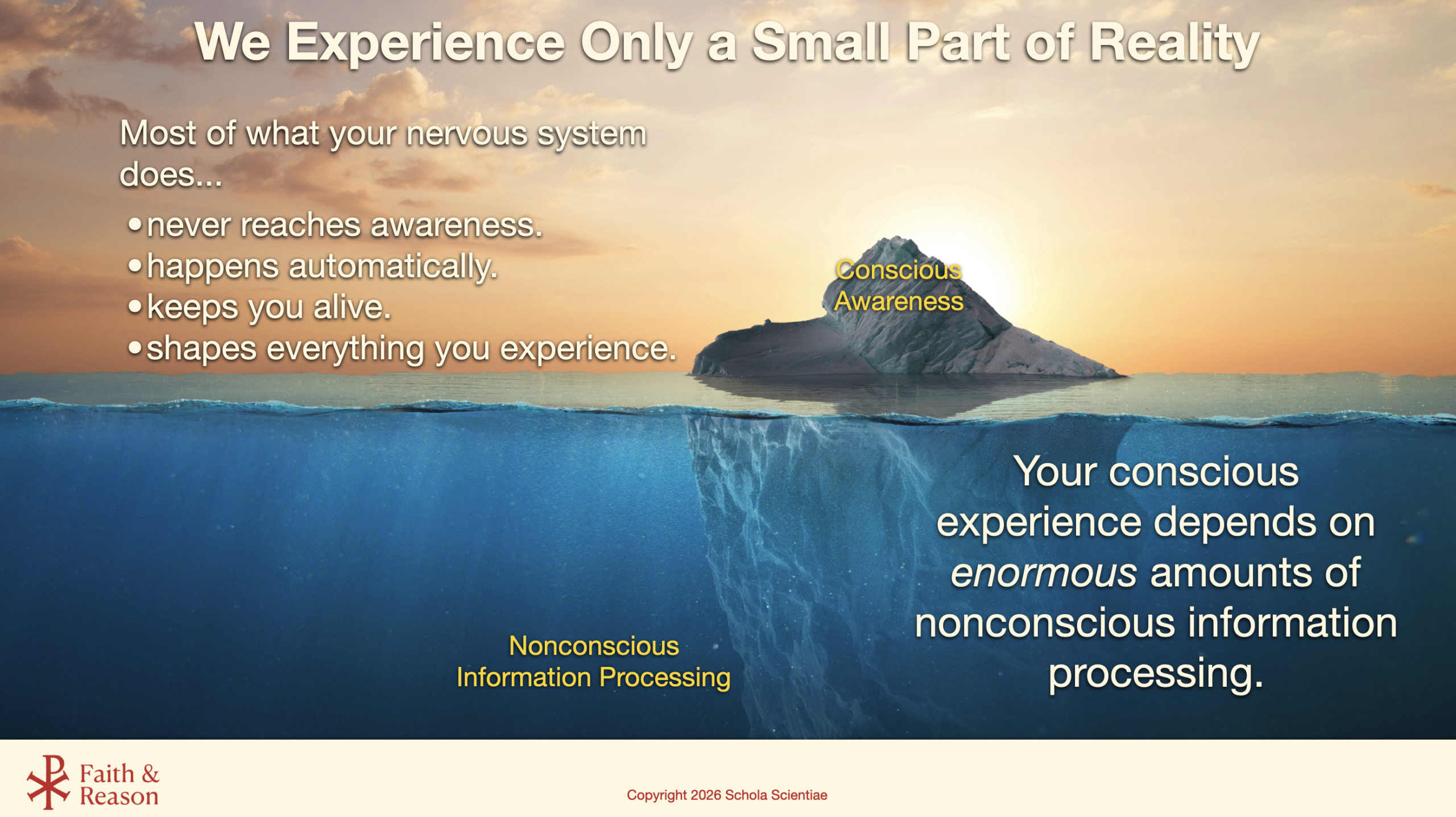
Slide 4 — We Experience Only a Small Part of Reality
Human beings experience only a small fraction of the information their nervous systems continuously receive and process. While our conscious awareness is remarkably powerful, it is also limited. Recognizing both the power and the limits of human cognition invites us to think more deeply about what we know—and about the limits of our own understanding.
Slide 5 — Humans Have the Ability to Know
Science explains the biological mechanisms that allow us to receive and process information. An equally remarkable fact is that human beings are capable of understanding, discovering truth, and intentionally seeking knowledge about themselves and the world around them.
Slide 6 — The Christian Understanding
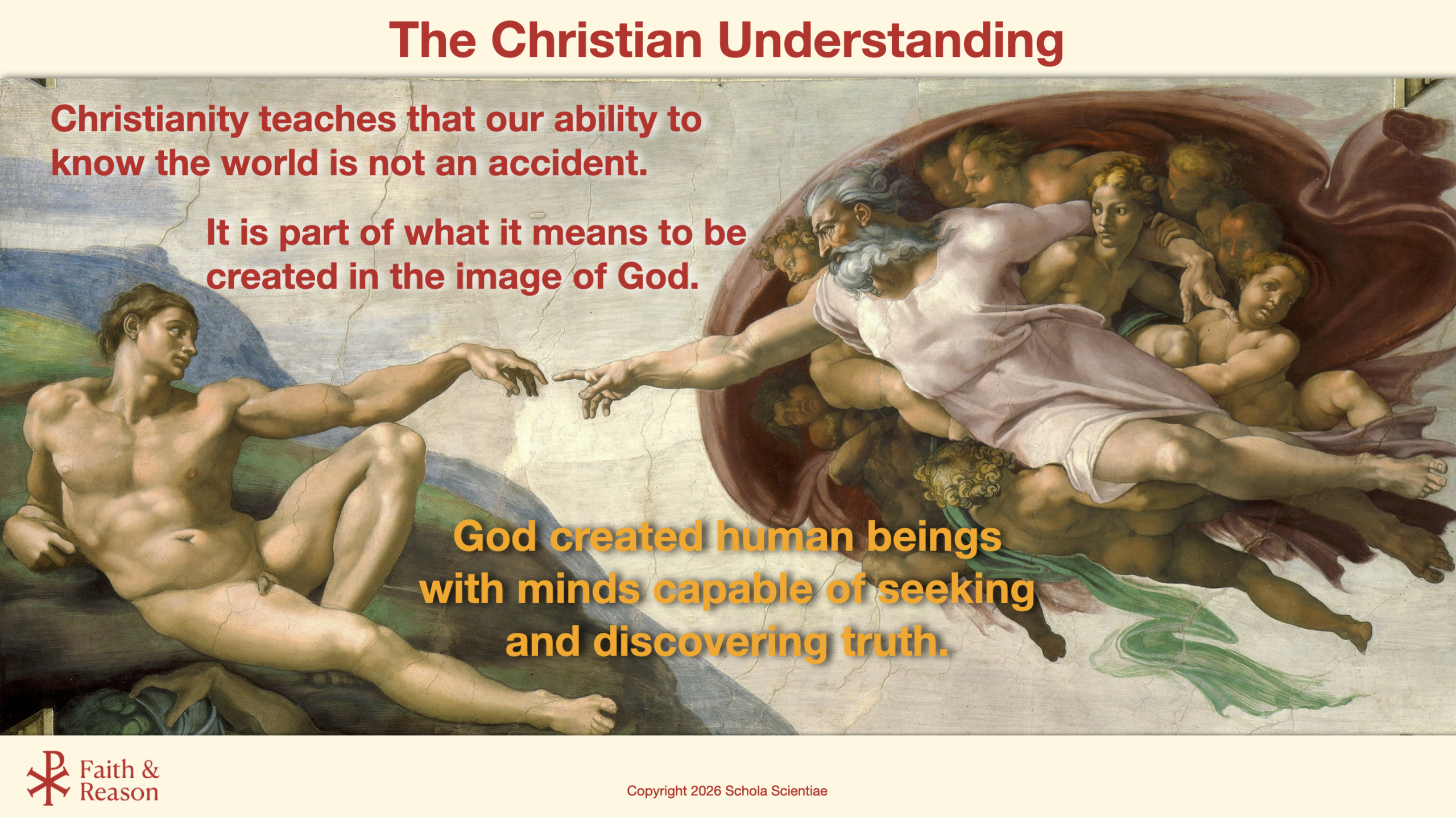
Christianity teaches that God created human beings with minds capable of seeking, understanding, and discovering truth. Our ability to know the world is one expression of being created in the image and likeness of God and provides the foundation for science, learning, creativity, and our relationship with God and one another.
Slide 7 — Human Capacity to Understand
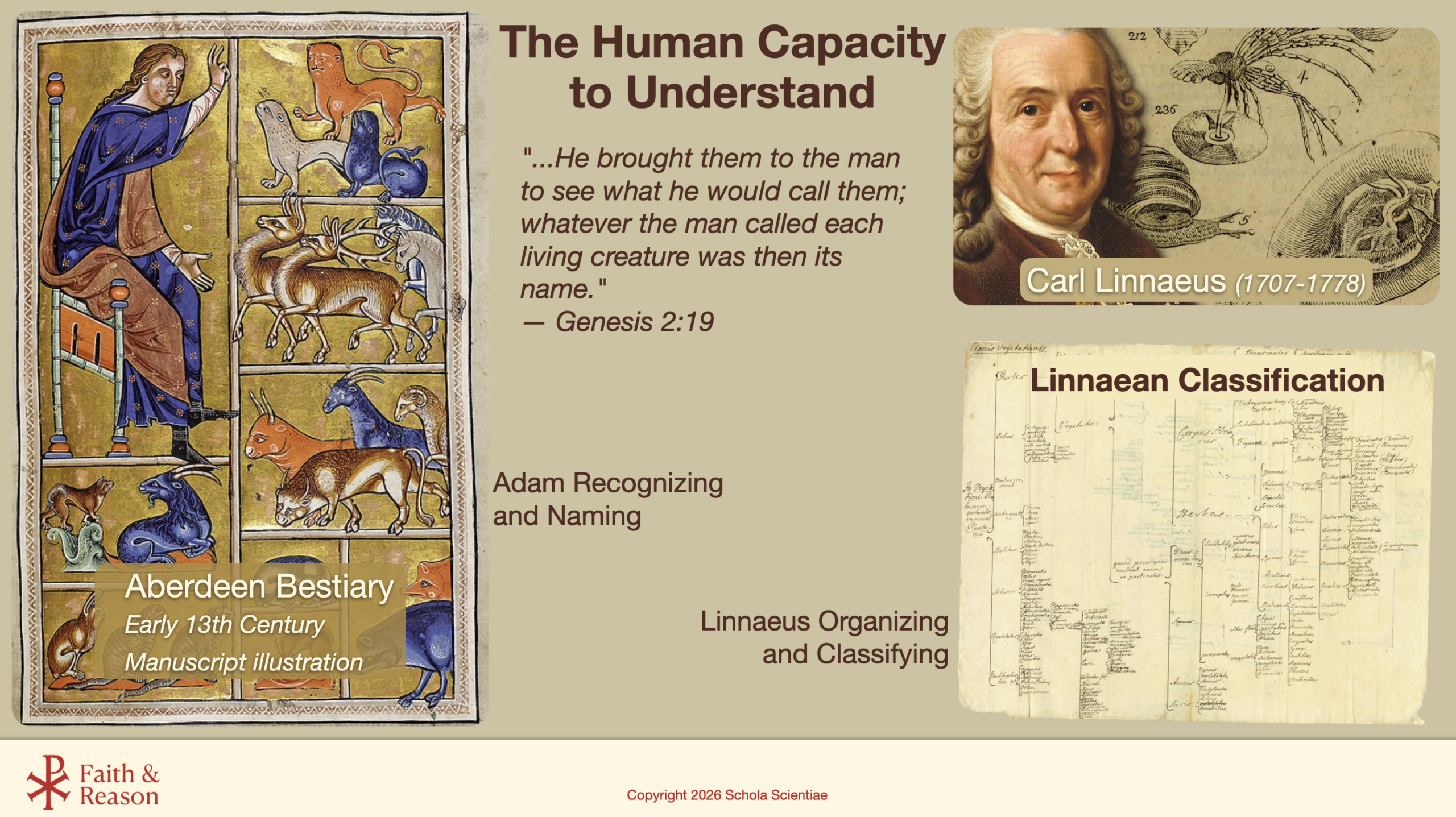
The human capacity to know and understand the world is expressed in many ways throughout history. Scientific observation, naming, classification, and discovery reflect one of the remarkable abilities that Christianity understands as part of being created in the image of God.
Slide 8 — What Do These Have in Common?
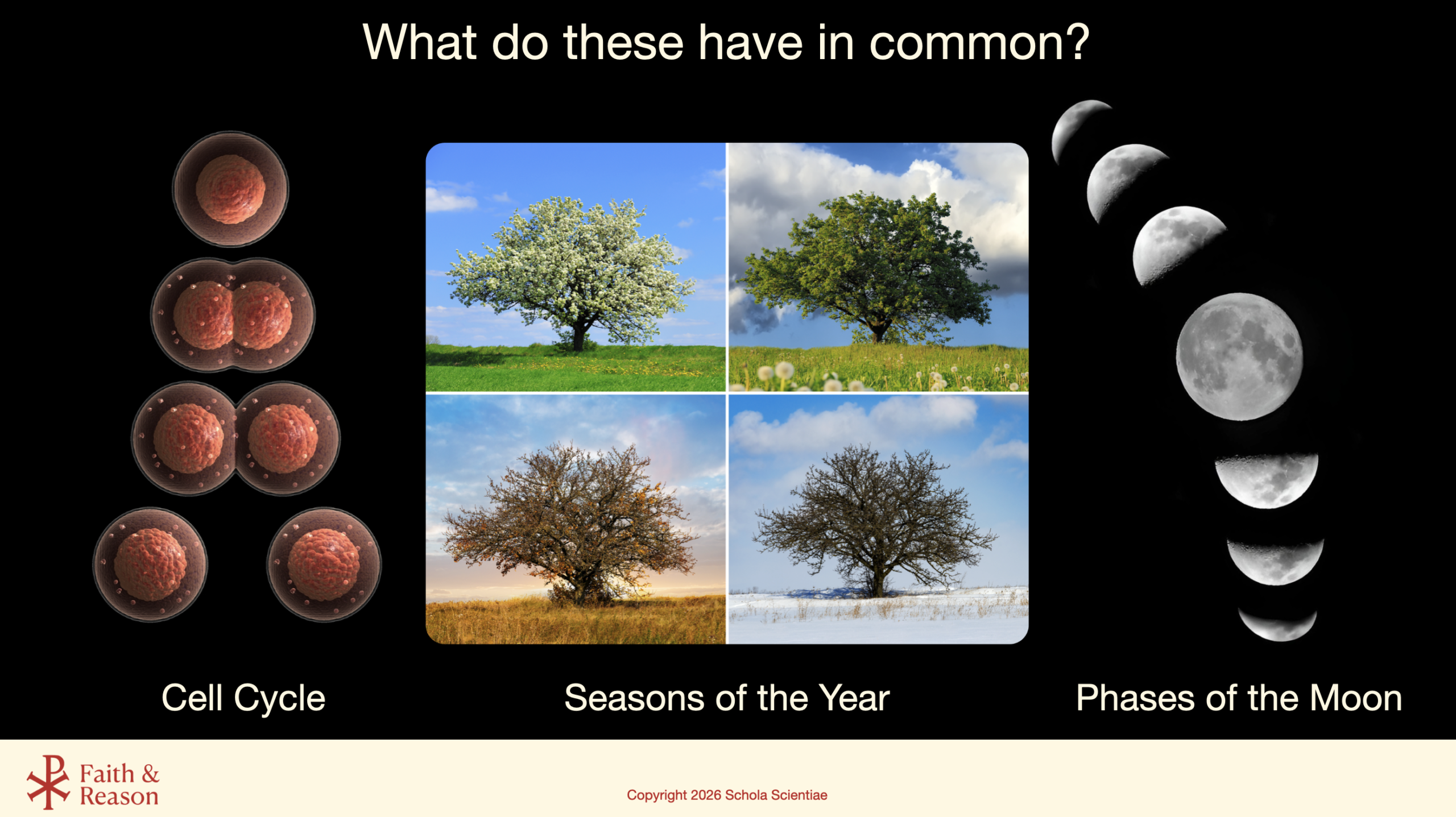
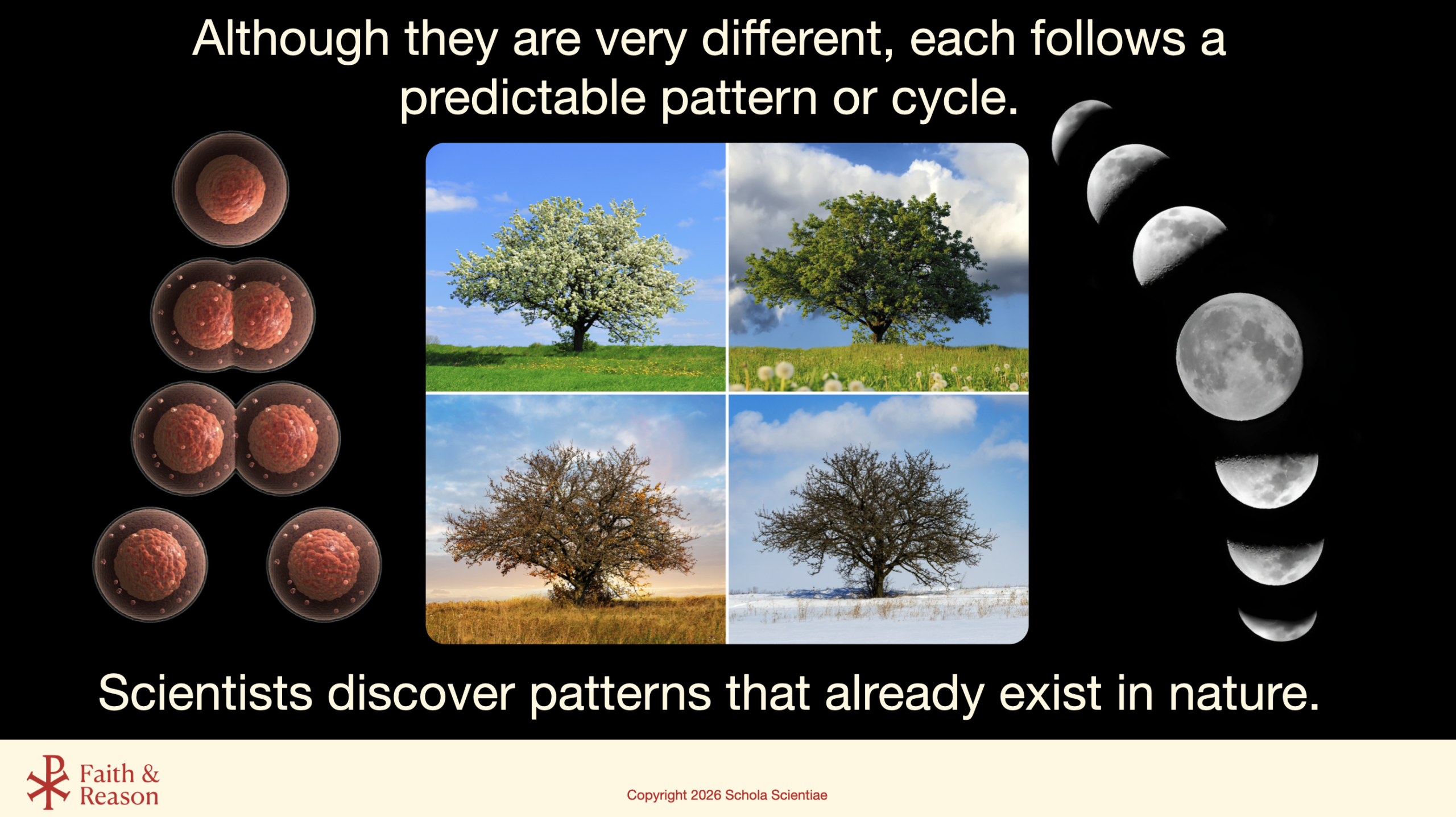
One of the defining characteristics of human cognition is the ability to recognize patterns, relationships, and order within the natural world. Scientific discovery begins when people observe these patterns and ask why they exist.
Slide 9 — Patterns and Cycles
Scientists do not invent the patterns found in nature—they discover them. The natural world displays remarkable order, and the human mind possesses the remarkable ability to observe, recognize, and understand that order.
Slide 10 — Knowledge of What Exists
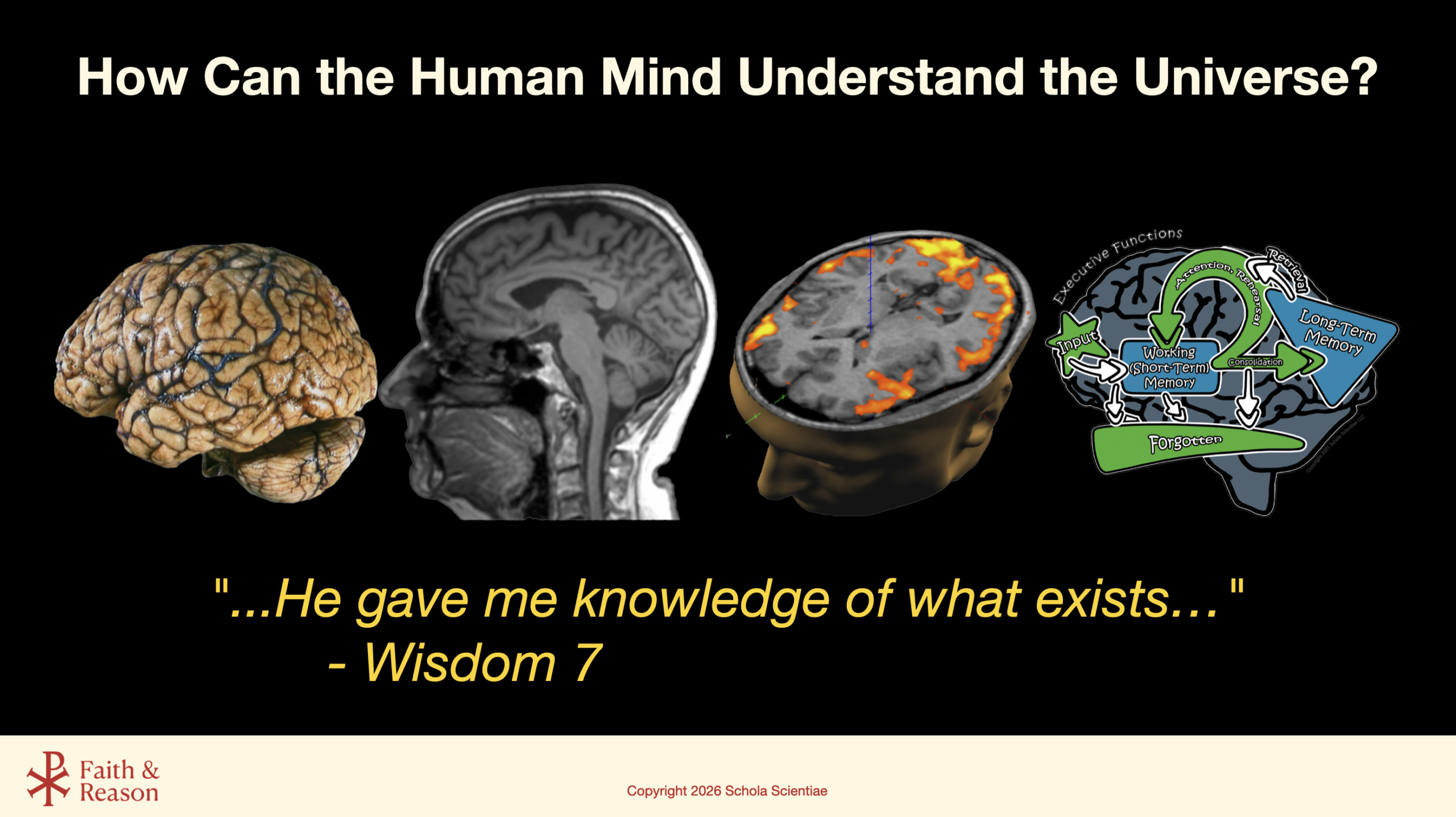
Human beings possess an extraordinary ability to observe, reason, recognize patterns, and understand the natural world. Science investigates how these abilities function, while the Christian tradition recognizes them as gifts that enable us to seek and discover truth.
Slide 11 — From Sensation...to Understanding...to Wise Action
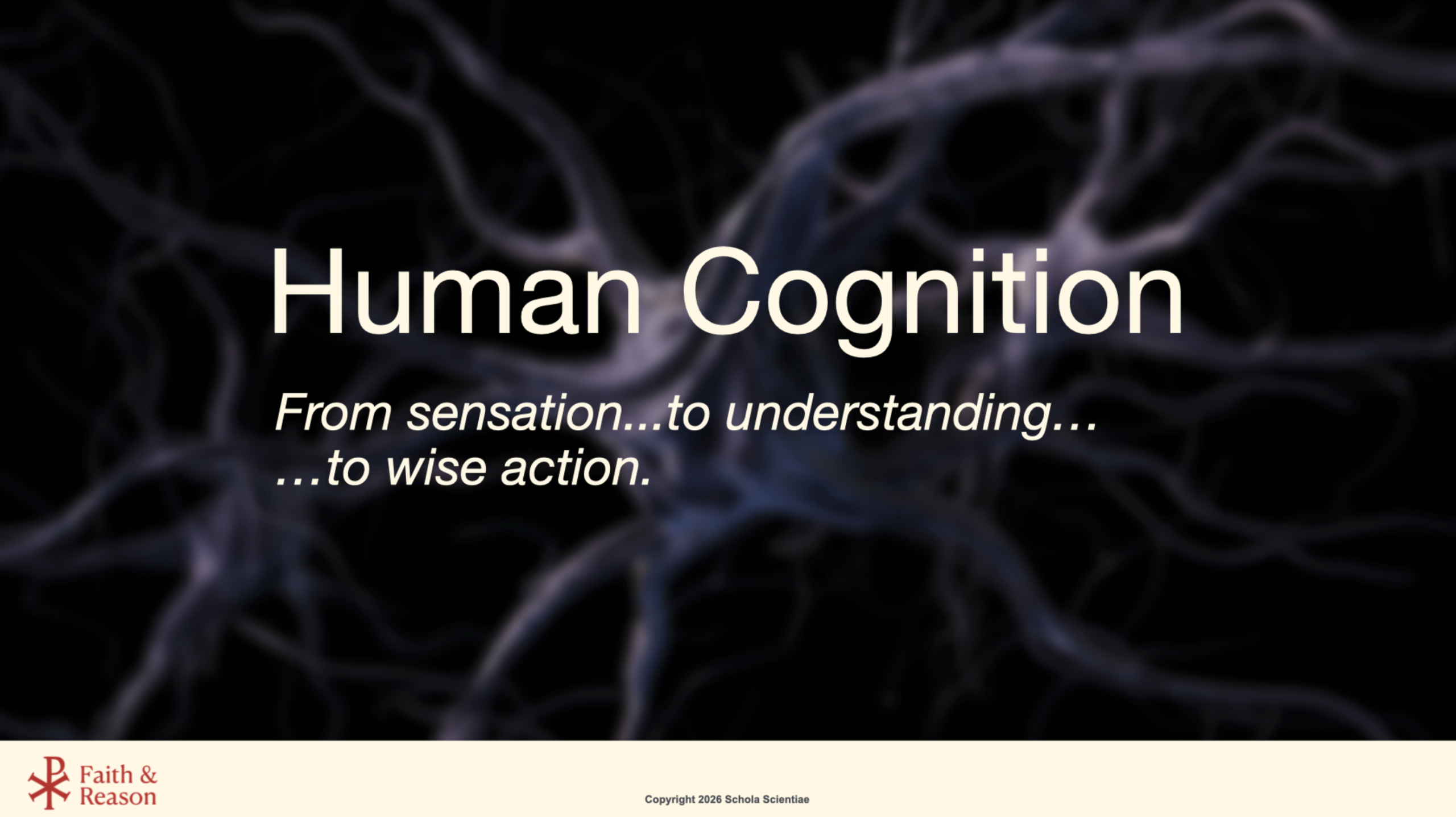
Human cognition is more than receiving information. It is the remarkable ability to transform sensation into understanding and understanding into wise action. Science investigates the biological processes that contribute to human cognition, while the Christian tradition reminds us that knowledge is a gift that carries both purpose and responsibility.