

Teacher Portal
Think about the following questions as we work through today’s PreLab.
By the end of this investigation, you should be able to answer each one confidently.
1. Why does working memory have such a limited capacity, and how does that affect learning?
Working memory is a small, temporary workspace. Because it can only hold 5–9 items, attention and rehearsal are needed to maintain information long enough for encoding into long-term memory.
2. Why do people tend to remember the first and last items on a list better than the middle ones?
This pattern — primacy and recency — occurs because early items receive more rehearsal and later items remain in working memory at recall time.
3. How does distraction interfere with memory and learning?
Distraction divides attention, preventing information from entering long-term memory. Multitasking forces the brain to switch tasks, reducing encoding and increasing forgetting.
4. What does the Stroop Test reveal about automatic processing?
Reading is fast and automatic. Naming ink colors is slow and controlled. Conflict between these systems shows how powerful automatic responses can be.
5. How do attention, working memory, and long-term memory work together when learning something new?
Attention filters the information, working memory actively processes it, and long-term memory stores it. A breakdown in any part disrupts learning.
Preparing for Success:
Before beginning this Investigation, students should review several key ideas from the Background Information and Concept Day. These ideas directly influence their performance on the Serial Position Test and the Stroop Test in PreLab.
To help students succeed:
-
Direct them to the specific Background sections linked below.
-
Encourage them to click the slide thumbnails (which you will insert) to view important Concept Day visuals.
-
Review the short explanations that tell them why each concept matters for the Investigation.
This structure removes all guesswork and helps both teachers and students feel confident and prepared. These ideas directly shape how students will perform during the Serial Position Test and the Stroop Test in the PreLab.
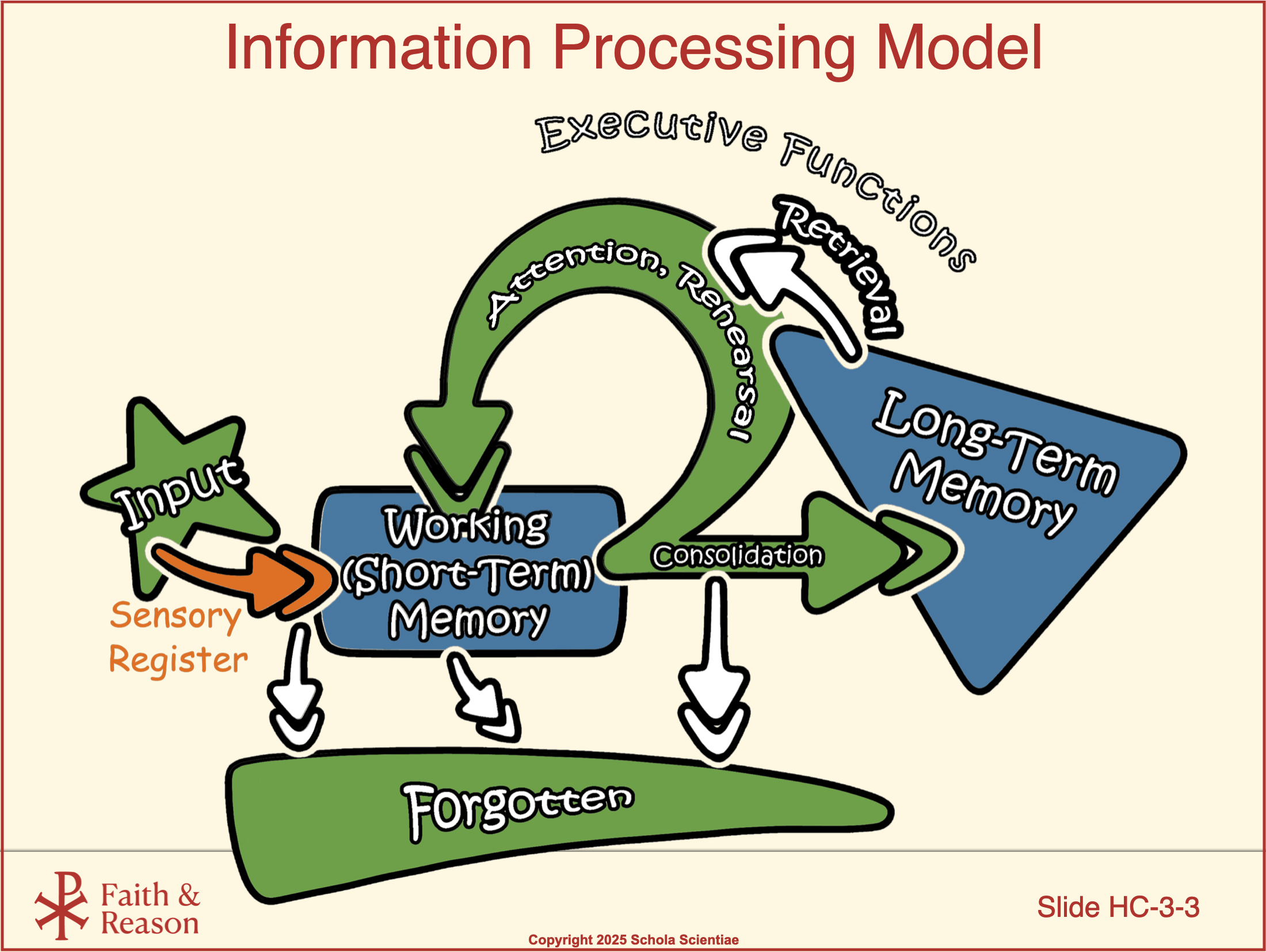
1. How Information Flows Through the Brain
Key Idea:
- Input → Working Memory → Long-Term Memory
Background Reading (Readings open in a new window):
- 🔗 Information Processing Model: Short-Term and Working Memory
- 🔗 Information Processing Model: Long-Term Memory
Relevant Concept Slides (Click to enlarge):
Why this matters:
During the Serial Position Test, students experience firsthand why organized, meaningful information sticks — and why random words fade quickly.
2. Attention as the Gatekeeper
Key Idea:
-
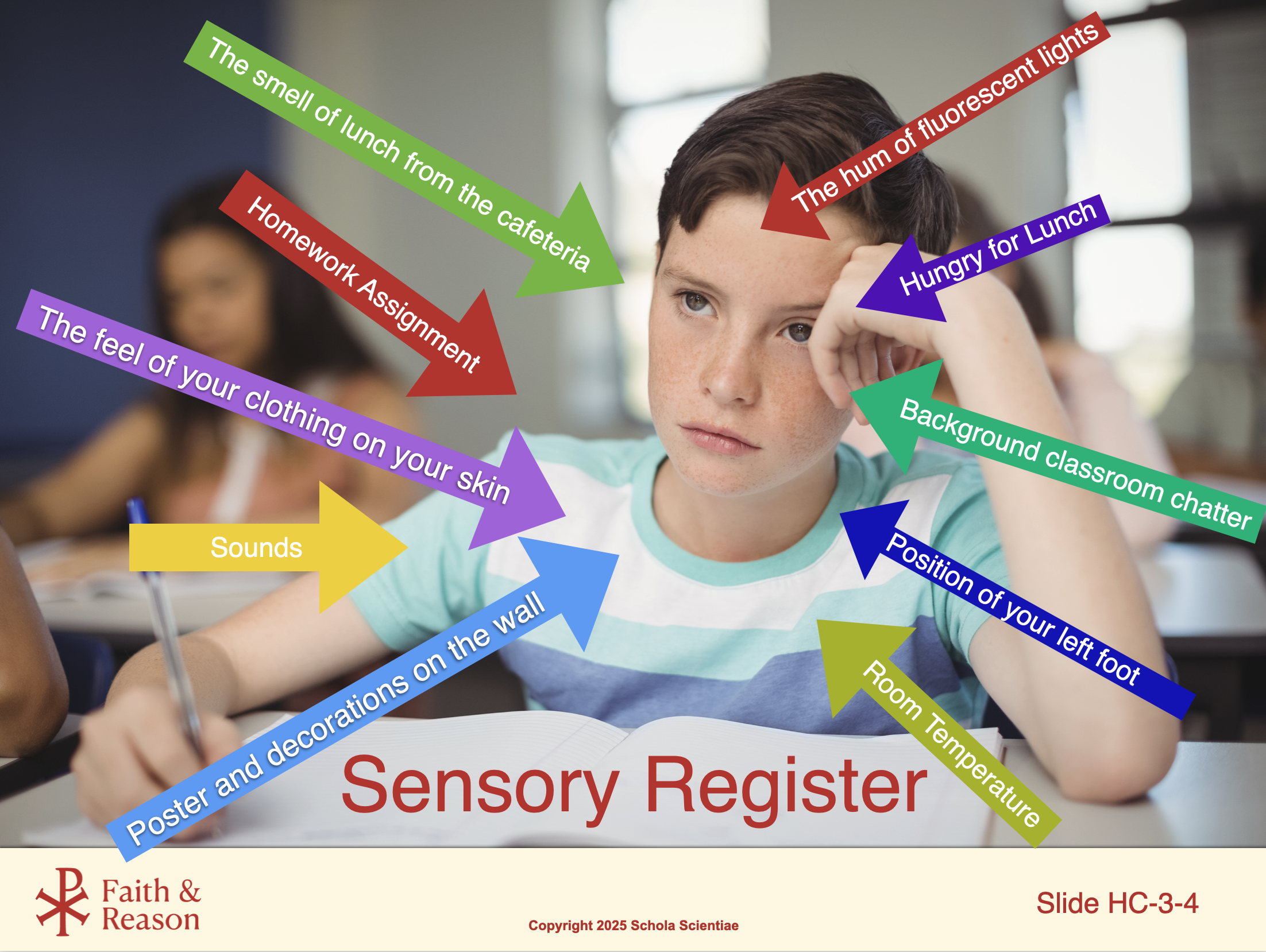
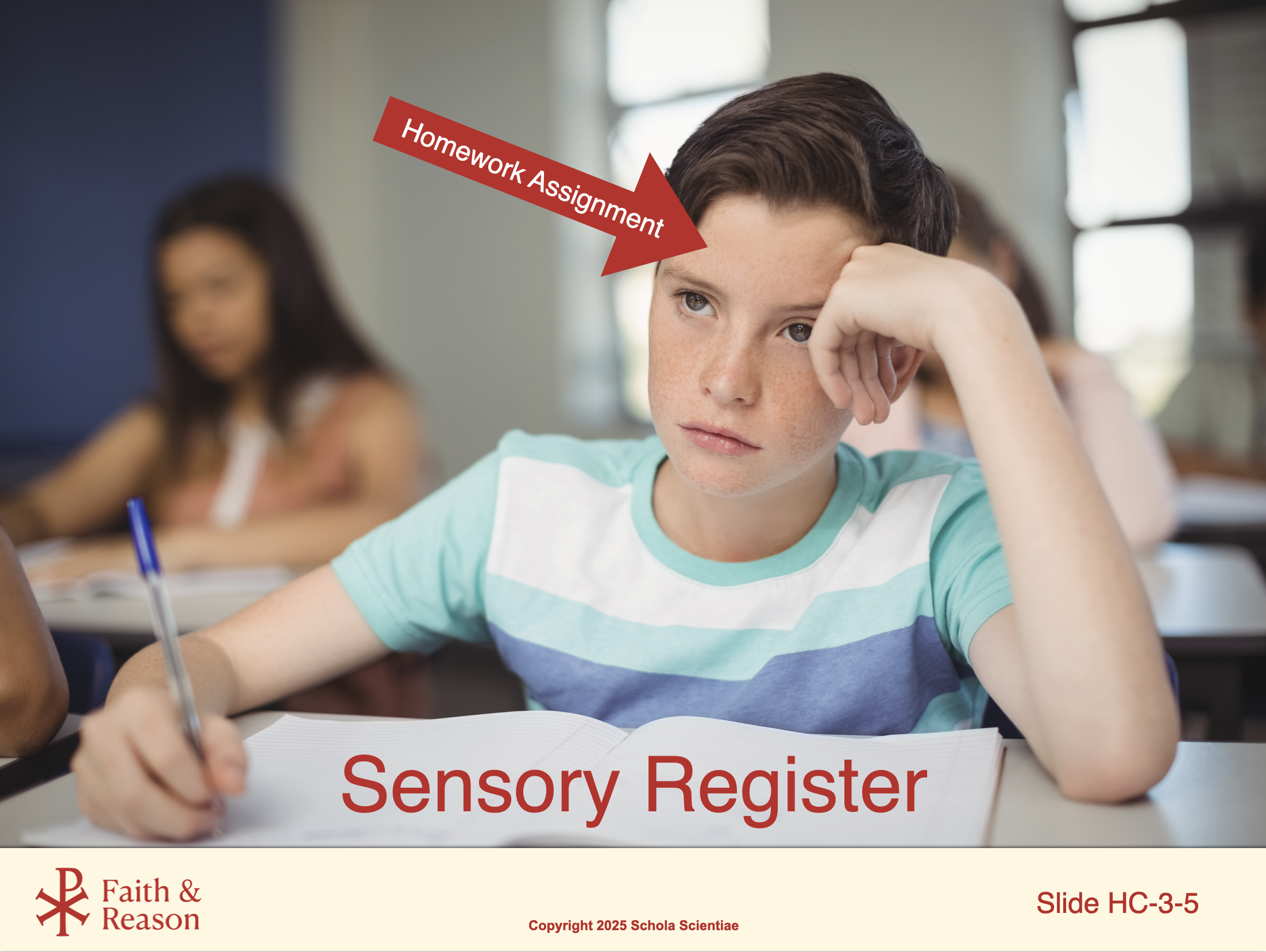
Only attended information enters working memory.
Background Reading (Readings open in a new window):
Relevant Concept Slides (Click to enlarge):
Why this matters:
Attention determines which information even has a chance to be remembered.
Students will perform better in Serial Position and Stroop tasks when they consciously focus their attention before each trial.
3. Working Memory Capacity — The Brain’s “Mental Workspace”
Key Idea:
-
Working Memory holds only a few items at a time and loses information quickly unless it is rehearsed, organized, or meaningful.
Background Reading (Readings open in a new window):
Relevant Concept Slides (Click to enlarge):
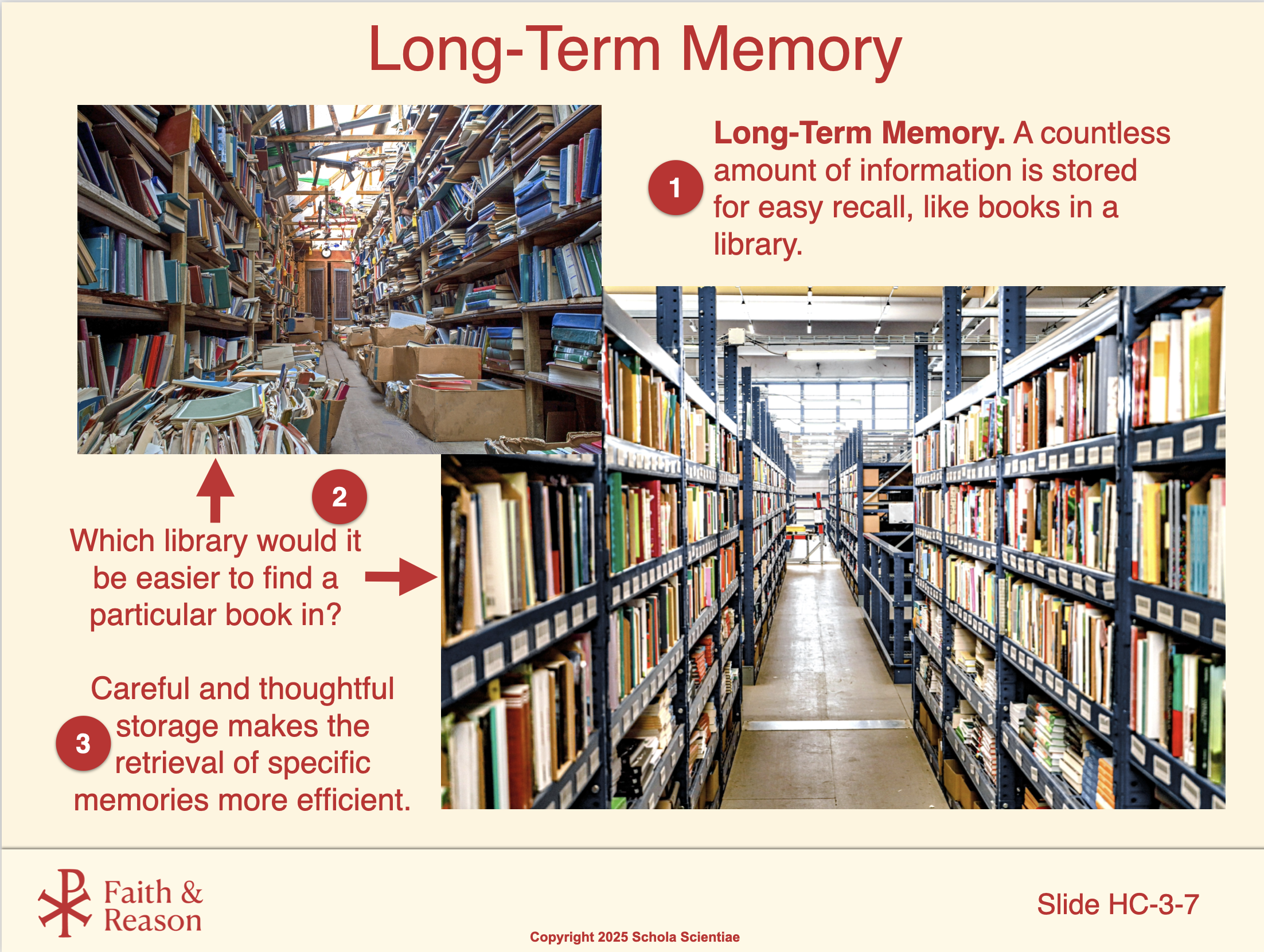
What this slide illustrates:
Students see how organization affects retrieval. Just like a messy library makes it hard to find a book, disorganized or unrehearsed information disappears quickly from working memory. This visual prepares them for the Serial Position Test.
Why this matters:
During the PreLab Serial Position Test, students will watch their own performance show that:
-
Working memory has limited capacity.
-
Middle items on a list often vanish because they receive little rehearsal.
-
Organization and attention strengthen memory, while distraction weakens it.
This gives students firsthand insight into why studying with structure and attention dramatically improves learning.
4. Encoding & Consolidation — How Information Becomes Long-Term Memory
Key Idea:
-
Information only becomes long-term memory if it is encoded with attention, meaning, or organization — and then consolidated through rehearsal or repeated exposure.
Background Reading (Readings open in a new window):
Relevant Concept Slides (Click to enlarge):
What this slide illustrates:
Students compare the messy library and the organized library to understand that information must be encoded and consolidated to become lasting memory.
-
New information enters the brain like new “books.”
-
If it is never organized, never reviewed, or never connected to something meaningful, the brain “loses” it — just like a book thrown into a chaotic room.
-
But when information is organized, labeled, and linked to other ideas, it becomes part of long-term memory, stored in a clean, well-organized “library.”
This sets up the idea that students’ performance on Serial Position and Stroop tasks will depend on how well they organize information and whether they give their brain time to consolidate it.
Why this matters:
During the PreLab tasks, students will discover that information only becomes long-term memory when it receives attention, meaning, and organization. The Serial Position Test will show them that:
-
Information that is rehearsed or meaningful is much more likely to move into long-term memory.
-
Items that receive little attention or no organization fade almost immediately.
-
Middle-list items are forgotten most often because they receive no rehearsal and weak consolidation.
The Stroop Test reinforces this by demonstrating how automatic processes can interrupt or override new learning unless students intentionally direct their focus.
Together, these experiences help students understand that learning is not passive—the brain strengthens memories only when attention and meaning are applied. This sets up the central message of the Investigation:
What we focus on, organize, and rehearse becomes what we remember.
5. Retrieval & Interference — Why Memories Fail (and How the Brain Competes)
Key Idea:
-
Retrieving a memory requires focus and organization — and interference from other information can block or distort what we remember.
Background Reading (Readings open in a new window):
Relevant Concept Slides (Click to enlarge):
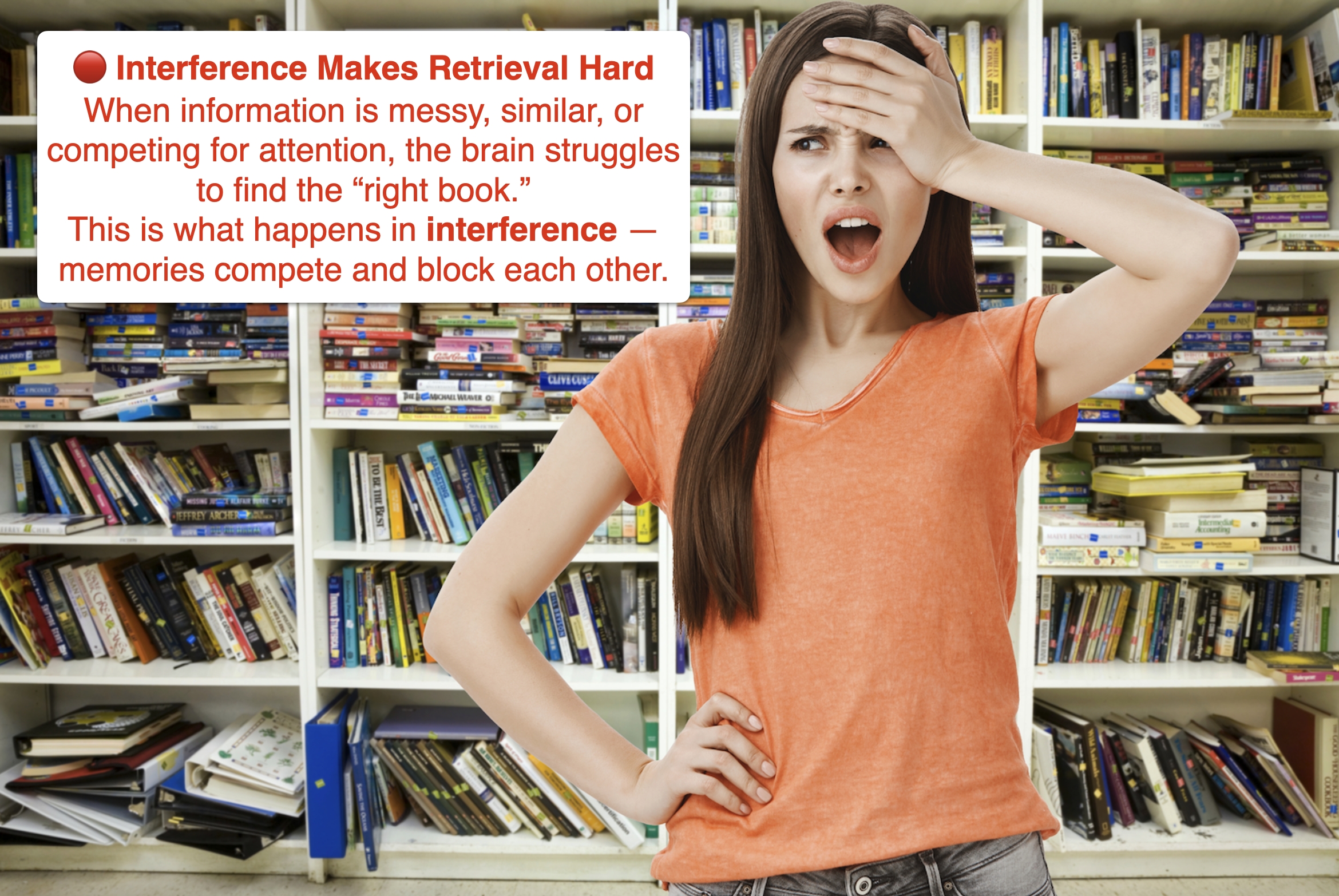
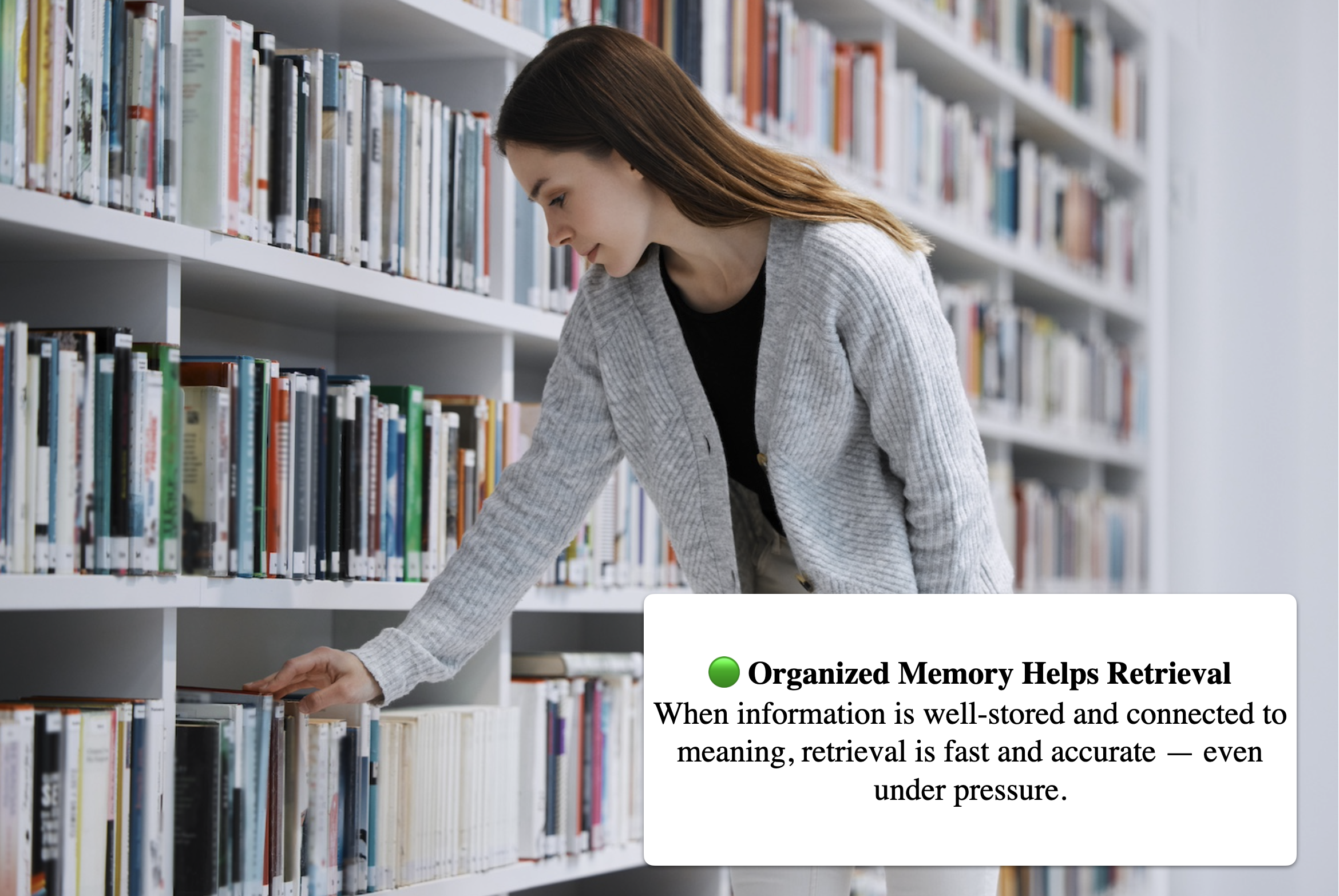
What these images illustrate:
When students try to retrieve information, their brain must search, select, and filter—just like trying to find a single book on a shelf.
The two contrasting images help demonstrate three critical ideas:
-
Interference slows or blocks retrieval
When too many similar or competing ideas are present, the brain struggles to locate the correct one. It’s like standing in front of a messy shelf where everything blends together. -
Organization speeds up retrieval
When information is well-structured, labeled, and meaningful, the brain can retrieve it quickly—just like finding a book in an orderly library. -
Attention determines retrieval success
If attention drifts, the brain may pull up the wrong memory or none at all. Competing thoughts interfere with recall, especially during timed tasks like the Serial Position and Stroop tests.
This prepares students to understand why their recall varies—and why interference from competing information will affect their Lab Day performance.
Why this matters:
During the cognitive tasks in Lab, students will see how:
▪ Competing information disrupts recall
▪ Distraction leads to errors
▪ Organization and attention improve retrieval speed
▪ Interference explains why the Stroop Test becomes difficult
These concepts help students connect real-time performance to underlying brain processes—reinforcing the message that attention and organization shape how accurately and efficiently we remember.
Investigation Vocabulary:
Attention (uh-TEN-shun)
Definition:
The process of focusing mental resources on certain information while ignoring other information.
Teacher Notes — Why this matters:
Learning begins with attention. If students didn’t attend to something, it never entered working memory — and therefore cannot be remembered later.
Classroom Example — What this looks like:
A teacher pauses and says: “Eyes on the keyword. Say it with me.” This brief reset boosts attention and helps students encode the concept.
Cognitive Load (KOG-nuh-tiv lohd)
Definition:
The total amount of mental effort being used in working memory at one time.
Teacher Notes — Why this matters:
Working memory is limited. If we overload it (too much text, too many instructions, too much novelty), students fail not because they “forgot,” but because the brain could not process and encode the information.
Classroom Example — What this looks like:
Breaking multi-step directions into two short steps instead of giving all steps at once.
Information Processing Model (IPM) (in-for-MAY-shun PRO-sess-ing MAH-d’l)
Definition:
A model describing how the brain handles information — from entering through the senses, to working memory, to long-term memory.
Teacher Notes — Why this matters:
This investigation continues building the IPM foundation. Your teaching strategies — repetition, chunking, retrieval practice — are ALL grounded in IPM.
Classroom Example — What this looks like:
The teacher says: “Let’s pause. Tell your partner the three steps information follows through the brain.” (Retrieval + organization)
Interference (in-ter-FEER-ens)
Definition:
When new or competing information makes learning or remembering something more difficult.
Teacher Notes — Why this matters:
This explains why similar terms or procedures must be spaced apart. Interference — not “laziness” — often causes students to mix up concepts introduced too close together.
Classroom Example — What this looks like:
Separating two similar vocabulary terms by teaching them on different days rather than the same lesson.
Long-Term Memory (long-TERM MEM-uh-ree)
Definition:
The brain’s long-term storage system where information is kept for days, months, or a lifetime.
Teacher Notes — Why this matters:
Teachers often overestimate how much enters LTM. Retrieval practice — not re-teaching — is what strengthens long-term encoding.
Classroom Example — What this looks like:
Opening class with a 15-second “Quick Recall” from yesterday’s concept — strengthening the consolidation.
Retrieval (ree-TREE-v’l)
Definition:
Bringing information out of long-term memory so it can be used again.
Teacher Notes — Why this matters:
Every time students retrieve information, they strengthen that memory trace. Retrieval is not testing — it is learning.
Classroom Example — What this looks like:
Instead of re-explaining, the teacher asks: “Tell me in your own words how the Sensory Register works.”
Working Memory (WER-king MEM-uh-ree)
Definition:
A small, temporary “workspace” in the brain where information is held and used for short periods.
Teacher Notes — Why this matters:
Most student errors occur here. Too many steps → overload → mistakes. This investigation intentionally uses discrete, chunked tasks to support working memory.
Classroom Example — What this looks like:
Giving students only the first part of a set of instructions, letting them perform it, then giving the second part.