NAVIGATE
Once the slide presentation is launched
- use your left and right arrows to advance or go back in the slide presentation, and
- hover your mouse over the left edge of the presentation to get a view of the thumbnails for all the slides so that you can quickly move anywhere in the presentation.
- Click HERE to launch the slide presentation for the CELL.
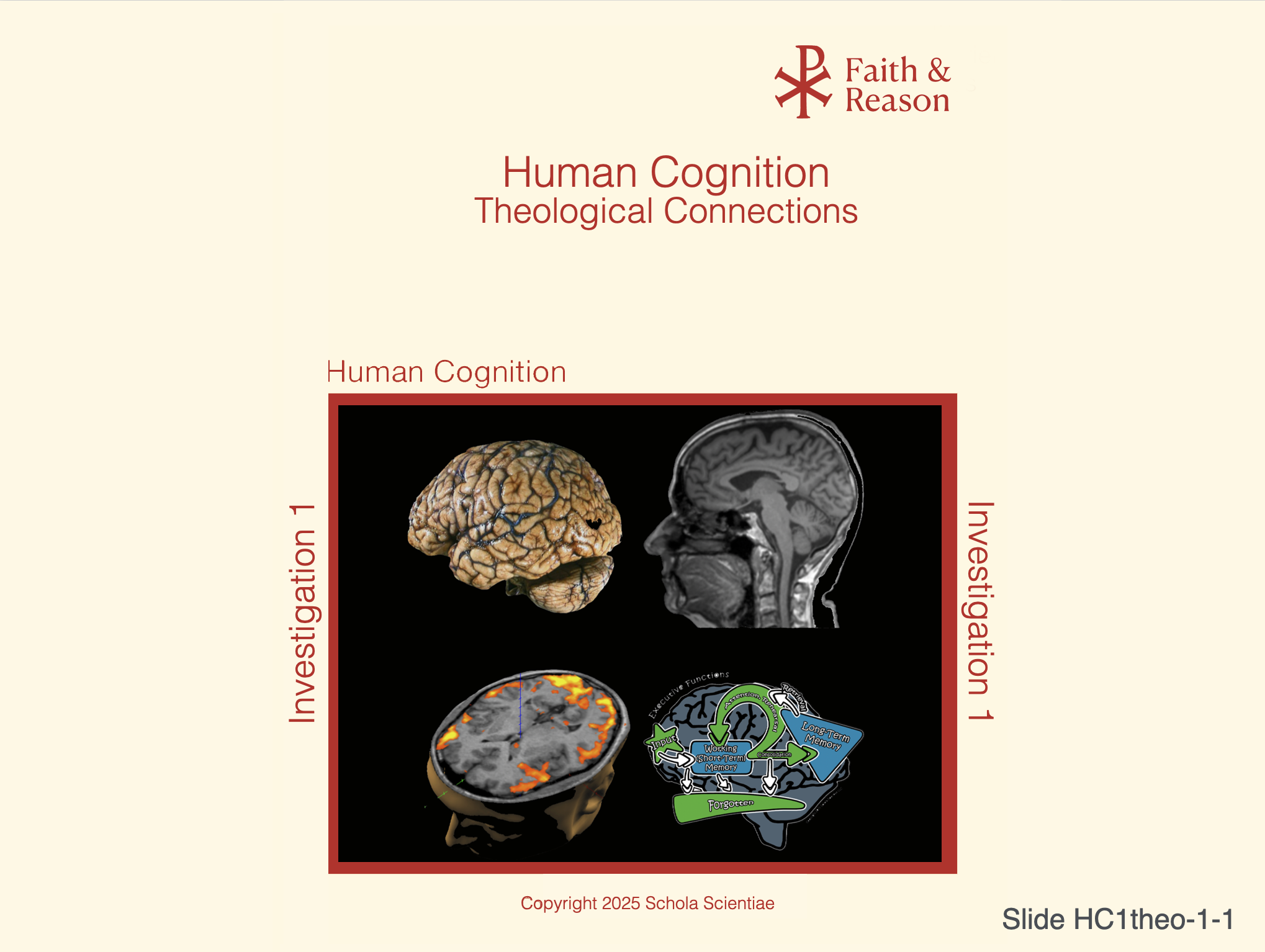
SLIDE HC1Theo-1-1
Purpose: Connect science and theology right from the start.
Teacher Notes:
- Point out that this Unit, Human Cognition, is part of the Human Experience Series—where science and faith work together.
- Mention that students will investigate how the brain works physically in science class and theologically here.
- Invite students to be curious about what makes us human.
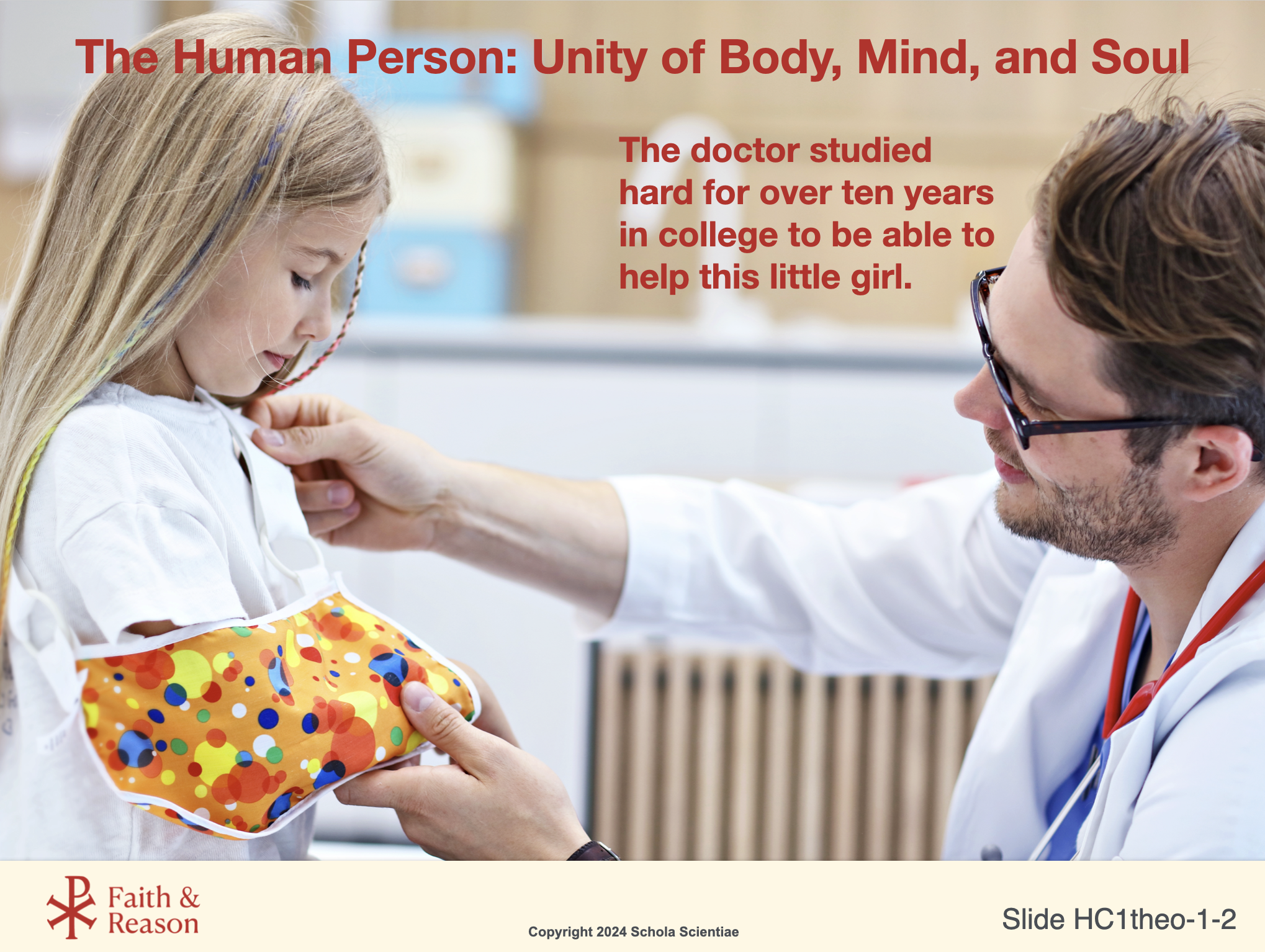
SLIDE HC1Theo-1-2
Purpose: Show that learning is a way to serve others.
Teacher Notes:
Ask: Why do you think this doctor worked so hard? → To help someone.
Use this as a way to discuss how reason and vocation are gifts we can offer to the world.
Transition into how our brain—our intellect—is part of how we become who God created us to be.
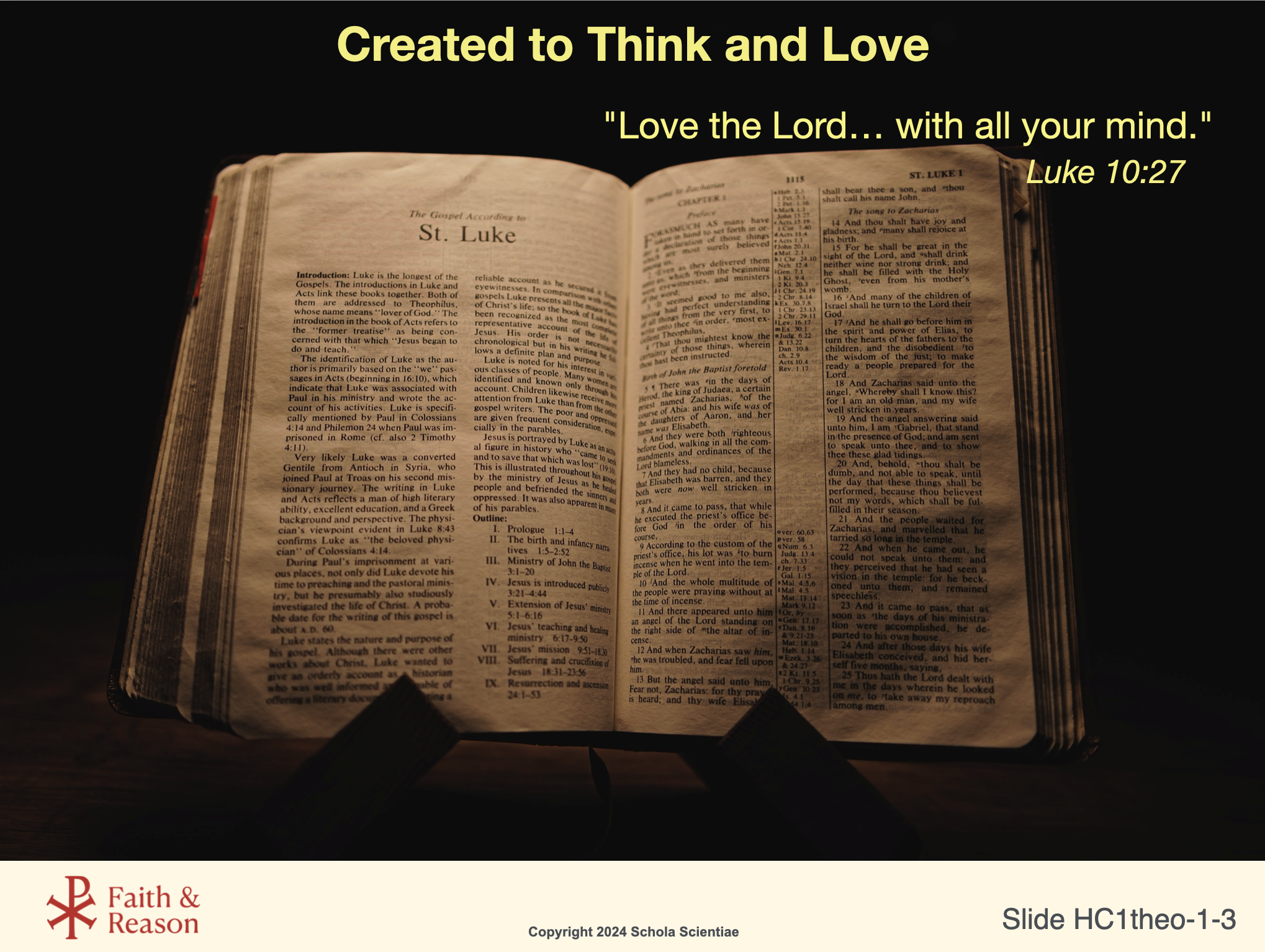
SLIDE HC1Theo-1-3
Purpose: Emphasize that loving God includes using our minds.
Teacher Notes:
Read the Scripture aloud together.
Ask: What does it mean to love God with your mind? Guide them to reflect on thinking, learning, and making wise choices.
Reinforce: Studying is not just academic—it’s a form of worship when we do it with love and purpose.
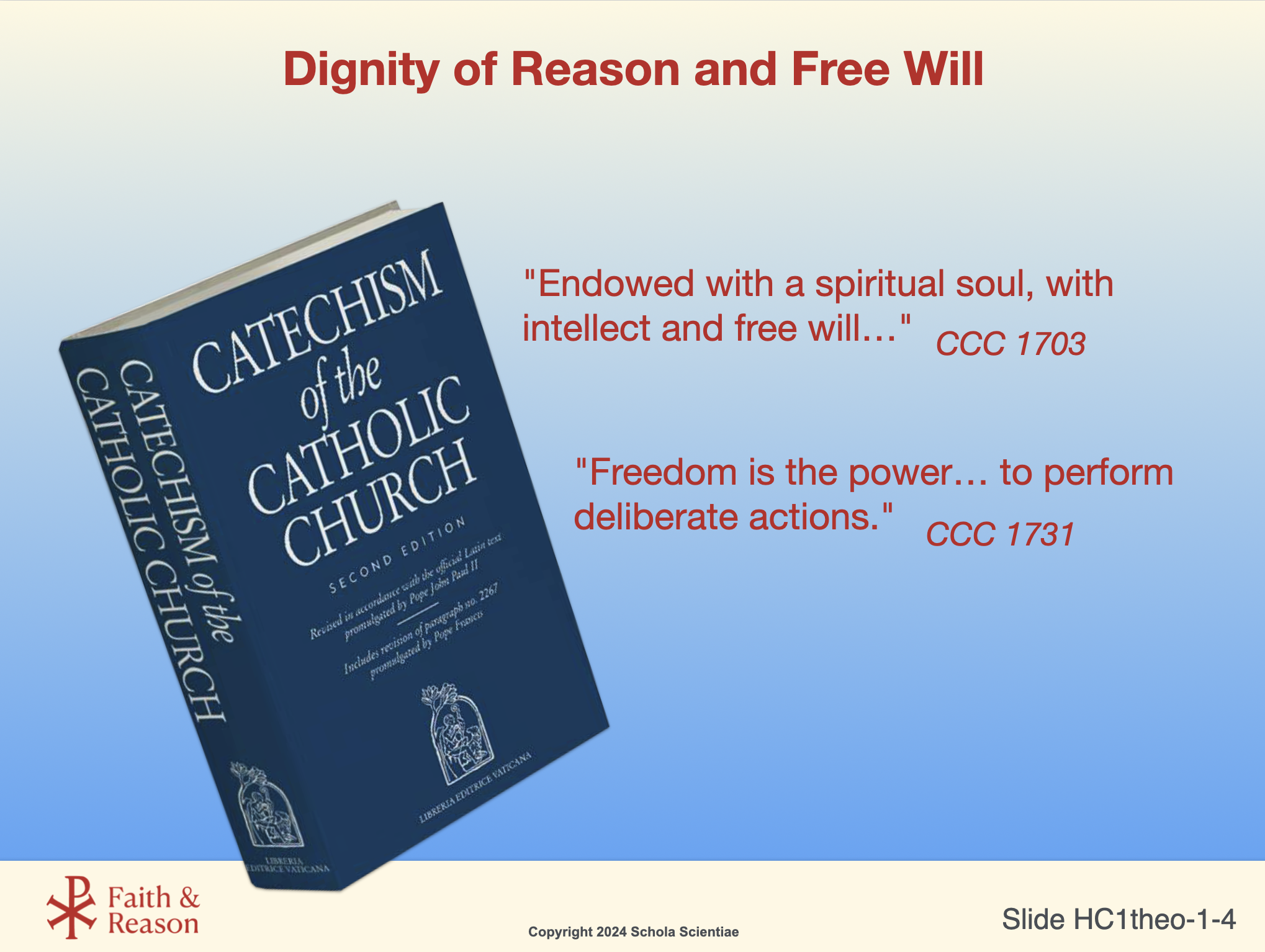
SLIDE HC1Theo-1-4
Purpose: Connect our ability to reason with our spiritual dignity.
Teacher Notes:
Briefly explain what the Catechism is.
Read both CCC quotes and unpack them:
We’re different from animals—we think, choose, and act freely.
Freedom is not “doing whatever we want,” but choosing what’s good and true.
Ask students: Can you think of a time when thinking helped you make a good choice?
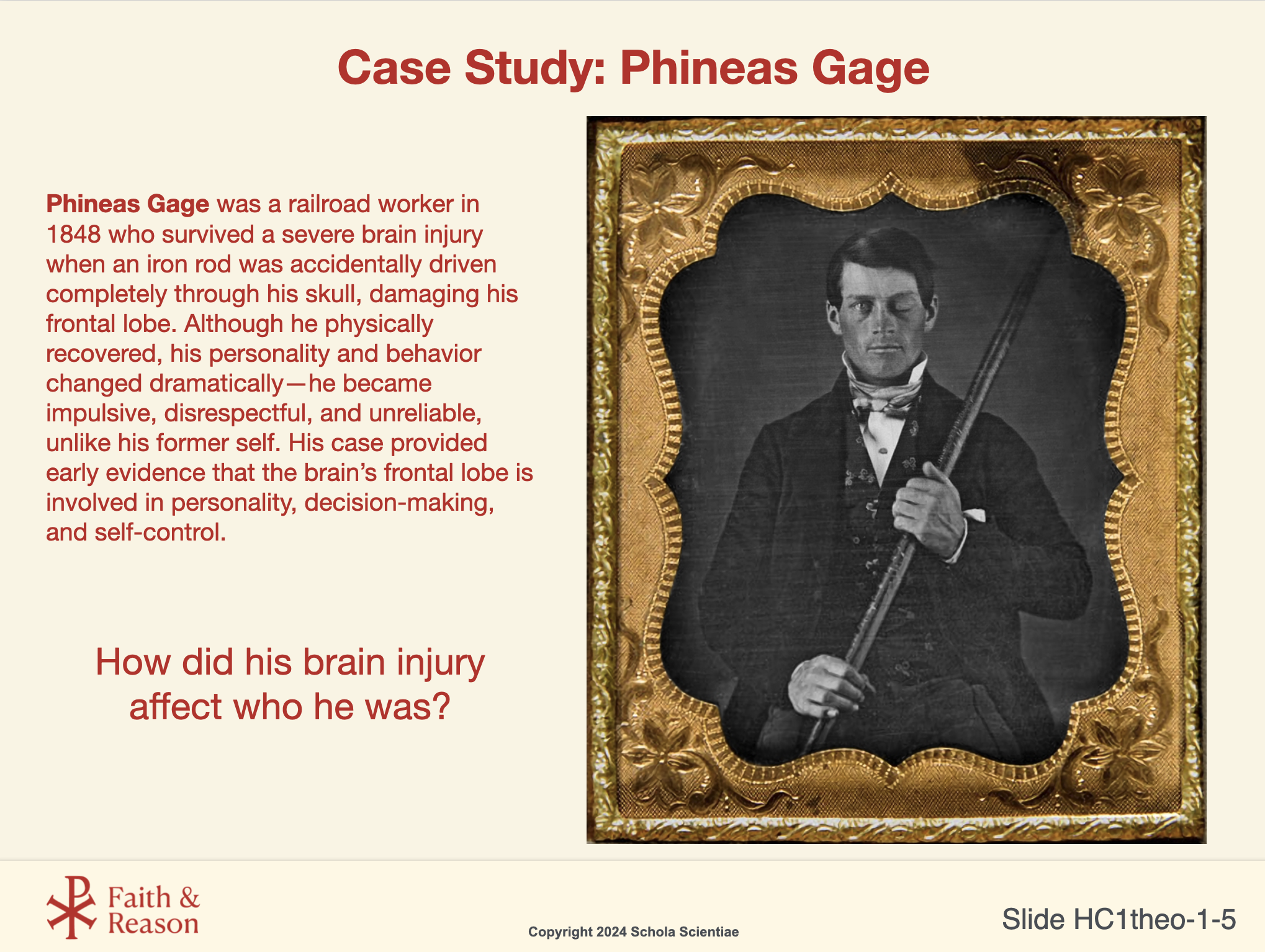
SLIDE HC1Theo-1-5
Purpose: Link real science to moral and spiritual identity.
Teacher Notes:
Tell the story of Phineas Gage briefly (or read the slide).
Emphasize: Our brain influences our personality, but we are more than just biology.
Ask: How can this help us understand the unity of body, mind, and soul?
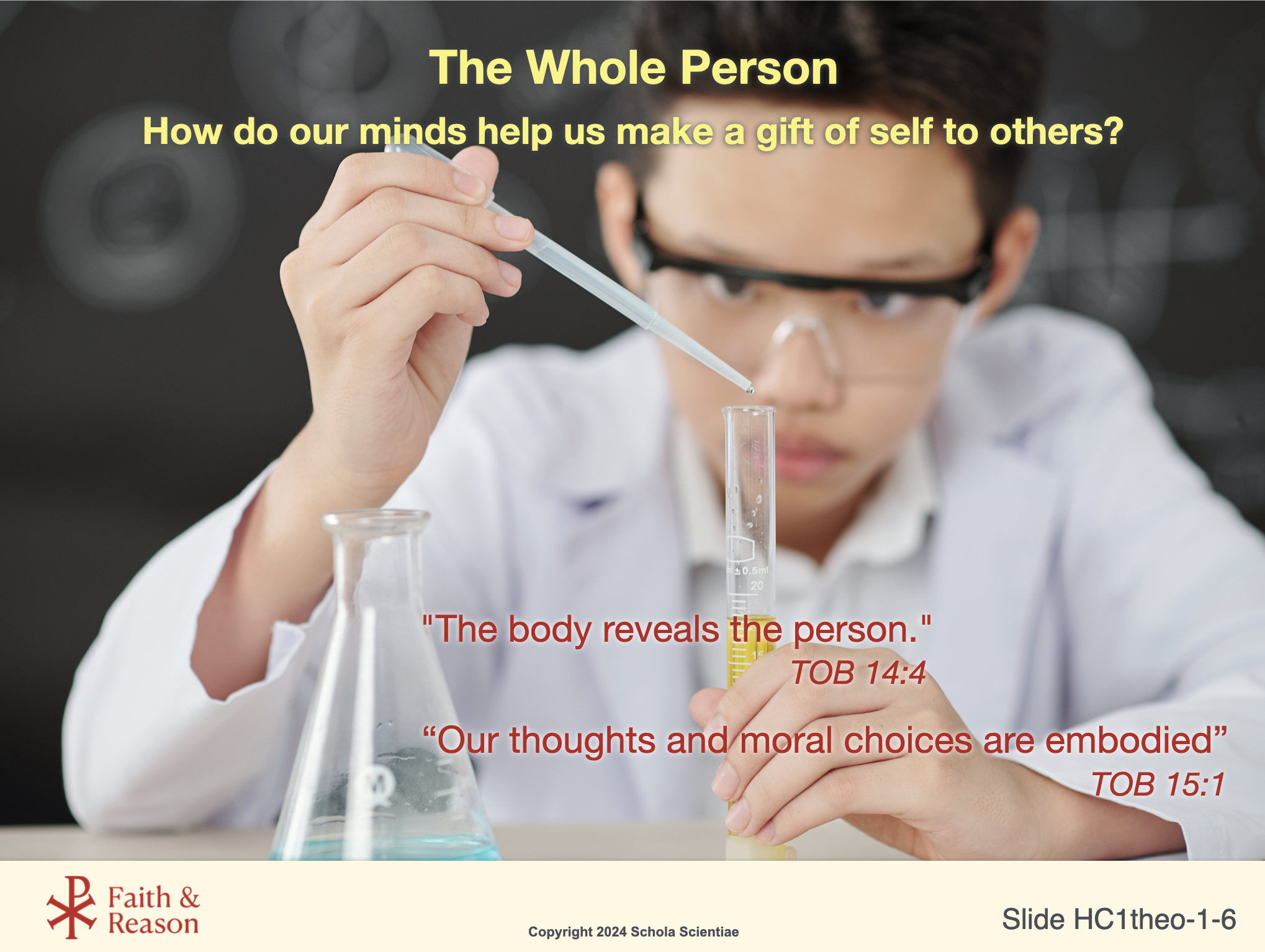
SLIDE HC1Theo-1-6
Purpose: Show how Catholic teaching views the unity of mind, body, and soul.
Teacher Notes:
Read both TOB quotes aloud.
Ask: How do your thoughts and choices become visible to others?
Help students see: Everything we do in our body—especially using our minds—is part of our personal identity and calling to love.
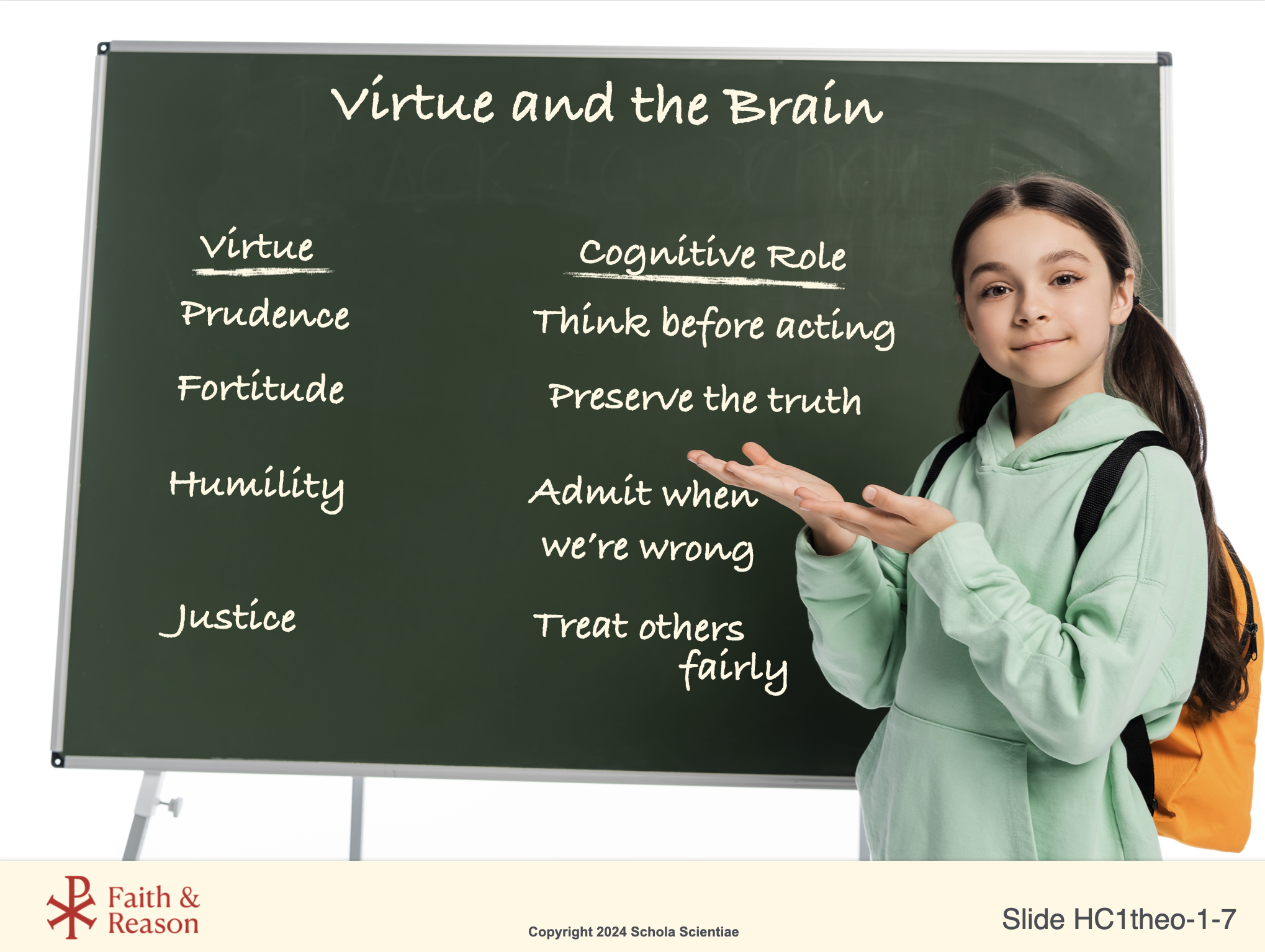
SLIDE HC1Theo-1-7
Purpose: Connect specific virtues to brain functions.
Teacher Notes:
Walk through each virtue and ask students to give examples from their own lives.
Optional: Have students rate which virtue they think is strongest for them and which one they’d like to grow in.
Reinforce: that choosing virtues is part of forming habits that shape both brain and soul.
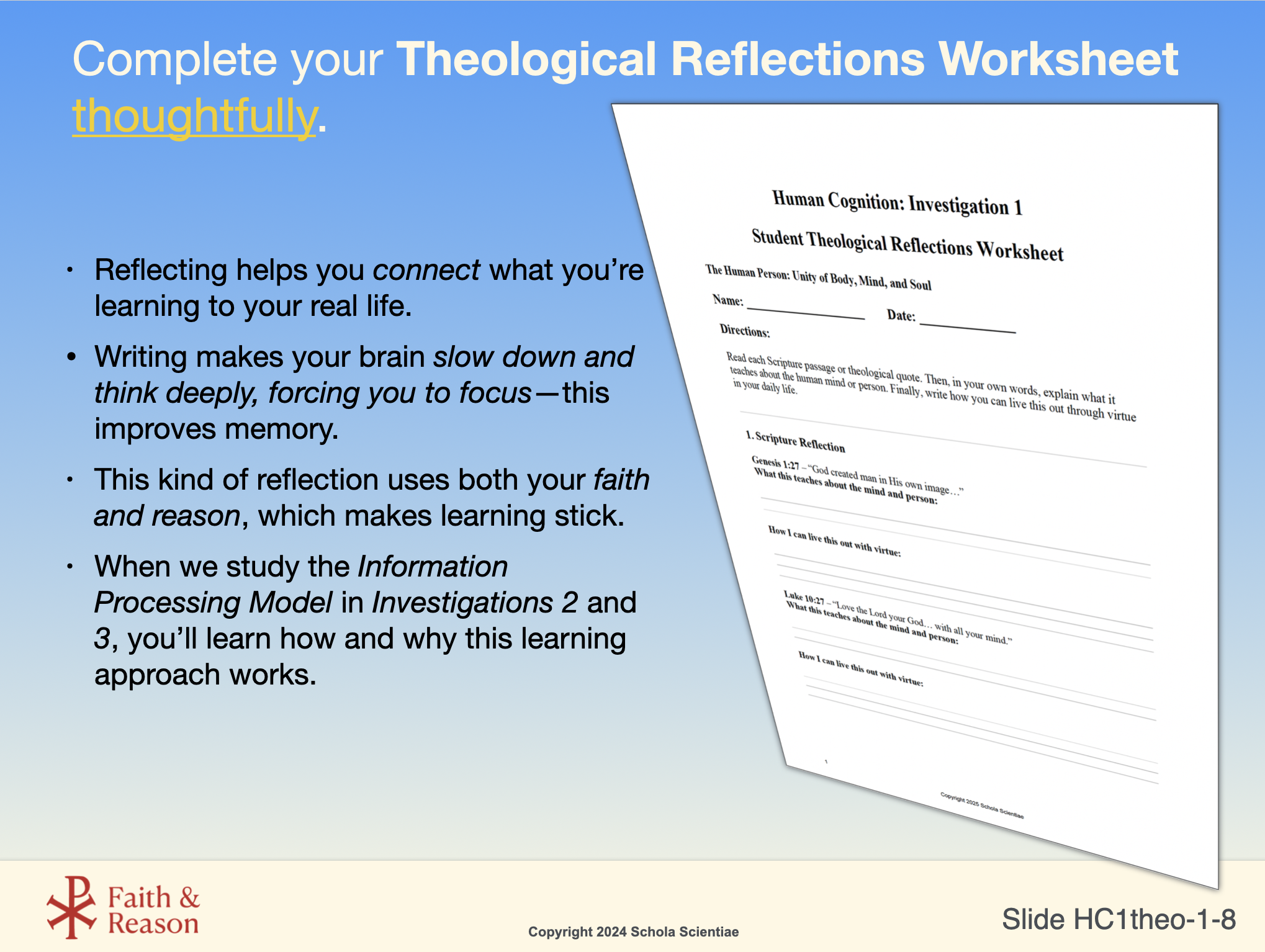
SLIDE HC1Theo-1-8
Purpose: Motivate students to take the worksheet seriously.
Teacher Notes:
Read each bullet and pause to explain:
Connecting learning to life helps them remember.
Slowing down their brain builds memory.
Faith and reason together make knowledge stick.
They’ll learn how this works in Investigations 2 and 3 when they explore the Information Processing Model.
Encourage: students to do the worksheet with intention—not just to finish, but to grow.
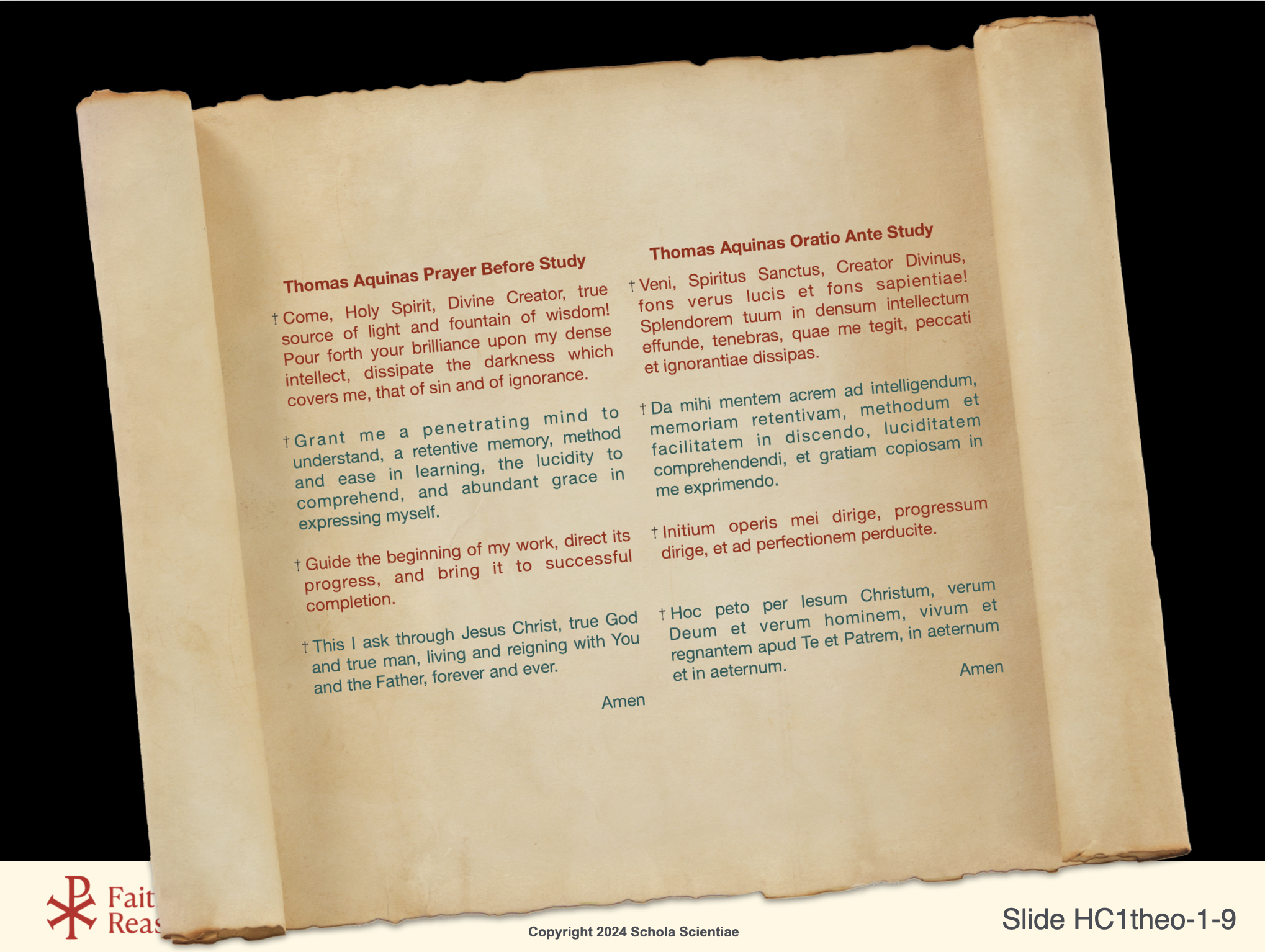
SLIDE HC1Theo-1-9
Thomas Aquinas’s Prayer Before Study (in English and Latin)
Teaching Notes:
Let students know this was St. Thomas Aquinas’ daily prayer before beginning his theological and philosophical work.
Invite the class to read it aloud—English only, or both English and Latin if the setting allows.
Use this as an opportunity to explain:
St. Thomas is a Doctor of the Church and a model for Catholic thinking.
He asked for intellectual gifts, not for pride, but to serve truth, God, and others.
Consider making this prayer a regular opening for theology or science classes throughout the series:
“Come, Holy Spirit, Divine Creator, true source of light and fountain of wisdom! Pour forth your brilliance upon my dense intellect, dissipate the darkness which covers me, that of sin and of ignorance. Grant me a penetrating mind to understand, a retentive memory, method and ease in learning, the lucidity to comprehend, and abundant grace in expressing myself. Guide the beginning of my work, direct its progress, and bring it to successful completion. This I ask through Jesus Christ, true God and true man, living and reigning with You and the Father, forever and ever. Amen.”