Teacher Portal (Preview)
Investigation 1: PostLab
PostLab Assessment — Investigation 1
Download and administer after completing the Investigation. (Not available in Preview)

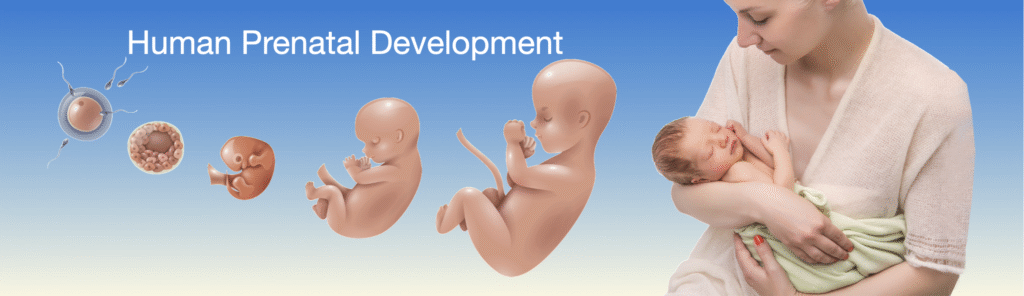
Reflecting on Mitosis and Prenatal Development: The purpose of this PostLab is to help students connect the hands-on modeling they completed in the Lab to the central ideas of this Investigation. Students should now be able to explain how precise cell division makes human prenatal development possible and why errors in these processes can have serious consequences.
Teacher Note: Some concepts in this Investigation—such as fertilization and reproduction—are included for scientific completeness. Teachers may choose to emphasize cell division mechanisms, chromosome behavior, and developmental order, while adjusting the depth of discussion based on classroom context and student readiness.
Focus Questions:
Think about the following questions as we work through today’s PreLab.
By the end of this investigation, you should be able to answer each one confidently.
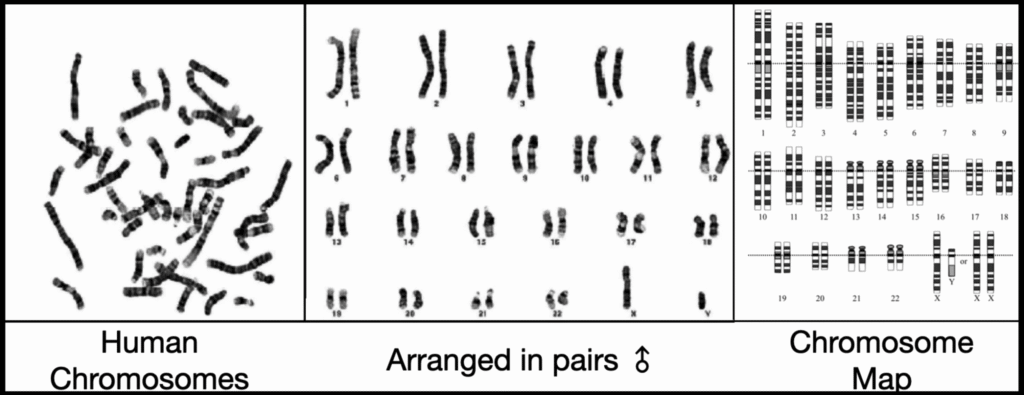
1. What role do chromosomes play in human development?
Chromosomes carry the DNA instructions that guide how every cell functions, divides, and develops. Understanding chromosomes helps explain how a single fertilized egg can grow into a complete human being.
2. Why do humans have 23 pairs of chromosomes, and why does this matter for growth?
Each pair includes one chromosome from each parent. These pairs ensure that every new cell formed during growth receives the full set of genetic instructions—critical for healthy development.
3. How does mitosis allow a tiny embryo to grow into a full-term baby?
Mitosis produces genetically identical cells again and again. This constant cell division increases cell number, allowing tissues, organs, and the entire body to grow throughout prenatal development.
4. What do the different stages of mitosis reveal about how cells divide accurately?
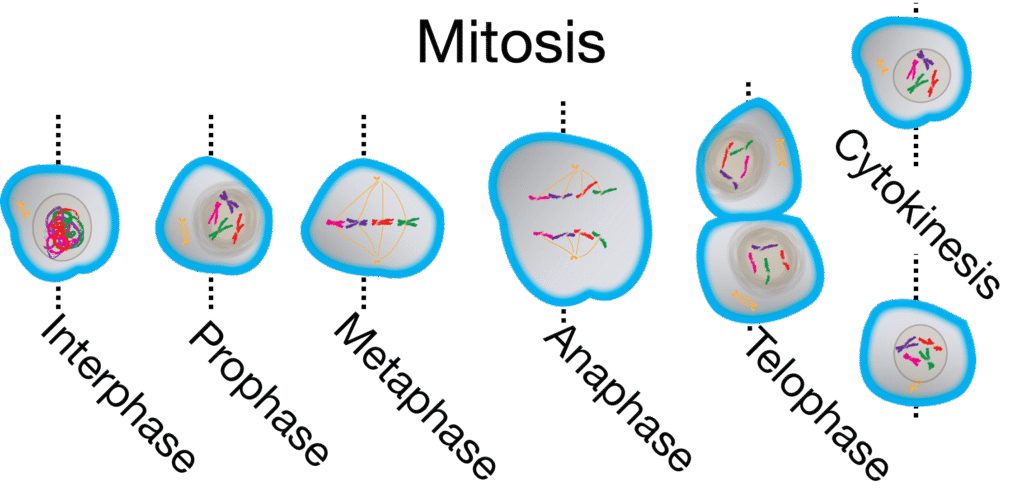
Each stage—prophase, metaphase, anaphase, and telophase—ensures chromosomes are copied and separated correctly. Accurate division is essential so that every new cell receives exactly 46 chromosomes.
5. Why are chromosome mistakes during early development so serious?
If a new cell receives too many or too few chromosomes, development can be disrupted. Understanding mitosis helps explain why correct chromosome number is vital for life and why errors can have major consequences.
Think Critically:
What are the major differences between asexual and sexual reproduction? In your answer, describe both the advantages and disadvantages of asexual and sexual reproduction. Do humans reproduce asexually or sexually?
Asexual reproduction happens when one parent makes an identical copy of itself, like in bacteria. It’s quick and doesn’t require a mate, which is an advantage, but since all the offspring are identical, there’s no genetic diversity, making it harder for them to survive changes in the environment. Sexual reproduction, like how humans reproduce, requires two parents to combine their genetic material, creating unique offspring. This genetic diversity is an advantage because it helps species adapt and survive, but it’s slower and requires finding a mate, which can be a disadvantage. Humans reproduce sexually, which is why we all look different from each other!
- Why is it important that each new cell gets an exact copy of the DNA during mitosis? It is important for each new cell to get an exact copy of the DNA so that it can function properly and carry out the same instructions as the original cell. If the DNA is not copied correctly, the new cells might not work the way they should, which can lead to problems in growth, repair, or even diseases like cancer.
- How do chromosomes ensure that genetic information is accurately passed from one cell to another during cell division? Chromosomes contain tightly packed DNA, which carries genetic instructions for the cell. During mitosis, the DNA is copied before the chromosomes line up in the middle of the cell. Then, each chromosome is pulled apart and evenly distributed to the two new cells. This ensures that each new cell gets the exact same set of genetic instructions as the original cell.
- How does mitosis help organisms grow and heal? Mitosis allows organisms to grow by making more cells. As a person grows, their body needs new cells to increase in size and develop new tissues. Mitosis also helps with healing because it replaces damaged or dead cells. For example, if you get a cut, mitosis produces new skin cells to close the wound and repair the injury.