
Back to: Human Cognition – Teacher
Student Portal
Investigation 1: Reflection and Meaning
Welcome to Reflection & Meaning
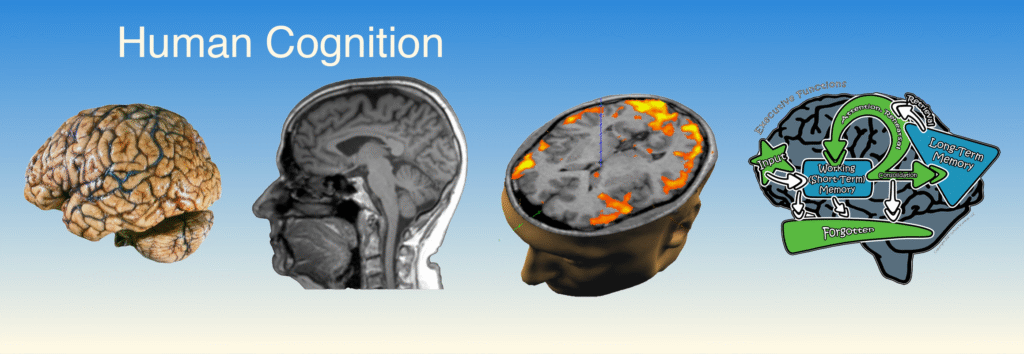
Science helps us understand how the human brain works. Reflection helps us consider what that knowledge means. As you explore the slides below, think about how the discoveries from this Investigation connect to your own experiences, choices, and understanding of what it means to be human.
Click on any image below to expand
Slide 1 — Human Cognition: The Human Brain
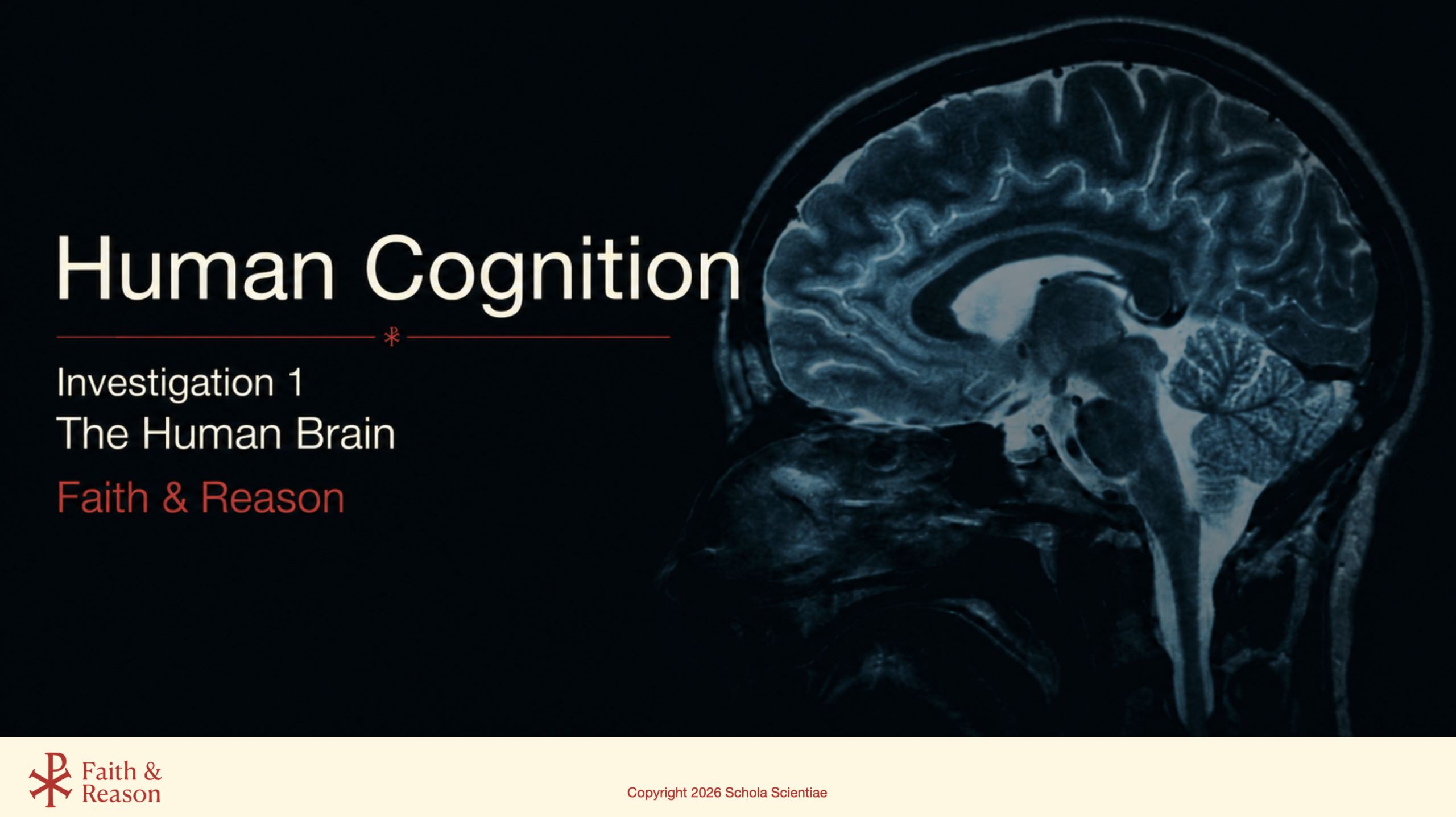
Your brain is one of the most complex structures known to science. It allows you to sense the world, move, remember, communicate, experience emotions, solve problems, and make decisions.
But studying the brain leads to a deeper question:
How much can understanding the brain tell us about what it means to be human?
As you move through these slides, keep that question in mind.
Slide 2 — Why Study Human Cognition?
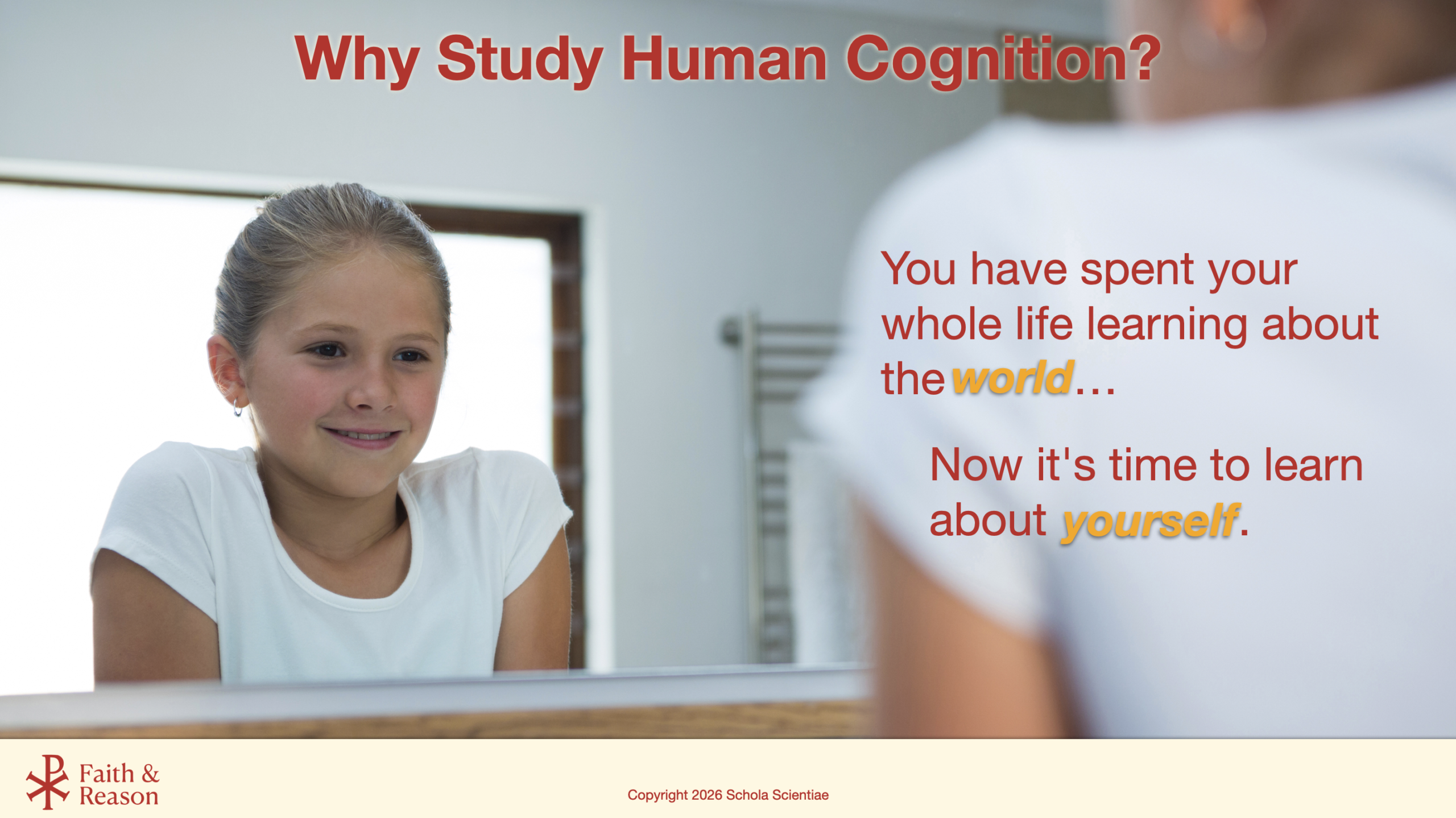
Studying human cognition means studying how we perceive, think, remember, learn, communicate, and make decisions.
Scientists investigate these abilities by studying the brain and nervous system. But cognition also raises larger questions about ourselves:
How do our brains contribute to who we are?
What can science tell us about the human person—and what questions remain?
Slide 3 — The Conversation Continues
Think about all the years you have spent in school. You have studied science, mathematics, history, literature, and many other subjects.
But how much time have you spent learning about the brain that makes all of that learning possible?
Human Cognition gives you an opportunity to study not only the world around you, but also how you experience, understand, and learn about that world.
As the conversation continues, consider:
What might learning about your own brain help you understand about yourself?
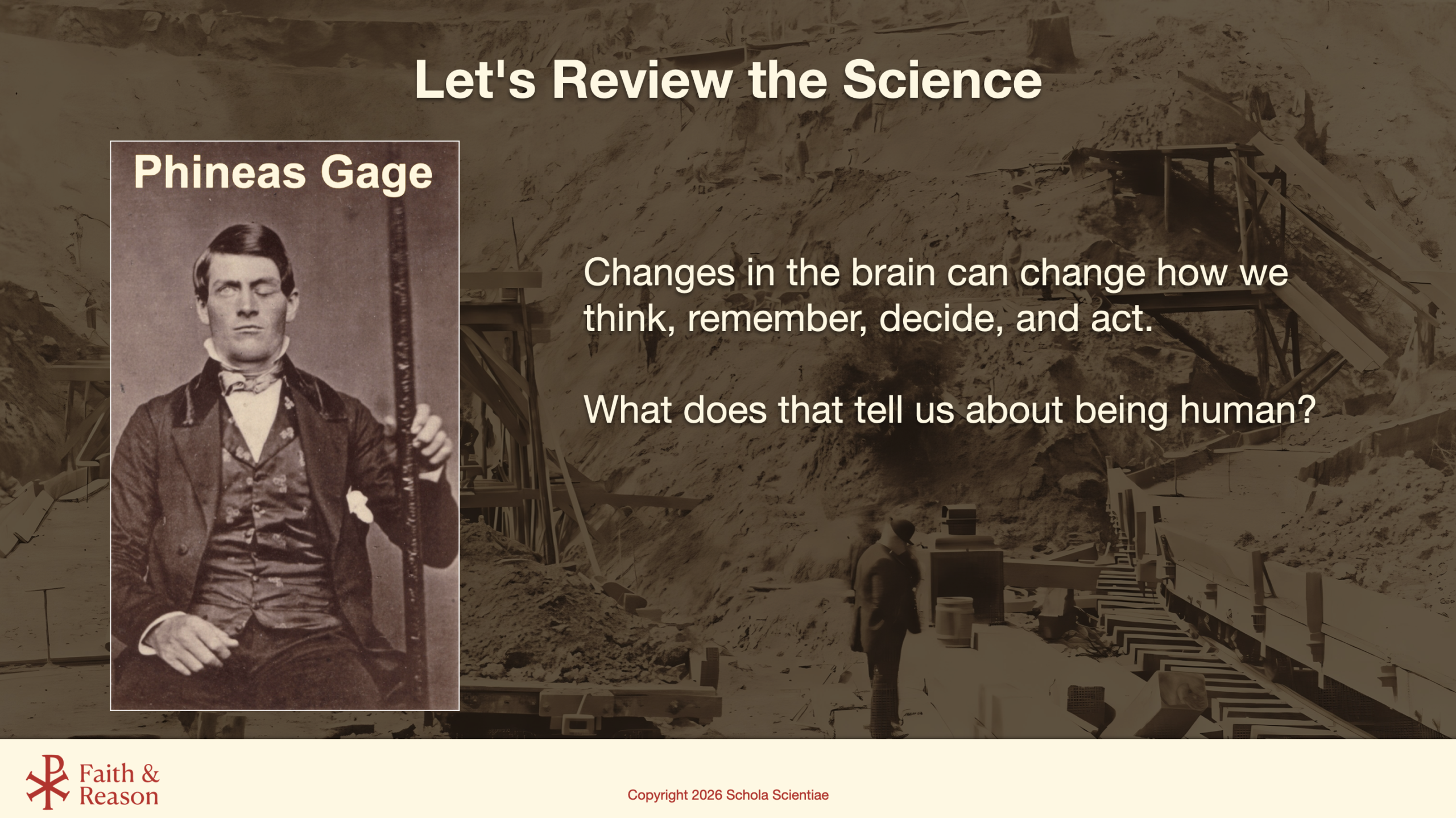
Slide 4 — Let’s Review the Science
During this Investigation, you learned about Phineas Gage and how a severe injury to his brain changed aspects of his personality and behavior.
His case provided important evidence that different parts of the brain contribute to different functions.
Think about what that evidence means:
If changing the brain can change how a person thinks or behaves, what questions does that raise about the human person?
Science has shown us that the brain matters profoundly. Now we can begin asking what those discoveries may tell us about ourselves.
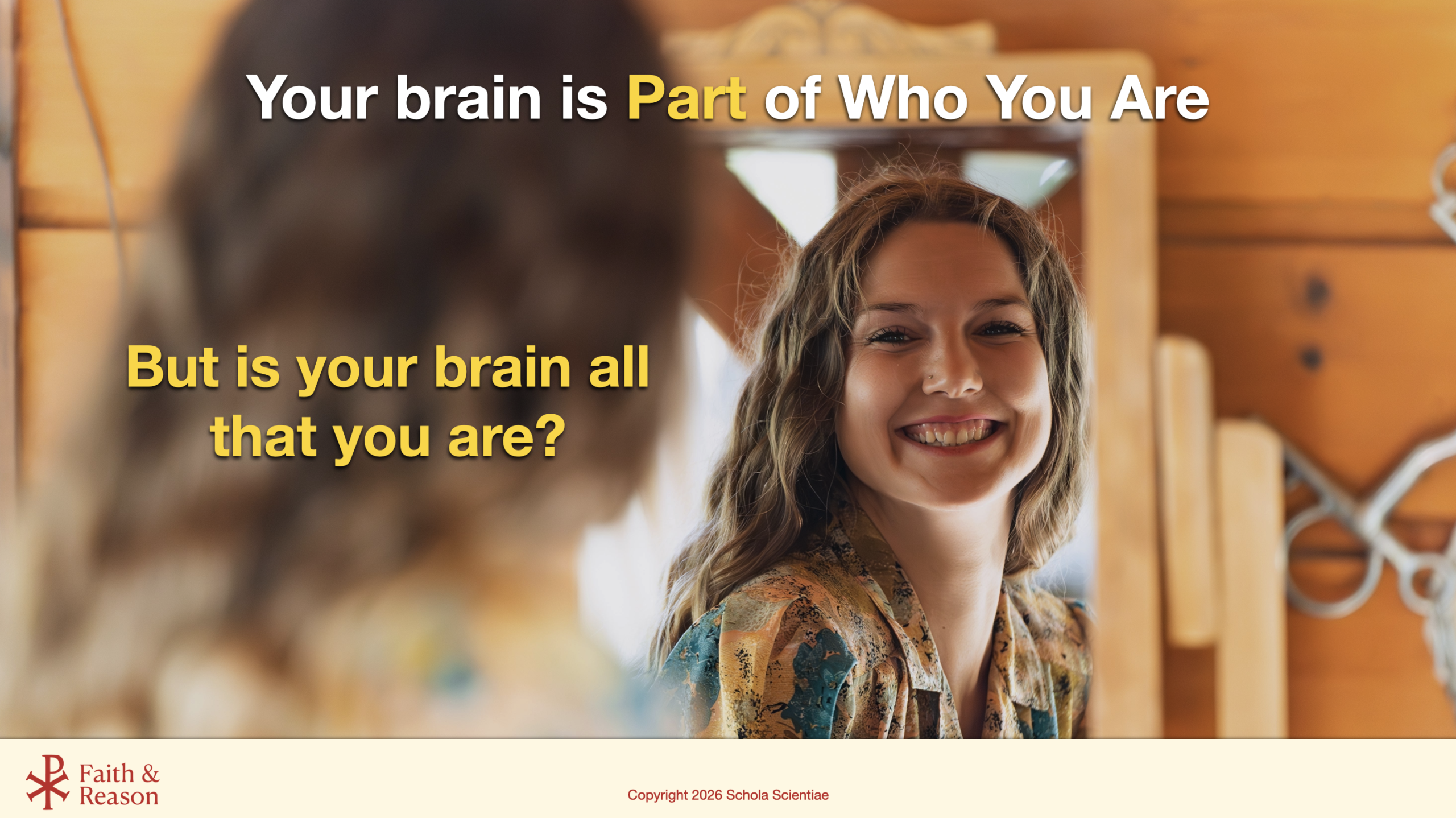
Slide 5 — Your Brain Is Part of Who You Are
Everything you have learned in this Investigation points to an important conclusion:
Your brain is an essential part of who you are.
It contributes to how you perceive, remember, communicate, move, make decisions, and behave.
But that leads to an even bigger question:
Is your brain all that you are?
Scientists, philosophers, and theologians have explored this question for thousands of years. You don’t need to settle it today. Instead, think carefully about what the scientific evidence tells us—and what questions still remain.
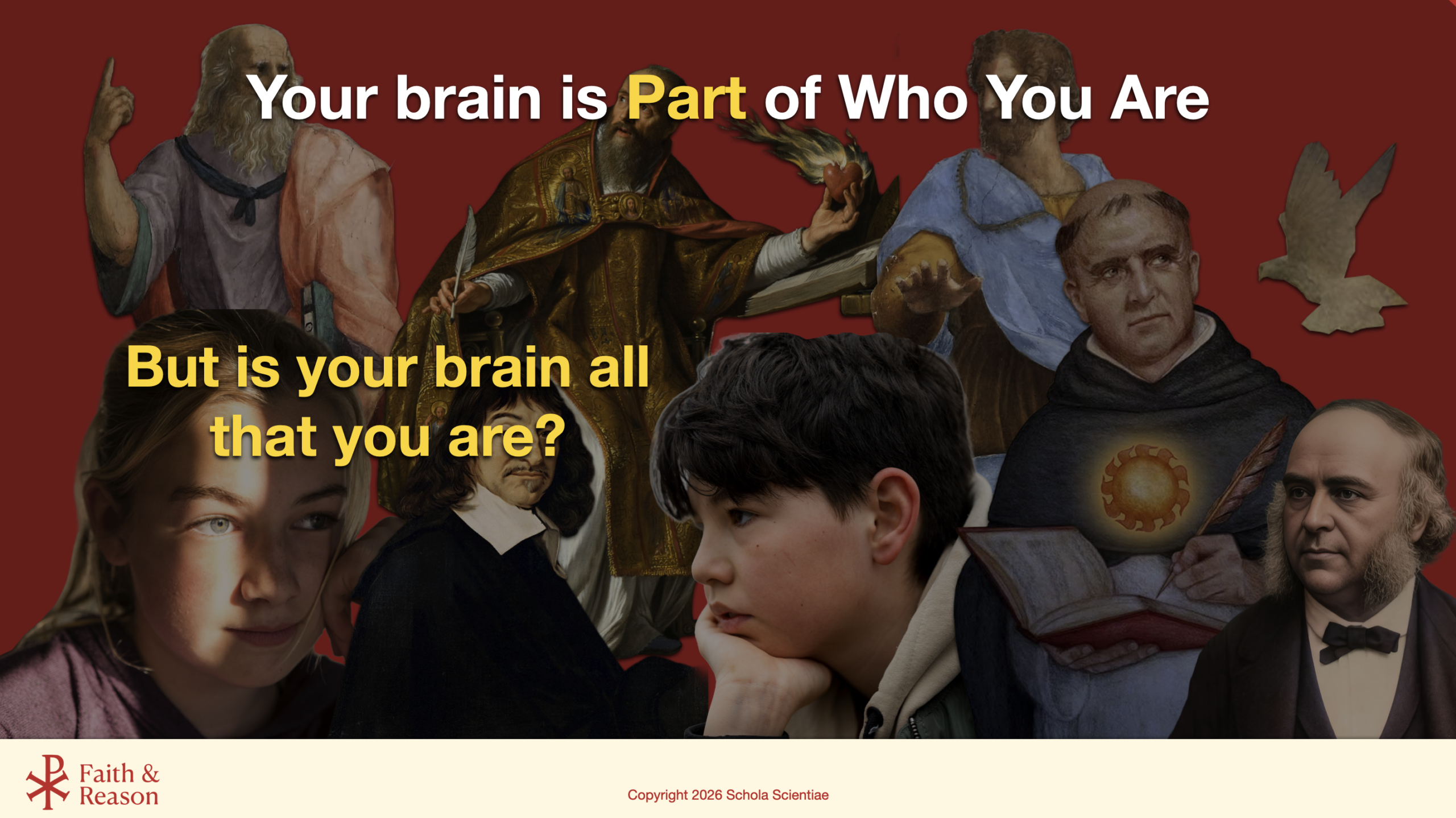
Slide 6 — One Question… Thousands of Years
You are not the first person to wonder about the relationship between the brain, mind, and human person.
For thousands of years, people have asked questions about what it means to be human and what makes us who we are.
Different generations have approached these questions in different ways, building upon, challenging, and refining the ideas of those who came before them.
Great questions can become conversations that continue across centuries.
As you explore the next few slides, remember:
You are becoming part of that conversation.
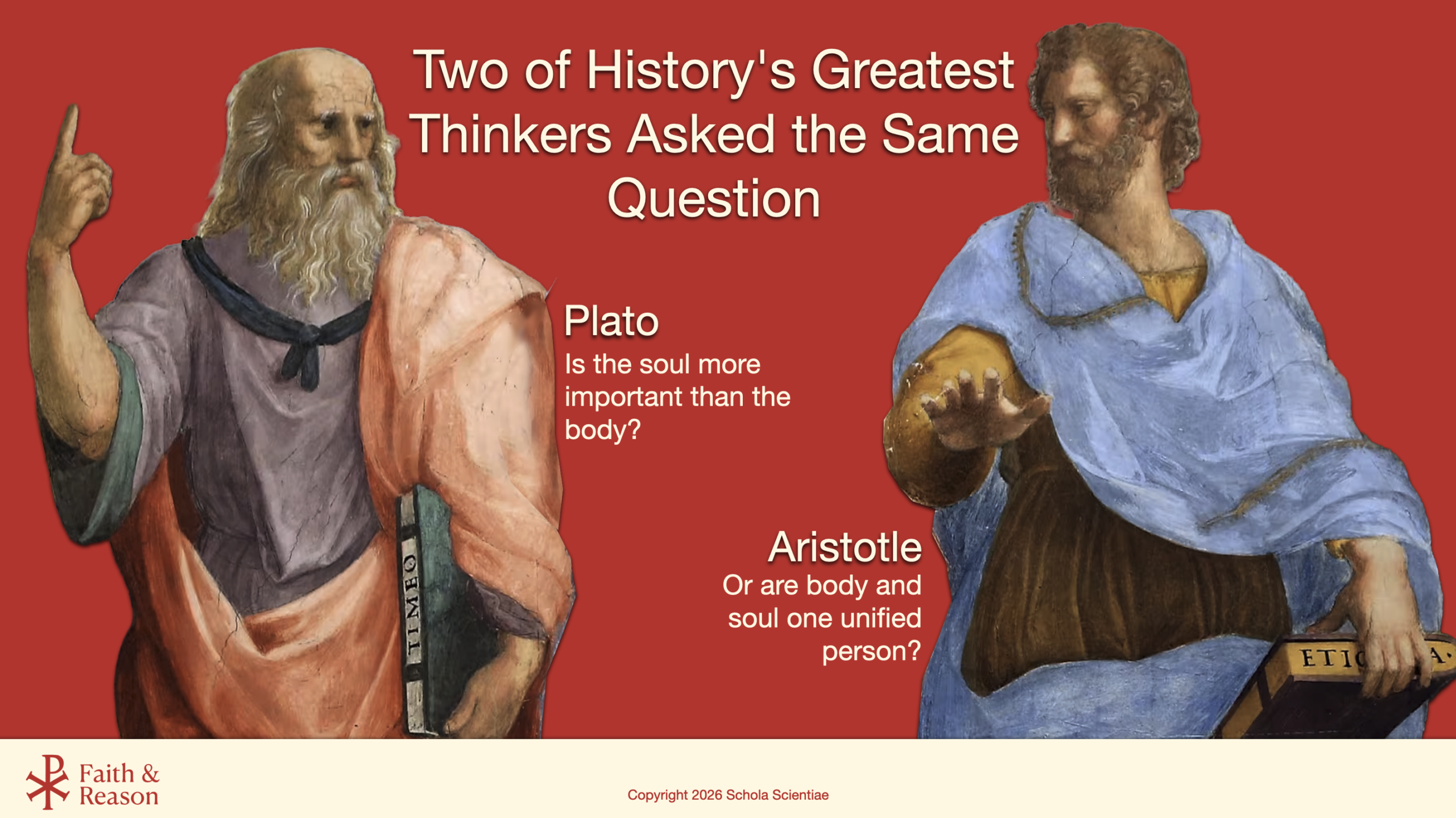
Slide 7 — Two of History’s Greatest Thinkers Asked the Same Question
Long before modern neuroscience existed, people were asking profound questions about human nature and what it means to be a person.
Plato and Aristotle were two of history’s greatest thinkers. They agreed that understanding the human person was important—but they approached the question differently.
As you consider their ideas, ask yourself:
- How can thoughtful people begin with the same question and reach different conclusions?
- What can we learn by trying to understand an idea before deciding whether we agree or disagree with it?
Modern neuroscience gives us evidence that Plato and Aristotle did not have. How might that new evidence contribute to this ancient conversation?
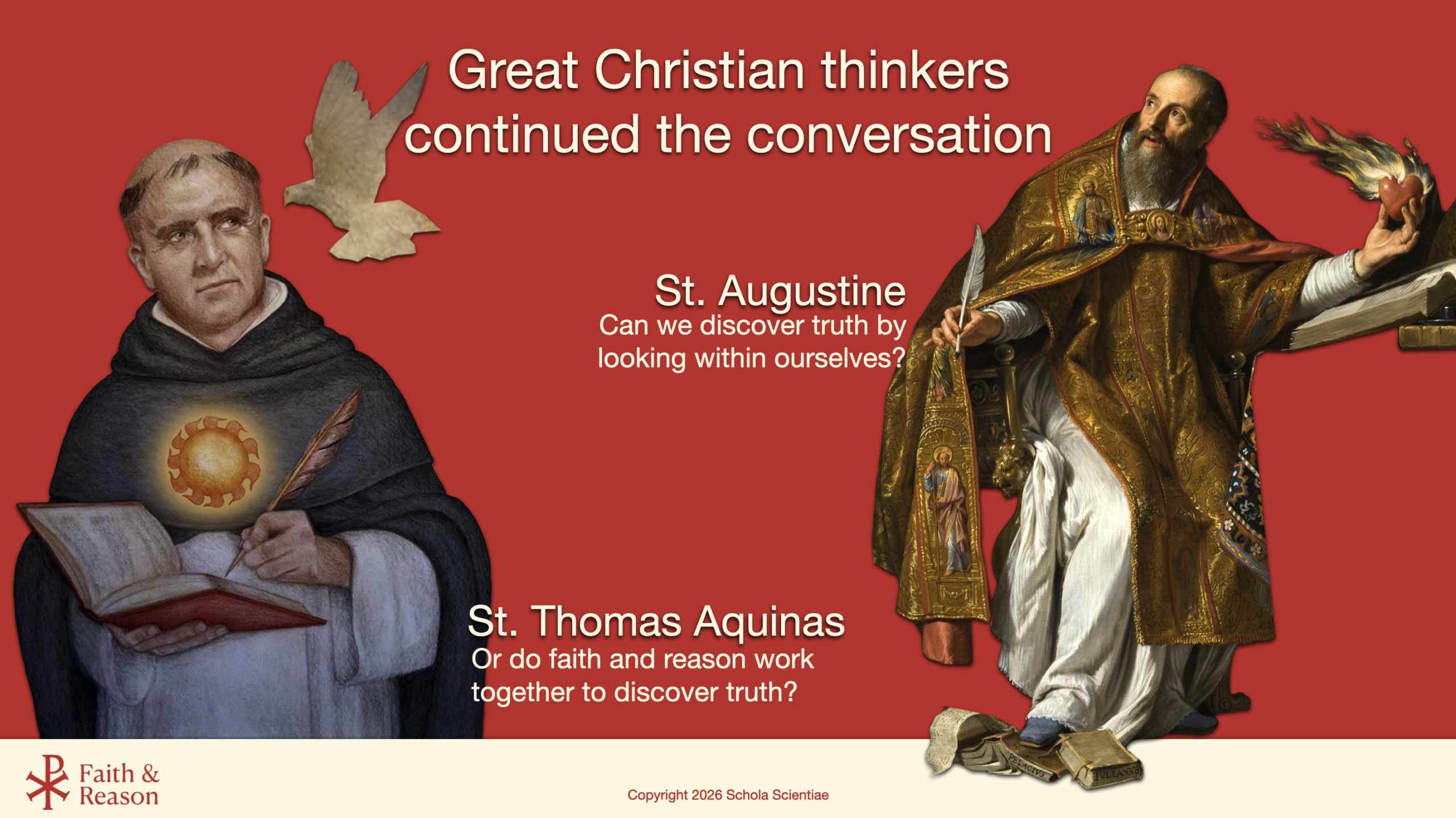
Slide 8 — Great Christian Thinkers Continued the Conversation
The conversation did not end with Plato and Aristotle. Centuries later, Augustine and Thomas Aquinas continued asking questions about the human person and about how we discover truth.
They considered how reason, experience, and faith can contribute to understanding ourselves and the world.
Think about this question:
Can different ways of seeking truth work together rather than compete with one another?
The search for truth often benefits from looking carefully at evidence, reasoning about what it means, and remaining open to what we still do not understand.
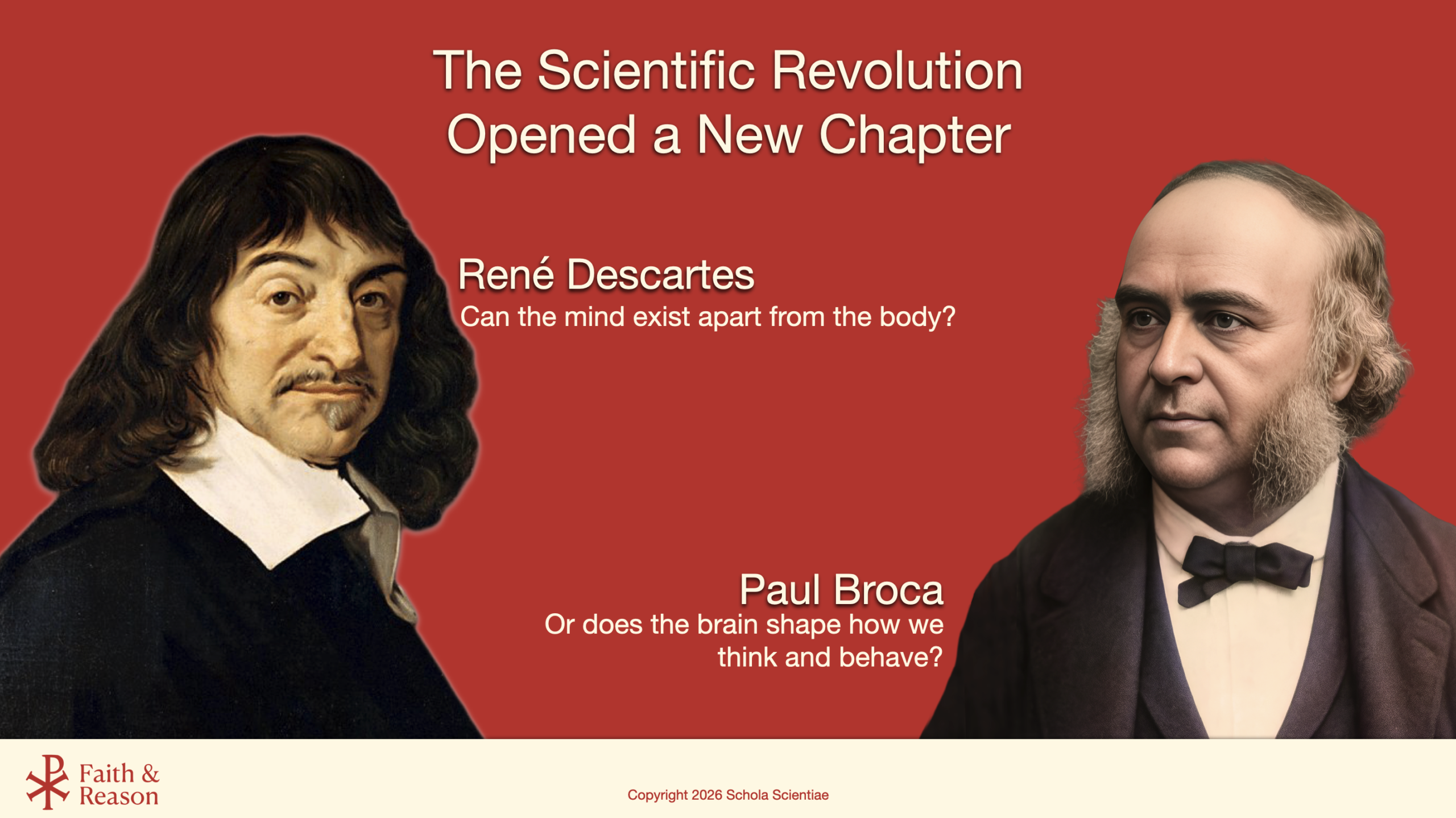
Slide 9 — The Scientific Revolution Opened a New Chapter
For centuries, questions about the mind and human person were explored mainly through philosophy. The Scientific Revolution added powerful new tools: careful observation, experimentation, and scientific reasoning.
Descartes asked important questions about the relationship between mind and body. Later, scientists such as Paul Broca began using evidence from patients to investigate how particular parts of the brain contribute to particular abilities.
Science did not end the earlier conversation. It brought new evidence into it.
Think about this:
How can a new scientific discovery answer an old question—and at the same time raise new ones?
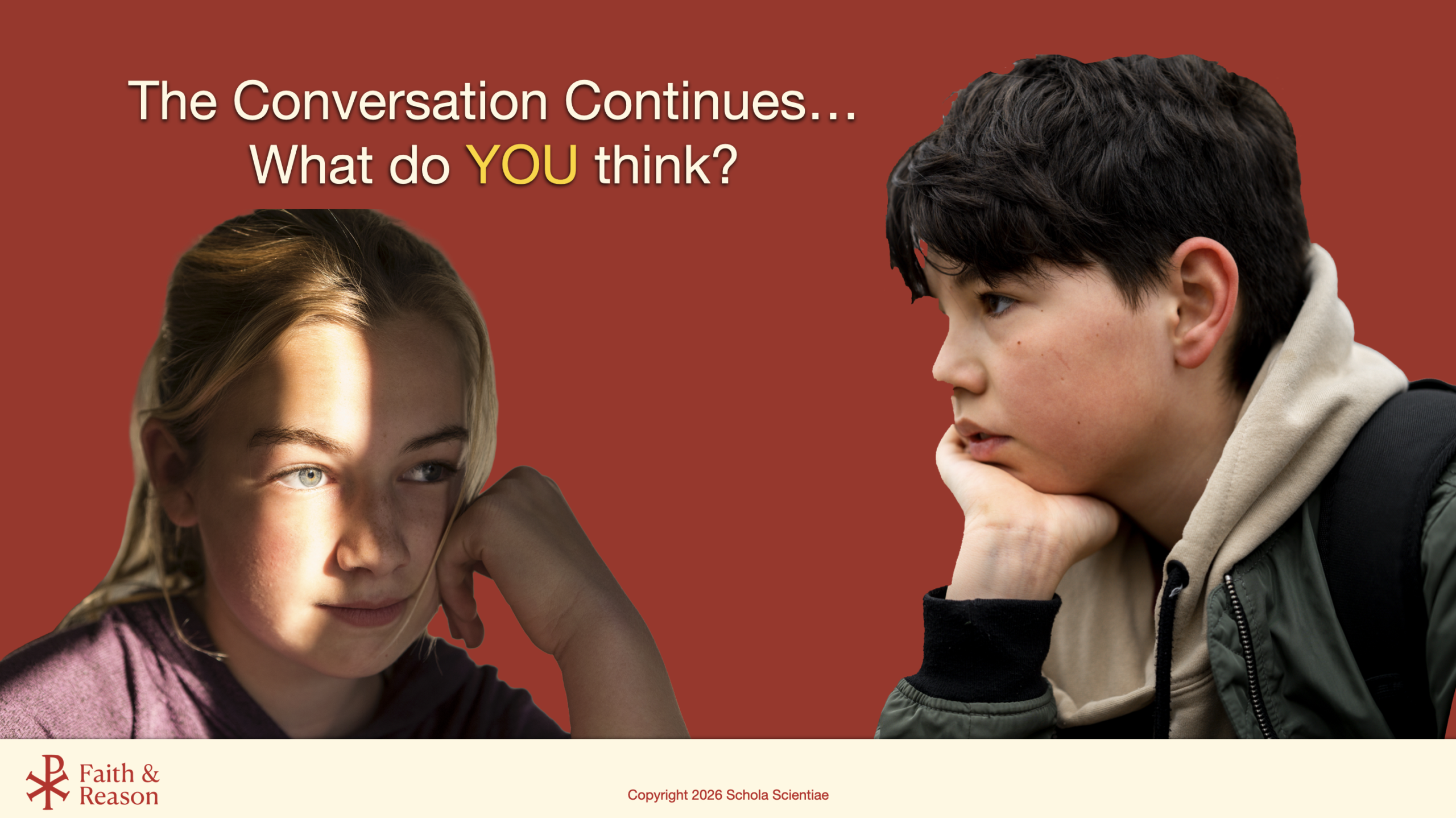
Slide 10 — The Conversation Continues…
For thousands of years, thoughtful people have discussed questions about the brain, mind, and human person.
Now it’s your turn to become part of the conversation.
You are not expected to have perfect answers. Use what you learned in this Investigation, listen carefully to other ideas, and explain the reasons behind your own.
Think about this:
Has what you learned about the brain changed the way you think about yourself? Why or why not?
Good questions don’t always end with immediate answers. Sometimes they give us something worth continuing to think about.
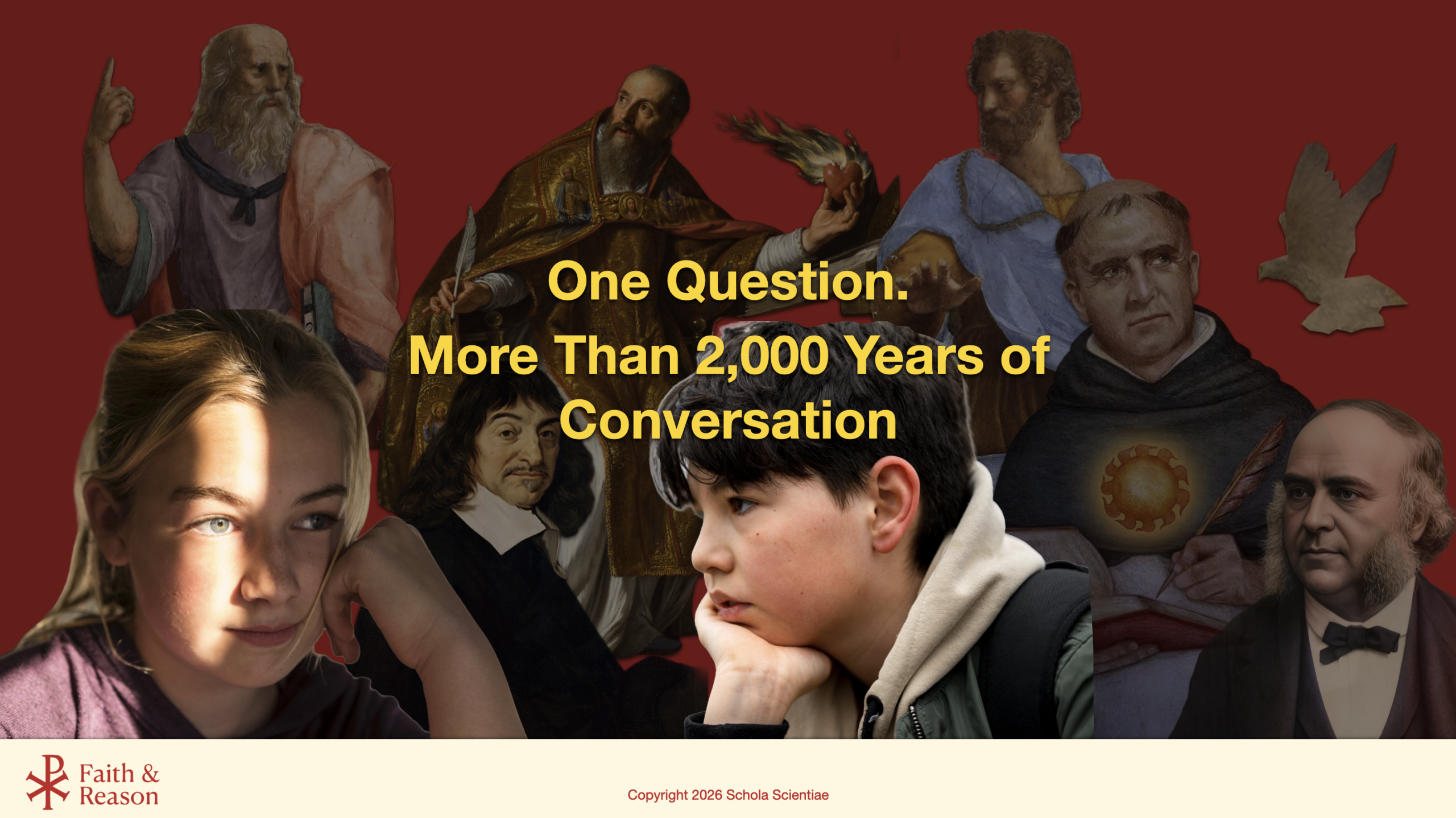
Slide 11 — One Question. More Than 2,000 Years of Conversation
For more than 2,000 years, thoughtful people have continued asking many of the same questions about the human person.
What does that tell us?
Some questions are so important that they are not settled by one experiment, one book, or one generation. Each new generation brings new knowledge, new evidence, and new ways of thinking about them.
Science has added remarkable discoveries about the human brain to this ancient conversation—but those discoveries have not ended it.
You are now part of one of humanity’s oldest and most important conversations.
Slide 12 — What Can Science Tell Us About the Human Person?
Throughout this Investigation, science has revealed remarkable things about the human brain—its anatomy, specialized regions, and connections to perception, memory, language, movement, and behavior.
So consider two questions:
What can science tell us about the human person?
Are there questions about the human person that science may not be designed to answer?
Recognizing that science has a natural scope does not diminish its importance. Science gives us powerful and reliable knowledge about the natural world.
Reflection begins by asking what those discoveries may mean.
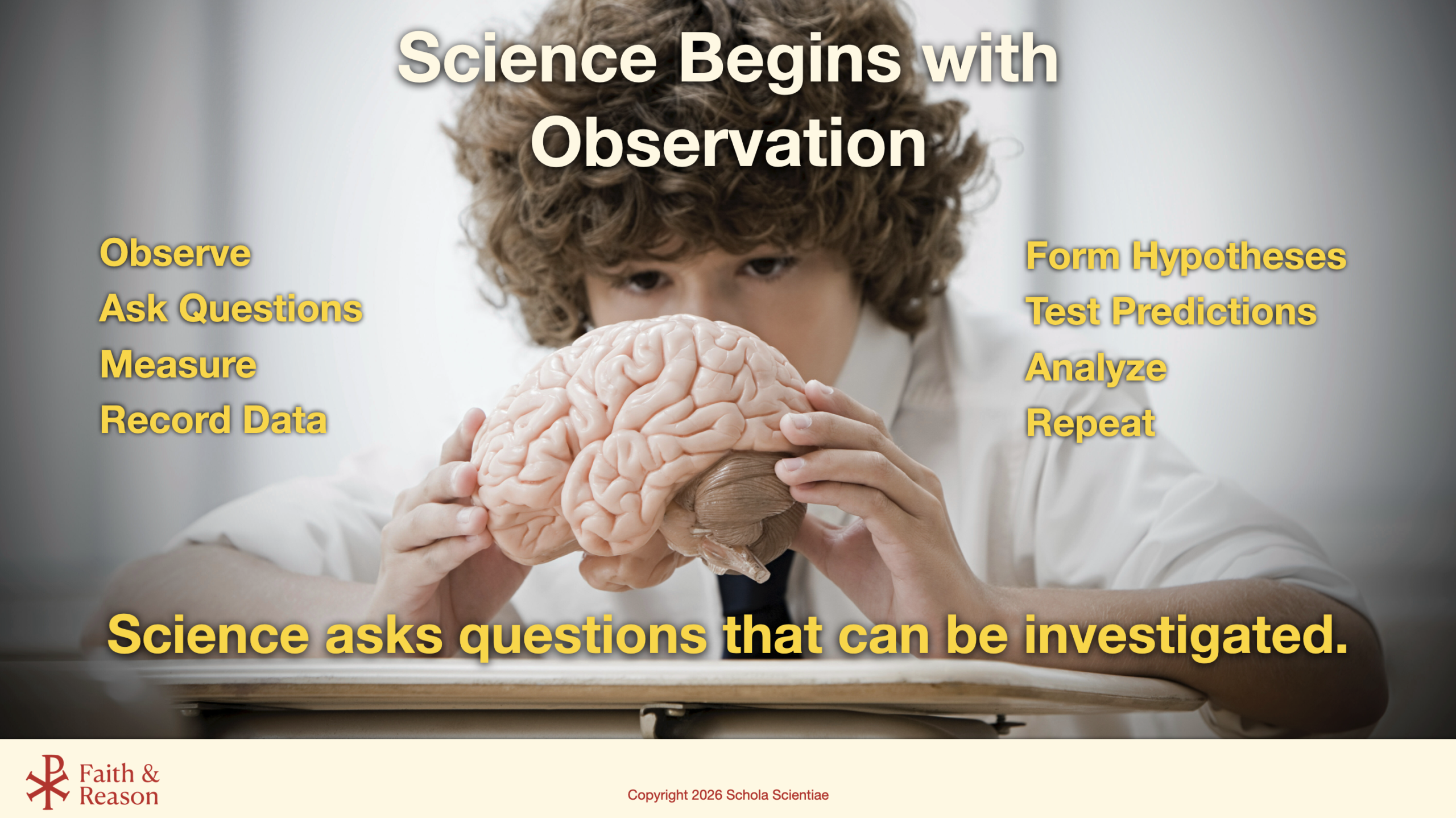
Slide 13 — Science Begins with Observation
After exploring some very big questions, return to where science begins:
Careful observation of the natural world.
Science asks questions that can be investigated. It gathers evidence, tests ideas, analyzes results, and uses that evidence to reach reasoned conclusions.
That same process guided the work you did throughout this Investigation.
Reliable scientific conclusions depend on evidence—not simply opinion or speculation.
Scientific thinking is one of the most powerful tools humans have developed for discovering how the natural world works. And trustworthy knowledge gives us a strong foundation for deeper reflection.