
Student Portal
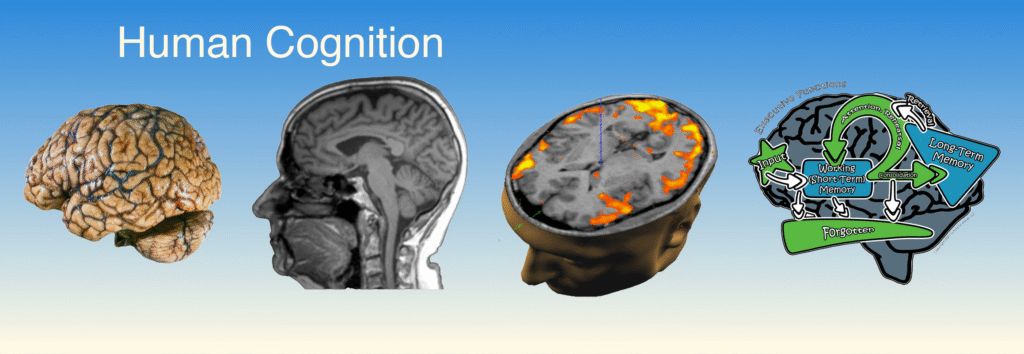
The nervous system does more than help us survive. It shapes how we experience reality itself.
In the laboratory, we studied receptors, reflexes, sensory maps, and information processing. We discovered that much of what the nervous system does happens automatically and without our awareness.
In this section, we step back from the experiments to consider what these discoveries may reveal about perception, consciousness, decision-making, and what it means to be human.
Science explains mechanisms.
Reflection explores meaning.
What Have We Learned About Ourselves?
The experiments in this Investigation revealed something surprising:
Much of what keeps us alive, safe, and connected to the world happens automatically and without our awareness.
From this Investigation, we discovered that:
- We experience only a small fraction of the information reaching our senses.
- Much of what our nervous system does happens before we become aware of it.
- Our bodies constantly protect and adjust themselves without conscious effort.
- What we call conscious experience may depend upon enormous amounts of hidden processing occurring beneath awareness.
In many ways, the conscious mind may be less like the captain of a ship giving every order and more like the visible tip of an iceberg resting upon vast amounts of activity occurring below the surface.
Questions for Reflection
- How much of your experience of the world do you think you are actually aware of?
- Are you making every decision consciously, or are some choices influenced by processes you never notice?
- If so much of the nervous system operates automatically, what role does conscious thought play?
Living Between Two Worlds
All humans encounter:
- an external physical world,
- and an internal world of interpretation.
Two people can encounter the same event and experience it differently because:
- memories differ,
- emotions differ,
- expectations differ.
The Human Advantage
Reflexes protect us. But humans can do something more.
Unlike automatic reflexes, we can pause before acting. We can reflect on our experiences, imagine the future, compare alternatives, and intentionally choose our responses.
Our nervous system allows us not only to react to the world—but to learn from it, shape it, and even change ourselves.
Humans can: Pause, Reflect, Plan, Imagine, Learn, Choose
Animals react. Humans can respond: While many animals can learn and make choices, humans possess an exceptional ability to reflect, plan ahead, and intentionally choose their actions.
Once Humans Knew That…
Scientific discoveries do more than answer questions.
- They change the way people think.
- They change medicine.
- They change technology.
- They change education.
- Sometimes, they change civilization itself.
Once scientists understood that some actions occur automatically while others require conscious thought, they could begin asking entirely new questions about how the nervous system works—and how it could be repaired, improved, and understood.
That knowledge helped pave the way for advances in:
- neurology,
- psychology,
- rehabilitation medicine,
- prosthetics,
- sports training,
- reaction-time studies,
- aviation,
- ergonomics,
- human-computer interfaces,
- neuroscience,
- artificial intelligence.
Every scientific discovery opens new possibilities. Understanding the nervous system has helped millions of people recover from injuries, improve learning, design safer technology, and better understand themselves.
Why This Matters
Science is not simply a collection of facts.
- Each discovery becomes a foundation upon which future discoveries are built.
- The knowledge gained by one generation often becomes the starting point for the next.
Questions That Remain
Every scientific discovery answers some questions—but almost always raises new ones.
The more we learn about ourselves, the more we realize there is still more to understand. These questions remind us that science is not finished. It is an ongoing human search for truth.
Examples:
- Are we aware of all the reasons we make decisions?
- How much of what we experience is interpretation rather than reality?
- If memories influence perception, do two people ever experience exactly the same world?
- Can we learn to change our own reactions?
The Reflection & Meaning slides continue this conversation by exploring what these discoveries may reveal about ourselves, our choices, and the search for truth.