
Back to: Human Cognition – Teacher
Student Portal
Investigation 2: Reflection and Meaning
Welcome to Reflection & Meaning
Science helps us understand how the nervous system works. Reflection helps us consider what that knowledge means. As you explore the slides below, think about how the discoveries from this Investigation connect to your own experiences, choices, and understanding of the world.
Click on any image below to expand
Slide 1 — Human Cognition: Simple Information Processing
You have finished the science investigation.
Now comes a different kind of question.
Instead of asking “How does the nervous system work?”, ask yourself:
- Why does understanding the nervous system matter?
- What does it teach us about ourselves?
- How might it influence the way we think, learn, and make decisions?
There are no single “correct” answers to every question in Reflection & Meaning. Listen carefully to your classmates, support your ideas with evidence from the investigation, and be willing to consider new perspectives.
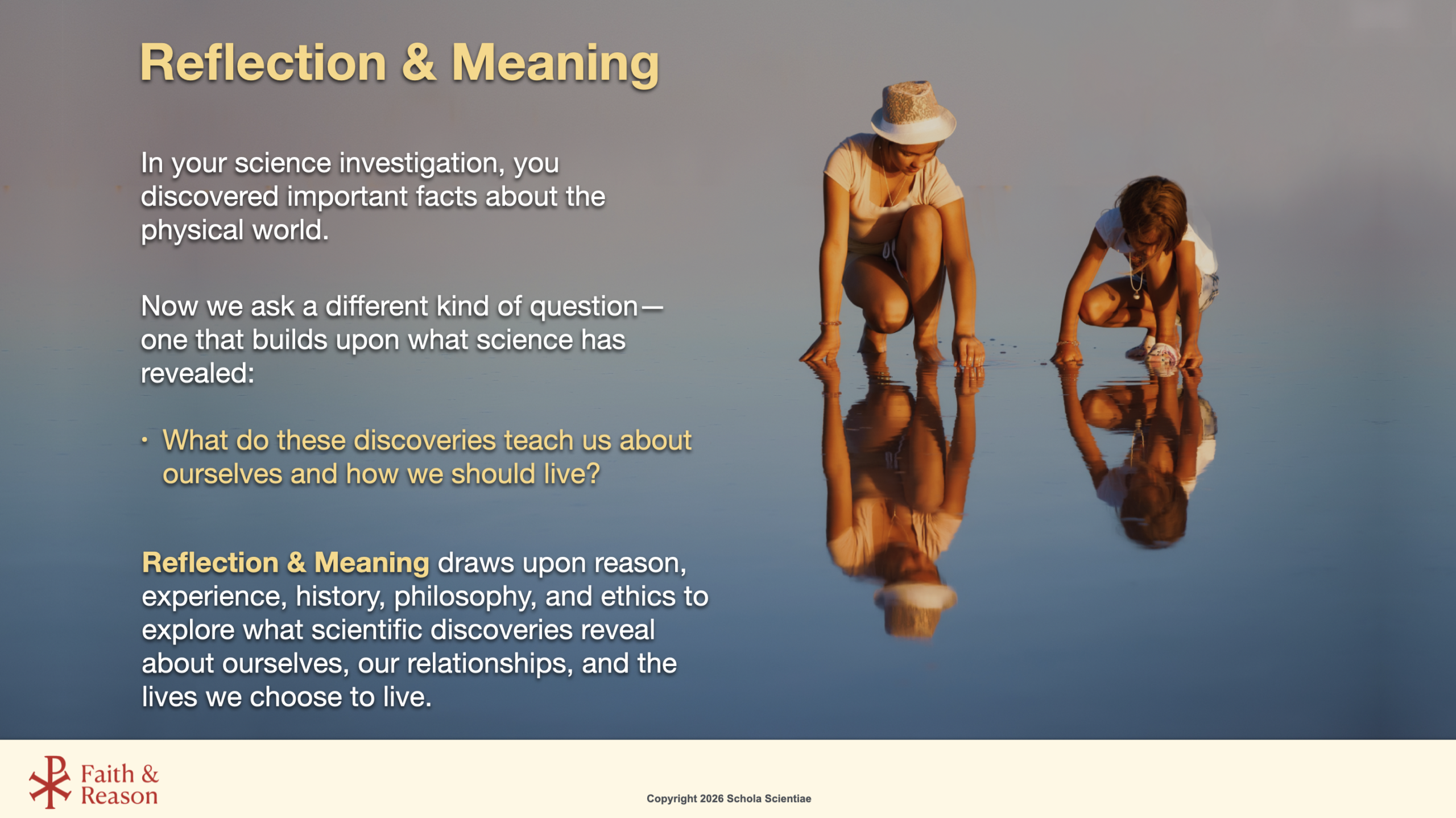
Slide 2 — Reflection & Meaning
In this Investigation, you discovered how the nervous system senses, processes, and responds to information from the world.
Now take the next step.
Think about how this scientific knowledge helps you better understand yourself, your everyday experiences, and the choices you make. As you explore the slides below, use what you learned during the Investigation to support your ideas.
There are no simple right or wrong answers. Listen carefully, think deeply, and be prepared to explain your thinking using evidence from what you learned.
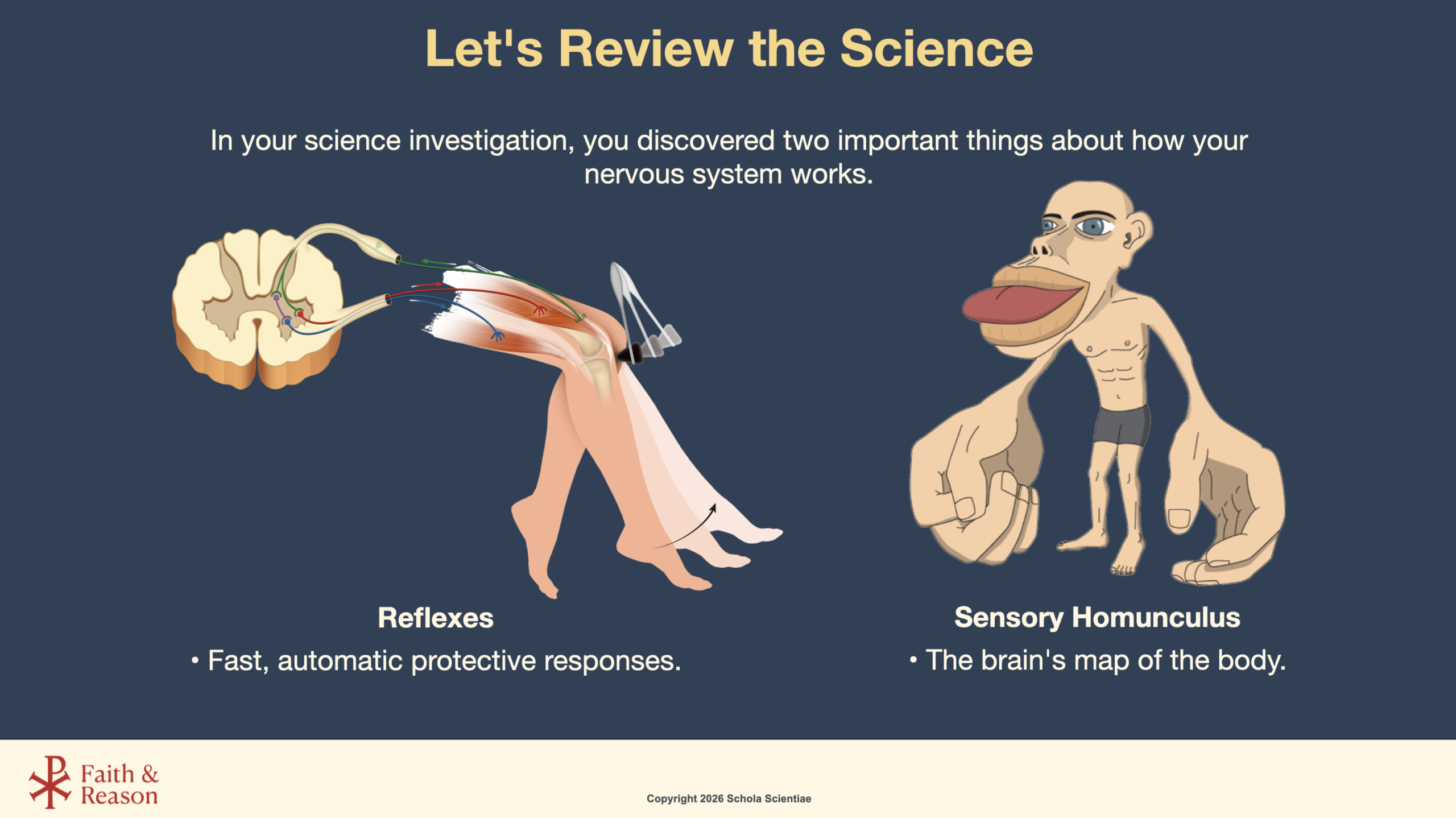
Slide 3 — Let’s Review the Science
Before exploring questions about meaning, take a moment to recall the most important scientific discoveries from this Investigation.
As you review the slide, ask yourself:
- What is a reflex, and why is it important?
- What does the sensory homunculus reveal about how the brain processes information?
- How do these discoveries help explain the way your nervous system interacts with the world?
As you discuss today’s questions, use the scientific evidence you discovered during the Investigation to support your thinking.
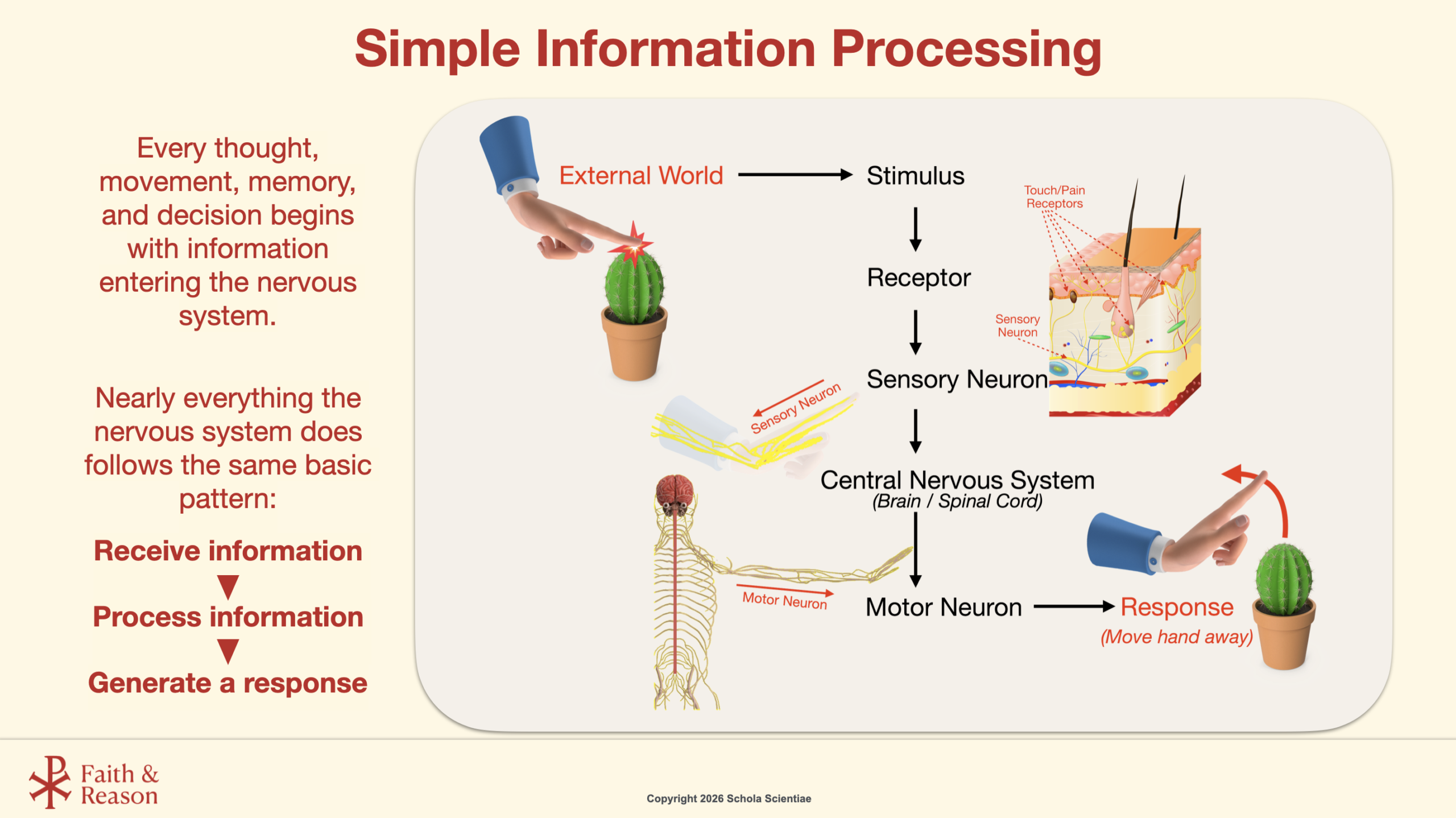
Slide 4 — Simple Information Processing
During this Investigation, you discovered that much of your nervous system is working long before you become consciously aware of it.
Think about your everyday experiences:
- How many actions do you perform without thinking about each step?
- Why is it important that many of your body’s responses happen automatically?
- What might happen if you had to consciously think about every movement, every sound, or every touch?
Automatic processing allows your brain to respond quickly while freeing your conscious mind to focus on learning, solving problems, making decisions, and interacting with the world.
As you continue through Reflection & Meaning, consider how this remarkable ability influences the way you live each day.
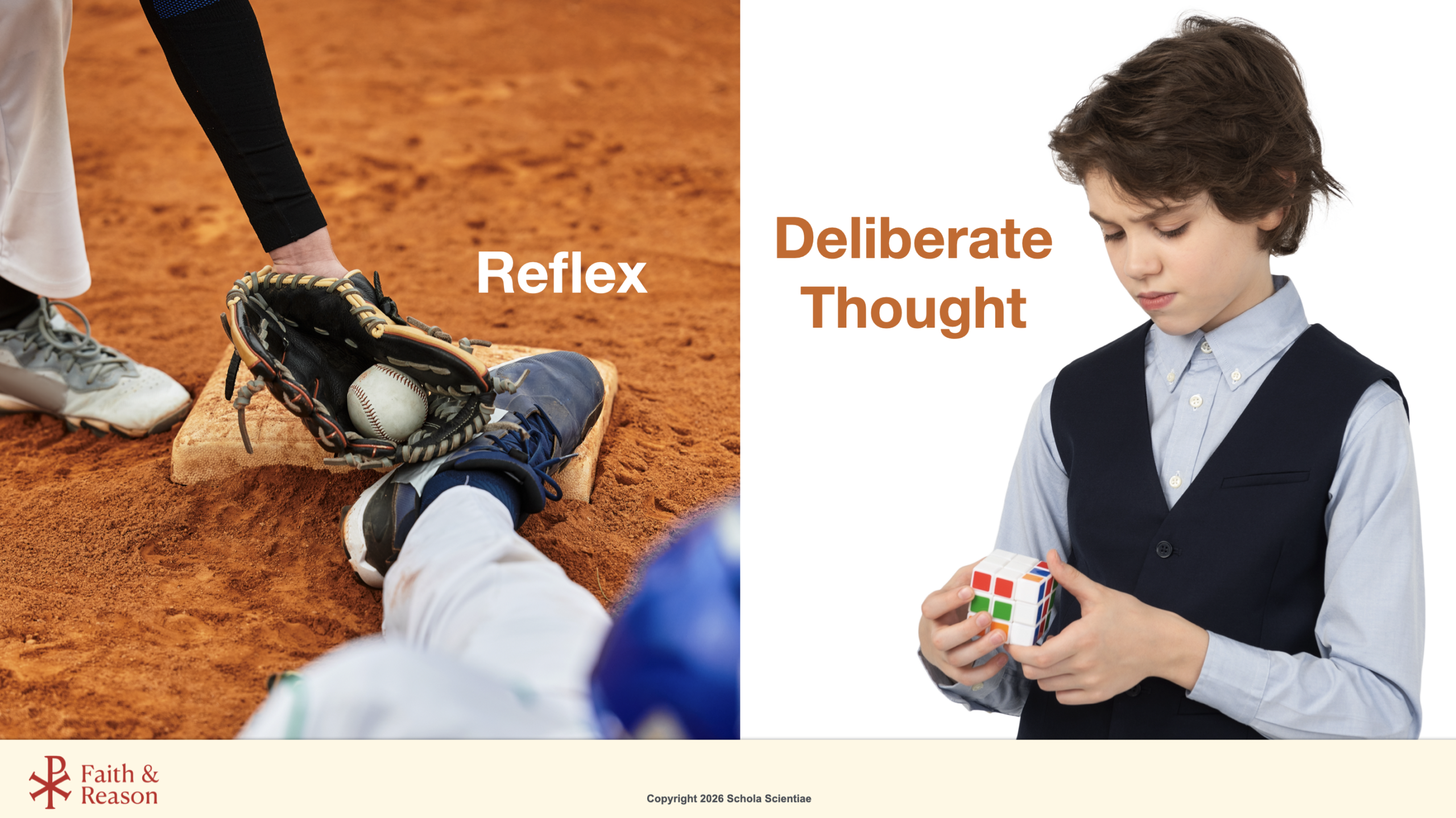
Slide 5 — Reflex vs. Deliberate Thought
During this Investigation, you discovered that some responses happen automatically. A reflex can protect you before you even realize what happened.
But not every situation calls for an automatic response.
Think about the differences between these two kinds of actions:
- When is a quick reflex the best response?
- When is it better to slow down, think carefully, and choose how to respond?
- Why is the ability to pause and think one of the most important abilities of the human brain?
As you discuss these questions, consider how knowing when to react and when to think can influence your decisions, your relationships, and the way you live your life.

Slide 6 — We Don’t All Experience the World the Same Way
During this Investigation, you learned that your brain is constantly receiving, selecting, and interpreting information from the world around you.
Because every person has different experiences, memories, expectations, and ways of paying attention, two people can experience the same event differently.
Think about these questions:
- Why might two people remember the same event in different ways?
- How can understanding this make you a better listener?
- Why is it important to gather evidence before deciding that your own first impression is the only correct one?
Scientific discoveries remind us that understanding other people often begins with curiosity, careful observation, and a willingness to consider perspectives different from our own.
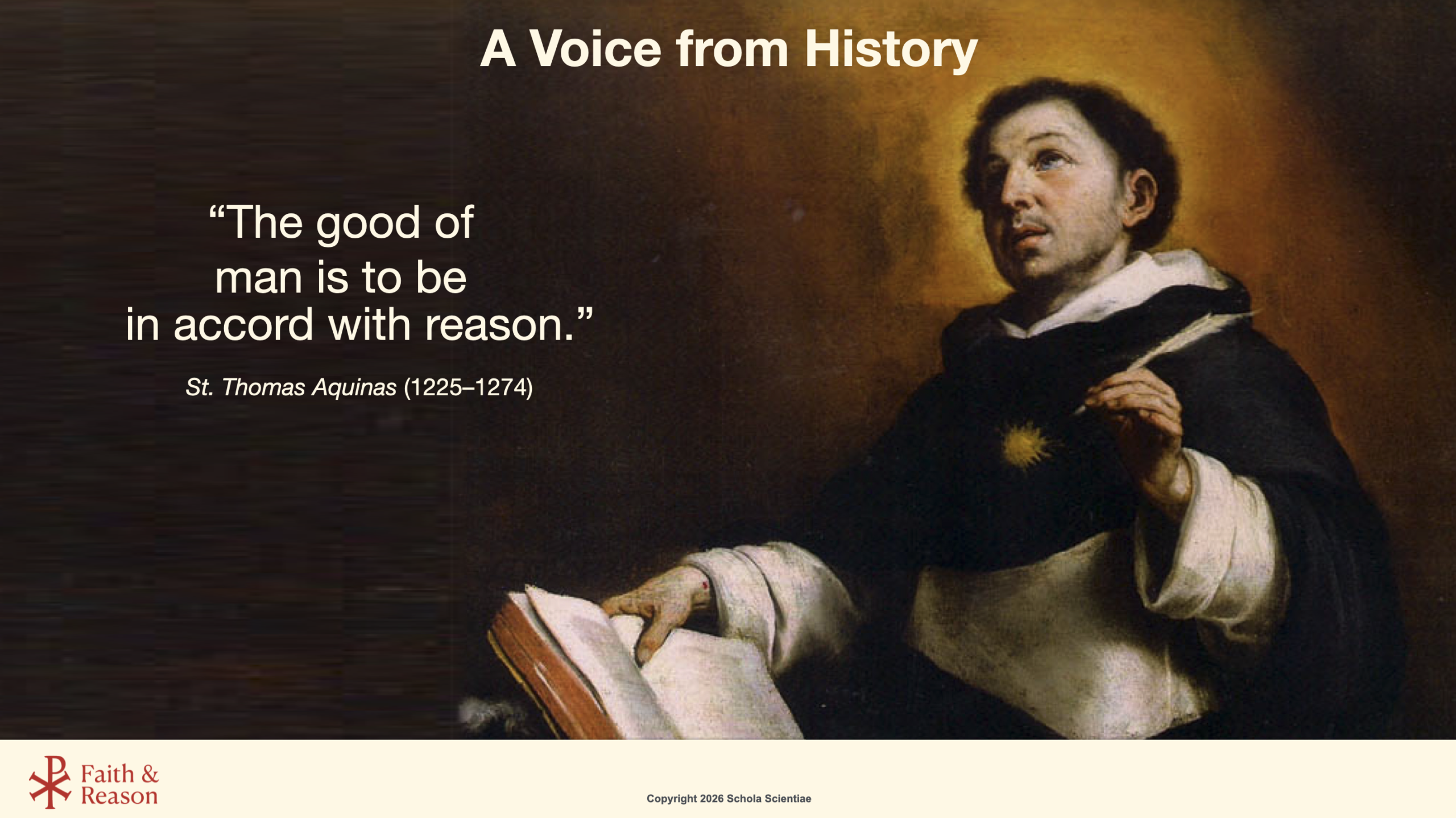
Slide 7 — A Voice from History
For thousands of years, people have asked some of the same questions you are asking in this Investigation.
- Can we trust our senses?
- How do we know what is true?
- How should knowledge guide the way we live?
Scientists, philosophers, and theologians have each explored these questions in different ways.
As you read the quotation on this slide, ask yourself:
- What do you think it means?
- Do you agree or disagree? Why?
- How does it connect to what you have learned about the brain and human cognition?
There may not be only one correct interpretation. The important thing is to support your thinking with careful reasoning and evidence.
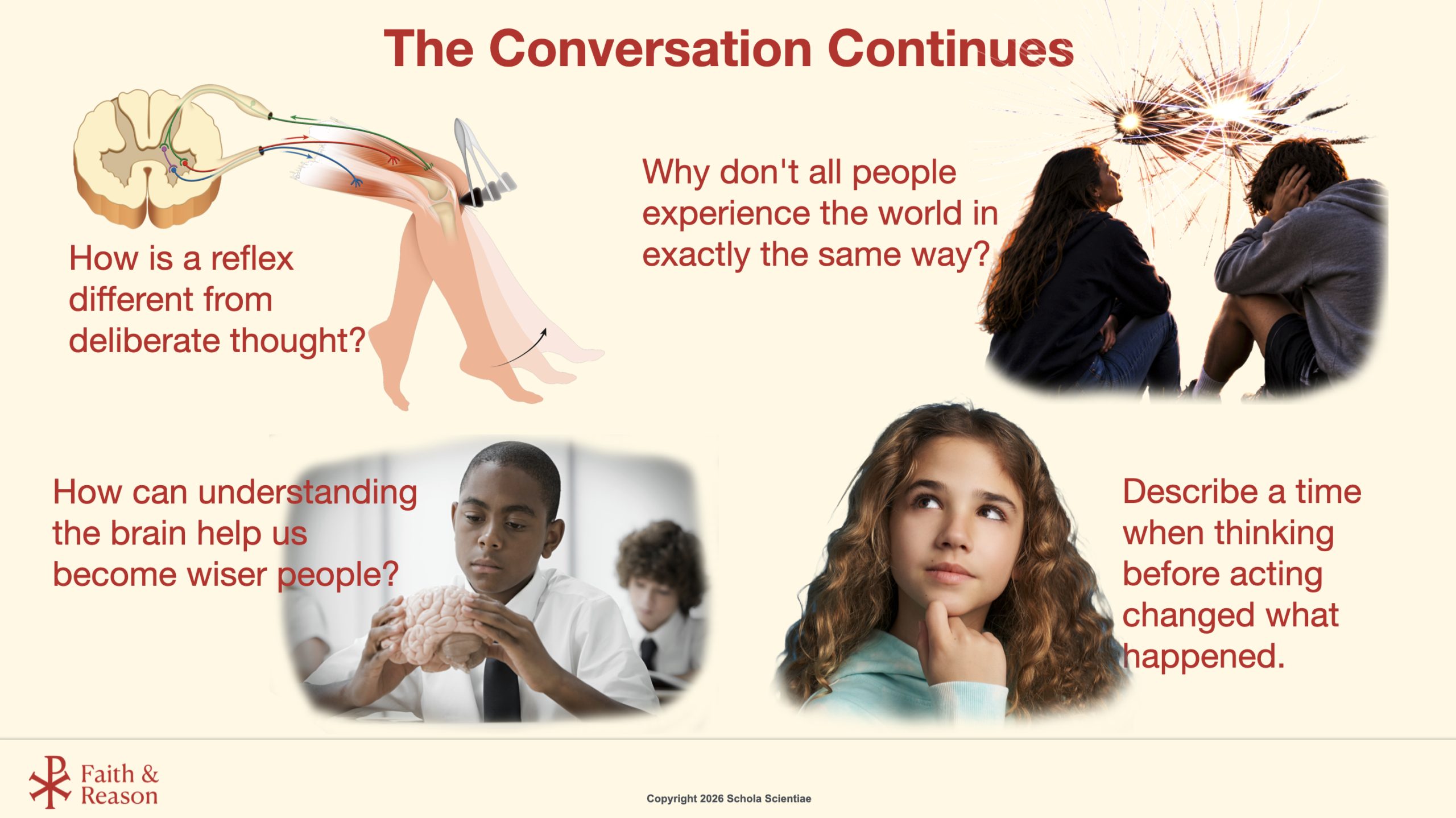
Slide 8 — The Conversation Continues
You’ve completed this Investigation, but the questions it raises don’t end here.
Now it’s your turn to connect what you’ve learned.
As you discuss today’s ideas, think about questions like these:
- Which discovery surprised you the most?
- How has your understanding of your nervous system changed?
- How might understanding how your brain works help you make better decisions?
- Is there something from this Investigation that you think you’ll notice in everyday life?
Listen carefully to one another. Explain your thinking, ask questions, and support your ideas with evidence from the Investigation.
The goal isn’t simply to remember today’s science—it’s to use it to better understand yourself and the world around you.
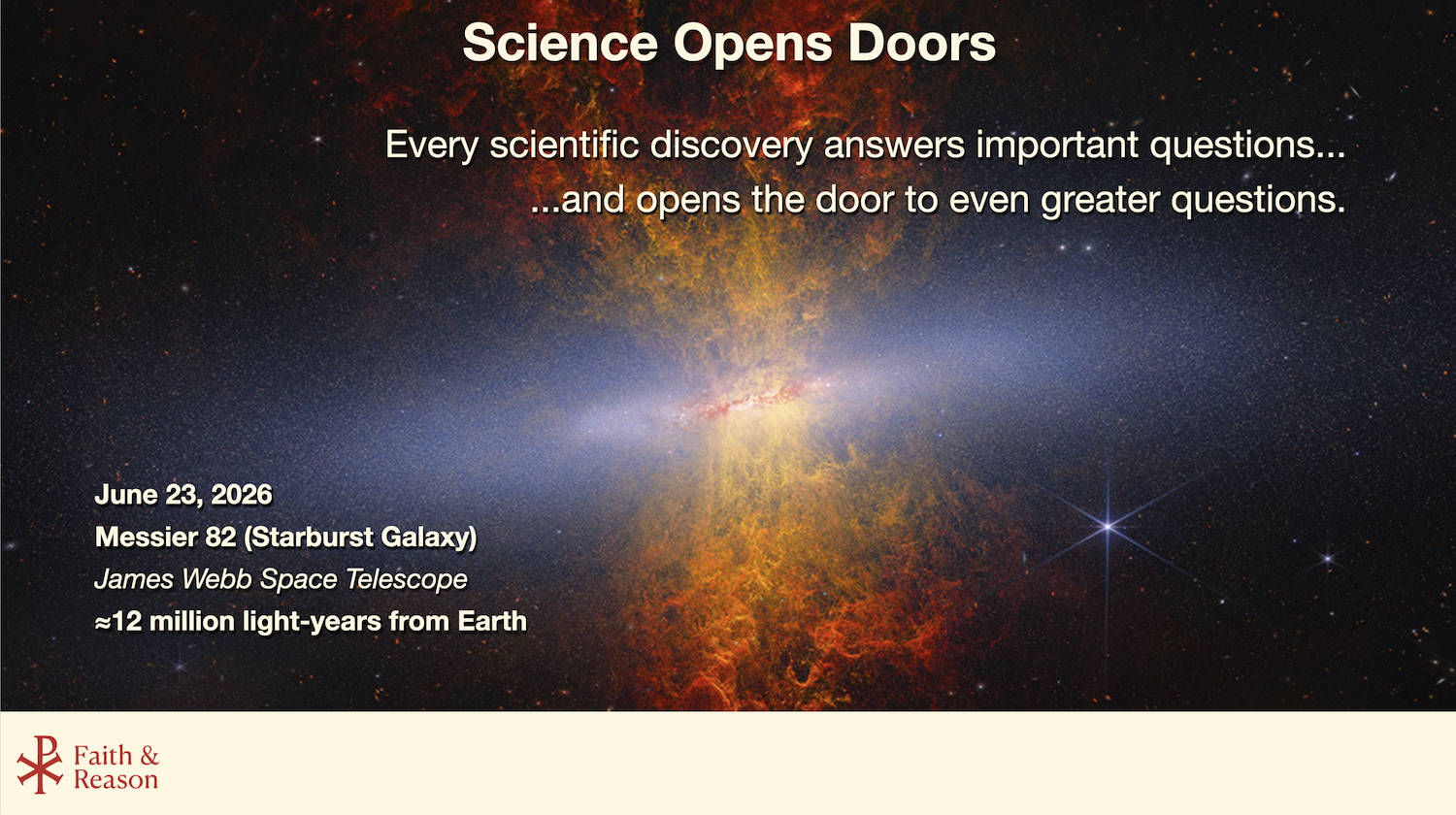
Slide 9 — Science Opens Doors
Every scientific discovery answers important questions.
But every discovery also raises new ones.
The more we learn about the world—and about ourselves—the more we realize there is still more to discover.
As you finish this Investigation, think about questions like these:
- What question would you most like scientists to answer?
- What mystery about the brain or human behavior would you like to understand better?
- What new questions did this Investigation make you ask?
The image above was captured by the James Webb Space Telescope. Even after centuries of scientific discovery, the universe continues to reveal new mysteries.
The same is true of the human brain.
Today’s discoveries are not the end of the story—they are the beginning of the next chapter.
Keep asking questions. Curiosity is where every scientific discovery begins.
Slide 10 — From sensation...to understanding...to wise action.
Throughout this Investigation, you discovered that your nervous system is constantly receiving information from the world around you.
But information alone isn’t enough.
Your brain must interpret that information, connect it with what you already know, and use it to guide your choices.
That journey—
Sensation → Understanding → Wise Action
—is one of the great purposes of learning.
As you continue through Human Cognition, you’ll discover how attention, memory, learning, language, and executive functions help transform information into understanding—and understanding into wisdom.
Science helps us understand how the brain works. Wisdom is choosing how to use that understanding.
What we do with that understanding is one of the most important choices we make.
As you continue your journey through Human Cognition, ask yourself:
- What did I discover?
- How has my thinking changed?
- How can I use what I’ve learned to make wiser decisions?